• Fri frakt över 249 kr
  • •
  • Snabba leveranser
  • •
  • Billiga böcker
Kundservice

Du är på sajten för privatpersoner.

Företag, bibliotek eller offentlig verksamhet?

Du handlar på classic.bokus.com, där alla dina funktioner finns intakta.
Till classic.bokus.com
Bokus logotyp. Gå till startsidan.
  • Erbjudanden
  • Nyheter
  • Student
  • Topplistor
  • Barn & ungdom
  • Bokus Play
  • E-böcker
  • Pocketböcker
  • Spel & pussel

10% studentrabatt med kod TERM26

Sidfot

Mina sidor

    Hjälp

    • Kundservice
    • Vanliga frågor och svar
    • Frakt och leverans
    • Retur vid ångerrätt
    • Reklamera vara
    • Betalning
    • Köpvillkor
    • Allmänna villkor
    • Information om webbplatsens tillgänglighet

    Om Bokus

    • Om oss
    • Pressrum
    • För studenter
    • För företag
    • För bibliotek och offentlig verksamhet
    • För leverantörer
    • Hållbarhet

    Populärt

    • Aktuella erbjudanden
    • Presentkort
    • Studentlitteratur
    • Nya böcker
    • Topplistor
    • Signerade böcker
    • Engelska böcker

    Inspiration

    • Boktips
    • BookTok
    • Populära bokserier
    • Barnbokskaraktärer
    • Populära författare

    Mina sidor

      Hjälp

      • Kundservice
      • Vanliga frågor och svar
      • Frakt och leverans
      • Retur vid ångerrätt
      • Reklamera vara
      • Betalning
      • Köpvillkor
      • Allmänna villkor
      • Information om webbplatsens tillgänglighet

      Om Bokus

      • Om oss
      • Pressrum
      • För studenter
      • För företag
      • För bibliotek och offentlig verksamhet
      • För leverantörer
      • Hållbarhet

      Populärt

      • Aktuella erbjudanden
      • Presentkort
      • Studentlitteratur
      • Nya böcker
      • Topplistor
      • Signerade böcker
      • Engelska böcker

      Inspiration

      • Boktips
      • BookTok
      • Populära bokserier
      • Barnbokskaraktärer
      • Populära författare
      Logotyp för Bokus
      Följ oss på Facebook (extern länk)Följ oss på Instagram (extern länk)Följ oss på YouTube (extern länk)Följ oss på TikTok (extern länk)
      bokus @ CookiesAnpassa cookiesIntegritetspolicyKöpvillkor
      Till Citymail hemsida (extern länk)Till Budbee hemsida (extern länk)Till Postnord hemsida (extern länk)Till Schenker hemsida (extern länk)Till Early Bird hemsida (extern länk)Till Walleys hemsida (extern länk)
      1. Samhälle och politik
      2. Politik och statsskick
      3. Statsvetenskap och politisk teori

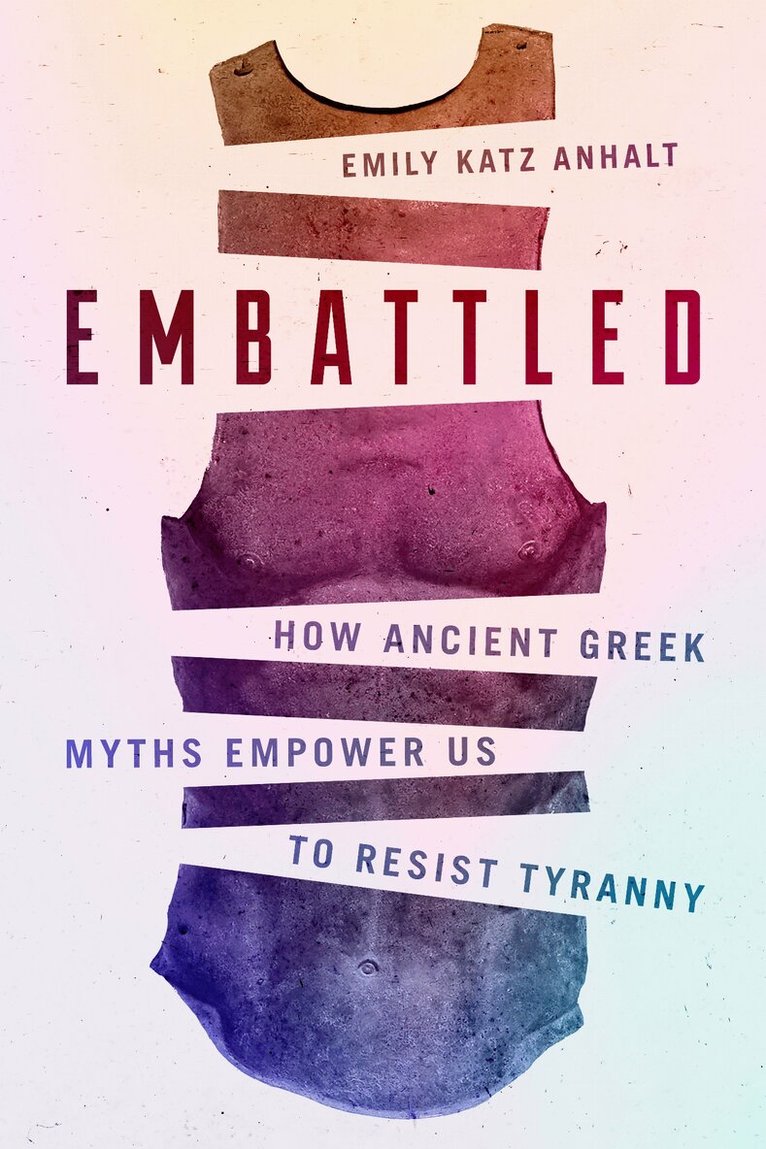
      Embattled

      How Ancient Greek Myths Empower Us to Resist Tyranny

      AvEmily Katz Anhalt

      Inbunden, Engelska, 2021

      436 kr

      Beställningsvara. Skickas inom 3-6 vardagar. Fri frakt över 249 kr.

      Fler format och utgåvor

      E-bok

      437 kr

      Beskrivning

      An incisive exploration of the way Greek myths empower us to defeat tyranny.As tyrannical passions increasingly plague twenty-first-century politics, tales told in ancient Greek epics and tragedies provide a vital antidote. Democracy as a concept did not exist until the Greeks coined the term and tried the experiment, but the idea can be traced to stories that the ancient Greeks told and retold. From the eighth through the fifth centuries BCE, Homeric epics and Athenian tragedies exposed the tyrannical potential of individuals and groups large and small. These stories identified abuses of power as self-defeating. They initiated and fostered a movement away from despotism and toward broader forms of political participation.Following her highly praised book Enraged: Why Violent Times Need Ancient Greek Myths, the classicist Emily Katz Anhalt retells tales from key ancient Greek texts and proceeds to interpret the important message they hold for us today. As she reveals, Homer's Iliad and Odyssey, Aeschylus's Oresteia, and Sophocles's Antigone encourage us—as they encouraged the ancient Greeks—to take responsibility for our own choices and their consequences. These stories emphasize the responsibilities that come with power (any power, whether derived from birth, wealth, personal talents, or numerical advantage), reminding us that the powerful and the powerless alike have obligations to each other. They assist us in restraining destructive passions and balancing tribal allegiances with civic responsibilities. They empower us to resist the tyrannical impulses not only of others but also in ourselves. In an era of political polarization, Embattled demonstrates that if we seek to eradicate tyranny in all its toxic forms, ancient Greek epics and tragedies can point the way.

      Produktinformation

      • Utgivningsdatum:2021-09-14
      • Mått:152 x 229 x 30 mm
      • Vikt:635 g
      • Format:Inbunden
      • Språk:Engelska
      • Antal sidor:320
      • Förlag:Stanford University Press
      • ISBN:9781503628564

      Utforska kategorier

      • Statsvetenskap och politisk teori inom Samhälle och politik
      • Filosofiska discipliner inom Filosofi och religion
      • Litteraturvetenskap inom Skönlitteratur

      Mer om författaren

      Emily Katz Anhalt is Professor of Classics at Sarah Lawrence College. Her most recent book is Enraged: Why Violent Times Need Ancient Greek Myths, which was selected as one of the Times Literary Supplement's Best Books of 2017.

      Recensioner i media

      "Anhalt encourages readers to look with fresh eyes at how easily power can be abused and how to fight back against despotic rule. Her engaging retellings of stories from ancient Greek epic and tragedy show just how relevant these texts are in the political climate of the twenty-first century." —Donna Zuckerberg, author of Not All Dead White Men: Classics and Misogyny in the Digital Age "The Greeks endured violence and demagoguery but also created antidotes, from the Odyssey's depiction of survival skills like rational deliberation, to the deep probes of politics by Aeschylus and Sophocles. Emily Katz Anhalt brilliantly articulates what this hard-won ancient wisdom offers those battling anti-democratic forces today."—Richard Martin, author of Myths of the Ancient Greeks "A thought-provoking exploration of how the ancient Greeks developed forms of storytelling to interrogate what it means to be a leader and how despotic leaders tend to abuse their power. The ancient myths at the center of this book speak to the present moment with uncanny prescience, as if written for our time as both a warning and an opportunity to rehearse the moral choices that we and our leaders must make each day."—Bryan Doerries, author of The Theater of War: What Ancient Greek Tragedies Can Teach Us Today "Anhalt's prose is wonderfully readable and at the same time deeply scholarly. She elucidates the social/political/psychological realities represented in these classic texts and demonstrates how critical reading of literature enables one to see one's own realities and their inherent dangers more clearly...Recommended."—M. F. McClure, CHOICE Our current political climate presents us with steep challenges. We could start by working toward exposing more students, and others, to these stories and texts in the first place. Even that seems an increasingly high bar. An engaging and readable volume like this one can help by presenting readers with the complexities and subtleties of Homer and the tragedies in an accessible way, and by encouraging us all to think with these myths as we try to understand our modern world, and, one hopes, work to improve it."—Daniel W. Berman, Bryn Mawr Classical Review

      Innehållsförteckning

      • Contents and AbstractsIntroduction: Confronting Tyranny Today chapter abstractToday, as in ancient times, tyrannical abuses of power—whether by one person, a few, or many—destroy individuals, corrode communities, and endanger democratic institutions. During the eighth through the fifth centuries BCE, however, ancient Greece witnessed an unprecedented movement away from tyranny and tribalism and toward civil society and broader forms of political participation. Democracy emerged as a consequence of gradual changes in social and political attitudes fostered by epic and tragic reworkings of Greek myths over many centuries. Homer's Iliad and Odyssey, Aeschylus's Oresteia, and Sophocles's Antigone identify aspirations and skills crucial to preventing abuses of power in any and every era. The ancient Greeks never removed tyrannical abuses of power from their world or from themselves, but their stories show us why and how we could.1Leadership (Iliad 1–2) chapter abstractThe Iliad's opening scenes depict a hierarchical, destructively competitive power structure familiar to the epic's earliest archaic audiences and not unfamiliar to us today. High achievers compete ruthlessly for honor, wealth, and supremacy at the expense of the community's welfare. Truth succumbs to violence and intimidation. Cruelty and bystanders' enjoyment of it constitute the emblems of tyrannical leadership and thoughtless subjection to it. By adhering to the principles of their own society, leading men harm their communities and themselves. The epic's human characters blame the gods for their suffering, but the audience sees that human choices are far more determinative than divine actions, and their consequences more predictable. Democracy was not even a concept when tales of the Trojan War began to circulate, but the Iliad begins by exposing the cost to everyone of exclusively self-serving leadership, and suggesting that the community bears the responsibility for defining "good" leadership.2Community (Odyssey 1–4) chapter abstractThe Odyssey begins by emphasizing that human communities need some form of mortal political authority capable of maintaining order. In the archaic world of Homer's characters and earliest audiences, "political authority" meant a king or a small group of powerful elites; but the epic begins to undermine the legitimacy of unfettered and unaccountable autocratic authority by suggesting that the powerful are responsible for the quality of life of everyone subject to their power. The Odyssey defines a "good" king as a ruler who benefits not merely himself but everyone in the community by promoting respect for reciprocal obligations among everyone, including himself. The ancient Greeks themselves failed to achieve this goal, but the Odyssey's portrait of communal order and happiness excludes all forms of tyranny. It offers both a challenge and an invitation to every human community.3Reality (Odyssey 5–8) chapter abstractOdysseus's adventures begin with his remarkable choice of reality over fantasy. This choice initiates his return home and permits him to recover his political authority and reestablish order and happiness for himself, his household, and his community. The seductions and deceptions of imaginative non-reality-based narratives can help cultivate our evidence-based reasoning skills. But Odysseus's example reminds us that a preference for fantasy, irrationality, and magical thinking over the reality of empirical lived experience can corrode our capacity for rational thought and prevent constructive political discourse and creative problem-solving. Preferring fantasy to reality, we risk empowering the tyrants and would-be tyrants in our own times, because they are hard at work in the real world while we amuse ourselves in imaginary ones. The rejection of tyranny originates in the realization that real-life problems require real-life solutions.4Deception (Odyssey 9–16) chapter abstractThis section of the Odyssey reminds us that the distinction between "true" and "false" matters, and that recognizing the distinction is our responsibility. Instead of asking or permitting the audience to suspend disbelief, tales narrated by Odysseus evoke our skepticism and cultivate our empiricism because we have other evidence against which to measure them. The Odyssey suggests that the determination of "true" or "false" is not merely a matter of opinion. Truth must be objectively verifiable. Matching wits with Odysseus, we develop the skills to defend ourselves against authoritative speakers who bombard us with fictions, even contradictory fictions, so as to eradicate the very concept of objective fact.5Success (Odyssey 17–24) chapter abstractThe Odyssey's conclusion introduces a profoundly egalitarian challenge to any narrowly based or exclusive power structure, and to the primitive equation of vengeance with justice. Ingenuity, skepticism, empiricism, and self-restraint enable Odysseus to succeed in exacting violent revenge against the rapacious, shortsighted suitors. But the epic presents these essential survival skills as potentially accessible to anyone, and Odysseus's successful defeat of the suitors offers no guarantee of permanently benevolent leadership, political harmony, or future prosperity. The epic's unsatisfying ending reminds the audience that vengeance is not a solution but a problem, a source of greater conflict. Violent revenge manifests as a lethal threat to civil society, since it is likely to escalate and become interminable. Not violence but farsighted wisdom and self-restraint, symbolized by Athena's ultimate intervention, prove vital to individual and communal survival and success.6Justice (Aeschylus's Oresteia) chapter abstractAthenian tragedies in the fifth century BCE challenged traditional, archaic tribal goals and promoted new ideals more conducive to preserving civil society and democratic institutions. The Oresteia undermines the age-old equation of revenge with justice, revising an ancient tale and dramatizing the devastating consequences of retributive violence. As each violent act in this new version derives from and produces others, Aeschylus exposes the common fallacy of assuming that because one side in a dispute appears deeply wrong the other side must be right. In the trilogy's conclusion, persuasive speech permits a zero-sum conception of justice and victory to evolve from a crushing conquest of one side at the expense of another into a conception of victory as a win for all concerned. The Oresteia presents the trial by jury as a healthier alternative to vengeance killings. Our great challenge is to make that vision a reality.7Conflict (Sophocles's Antigone) chapter abstractLike the Homeric epics, Athenian tragedies offer us, as they offered fifth-century Athenians, the opportunity to learn from others' mistakes. Sophocles's Antigone explores the great challenge confronting every human community: What do we do when we disagree? Antigone exposes the catastrophic consequences of a closed mind incapable of accepting new information or thinking creatively. Neither Creon nor Antigone is a constructive role model. The collision between Creon's rejection of the family in favor of civic loyalties and Antigone's "family first" certainty and disregard for civic loyalties destroys family, city, and the relevant individuals. Inflexible, hot-tempered, and impervious to reasoned argument, Antigone and Creon collide and self-destruct. Antigone learns nothing. Creon learns too late. They cannot be helped, but maybe we can be. Dramatizing how not to go about resolving disputes, Sophocles's cautionary tale reminds us that in every conflict our certainties may blind us to better ideas.Conclusion: The Art of Self-Governance chapter abstractTwenty-first-century tyranny is merely the latest iteration of an age-old pestilence. The Iliad, Odyssey, Oresteia, and Antigone can help to inoculate us against it. These stories remind us that words have consequences and that discernment is our responsibility. They teach us to value evidence and expertise, and to choose leaders who will not sacrifice the welfare of the community to their own shortsighted greed. Exposing the tyrannical potential of a closed mind, these tales encourage us to resist the seductions of violence, assess facts, value diverse viewpoints, and resolve complex problems creatively. They not only fortify us against liars, magical thinkers, con artists, and thugs, but also remind us to beware of becoming liars, magical thinkers, con artists, or thugs ourselves. Fortified by ancient Greek tales against the tyrannical forces of today, we can learn to govern ourselves.
      Hoppa över listan

      Mer från samma författare

      Emily Katz Anhalt - Enraged, Häftad

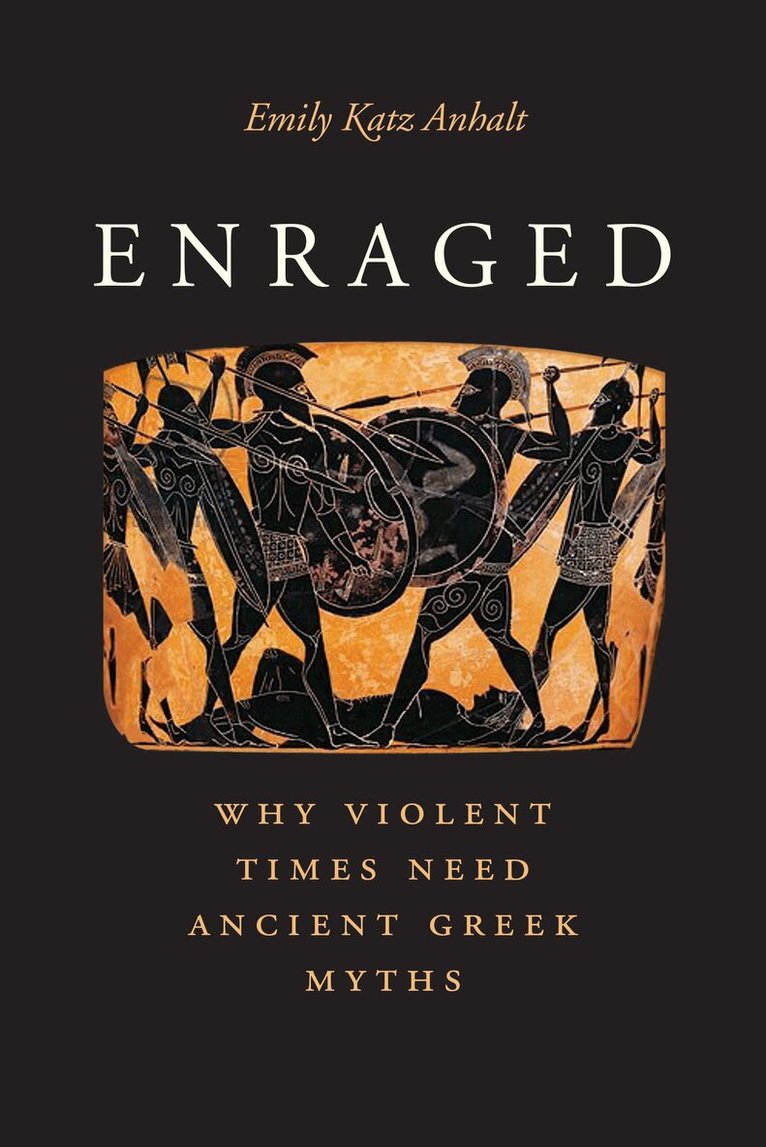
      Enraged

      Emily Katz Anhalt

      Häftad, 2018

      234 kr

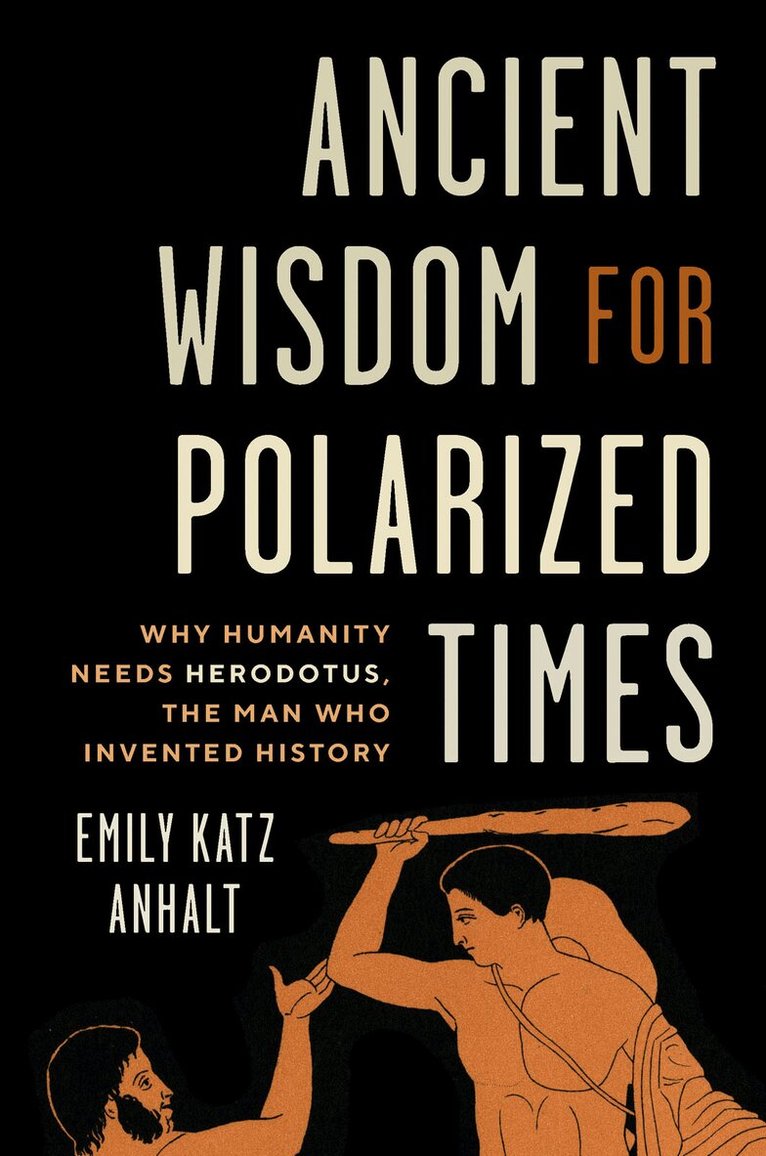
      Emily Katz Anhalt - Ancient Wisdom for Polarized Times, Inbunden

      Ancient Wisdom for Polarized Times

      Emily Katz Anhalt

      Inbunden, 2026

      304 kr

      Emily Katz Anhalt - Solon the Singer, Inbunden

      Solon the Singer

      Emily Katz Anhalt

      Inbunden, 1993

      917 kr

      Emily Katz Anhalt - Solon the Singer, Häftad

      Solon the Singer

      Emily Katz Anhalt

      Häftad, 1993

      380 kr

      Hoppa över listan

      Du kanske också är intresserad av

      Emily Katz Anhalt - Embattled, E-bok

      Embattled

      Emily Katz Anhalt

      E-bok
      2021

      437 kr

      Emily Katz Anhalt - Solon the Singer, Häftad

      Solon the Singer

      Emily Katz Anhalt

      Häftad, 1993

      380 kr

      Emily Katz Anhalt - Enraged, Häftad

      Enraged

      Emily Katz Anhalt

      Häftad, 2018

      234 kr

      Emily Katz Anhalt - Ancient Wisdom for Polarized Times, Inbunden

      Ancient Wisdom for Polarized Times

      Emily Katz Anhalt

      Inbunden, 2026

      304 kr

      Emily Katz Anhalt - Solon the Singer, Inbunden

      Solon the Singer

      Emily Katz Anhalt

      Inbunden, 1993

      917 kr

      Klara Peters Bastin - SIGNERAD - Om julens wälgång, Inbunden
      • Signerad!

      SIGNERAD - Om julens wälgång

      Klara Peters Bastin

      Inbunden, 2026

      249 kr

      Roland Paulsen - Avbegåvad : en essäberättelse om arv och miljö, Inbunden
      • -15%

      Avbegåvad : en essäberättelse om arv och miljö

      Roland Paulsen

      Inbunden, 2026

      225 kr265 kr

      Peter Englund - Om att misslyckas, Inbunden
      • -17%

      Om att misslyckas

      Peter Englund

      Inbunden, 2026

      4,0 utav 5 stjärnor. Totalt antal röster:(9)

      199 kr239 kr

      Åse Falkman Fredrikson, Anna Hallén - Kaos i klimakteriet : lösningar som fungerar, Inbunden
      • Hälsa

      Kaos i klimakteriet : lösningar som fungerar

      Åse Falkman Fredrikson, Anna Hallén

      Inbunden, 2026

      269 kr

      Vendela Blomström, Jeanna Wennerberg - Akademiskt läsande och skrivande, Häftad
      • -10% student

      Akademiskt läsande och skrivande

      Vendela Blomström, Jeanna Wennerberg

      Häftad, 2026

      421 kr