• Fri frakt över 249 kr
  • •
  • Snabba leveranser
  • •
  • Billiga böcker
Kundservice

Du är på sajten för privatpersoner.

Företag, bibliotek eller offentlig verksamhet?

Du handlar på classic.bokus.com, där alla dina funktioner finns intakta.
Till classic.bokus.com
Bokus logotyp. Gå till startsidan.
  • Erbjudanden
  • Nyheter
  • Student
  • Topplistor
  • Barn & ungdom
  • Bokus Play
  • E-böcker
  • Pocketböcker
  • Spel & pussel

10% rabatt på allt med kod NYSTART10 →

Sidfot

Mina sidor

    Hjälp

    • Kundservice
    • Vanliga frågor och svar
    • Frakt och leverans
    • Retur vid ångerrätt
    • Reklamera vara
    • Betalning
    • Köpvillkor
    • Allmänna villkor
    • Information om webbplatsens tillgänglighet

    Om Bokus

    • Om oss
    • Pressrum
    • För studenter
    • För företag
    • För bibliotek och offentlig verksamhet
    • För leverantörer
    • Hållbarhet

    Populärt

    • Aktuella erbjudanden
    • Presentkort
    • Studentlitteratur
    • Nya böcker
    • Topplistor
    • Signerade böcker
    • Engelska böcker

    Inspiration

    • Boktips
    • BookTok
    • Populära bokserier
    • Barnbokskaraktärer
    • Populära författare
    Logotyp för Bokus
    Följ oss på Facebook (extern länk)Följ oss på Instagram (extern länk)Följ oss på YouTube (extern länk)Följ oss på TikTok (extern länk)
    bokus @ CookiesAnpassa cookiesIntegritetspolicyKöpvillkor
    Till Citymail hemsida (extern länk)Till Budbee hemsida (extern länk)Till Postnord hemsida (extern länk)Till Schenker hemsida (extern länk)Till Early Bird hemsida (extern länk)Till Walleys hemsida (extern länk)
    1. Ekonomi och Ledarskap
    2. Nationalekonomi
    3. Internationell ekonomi

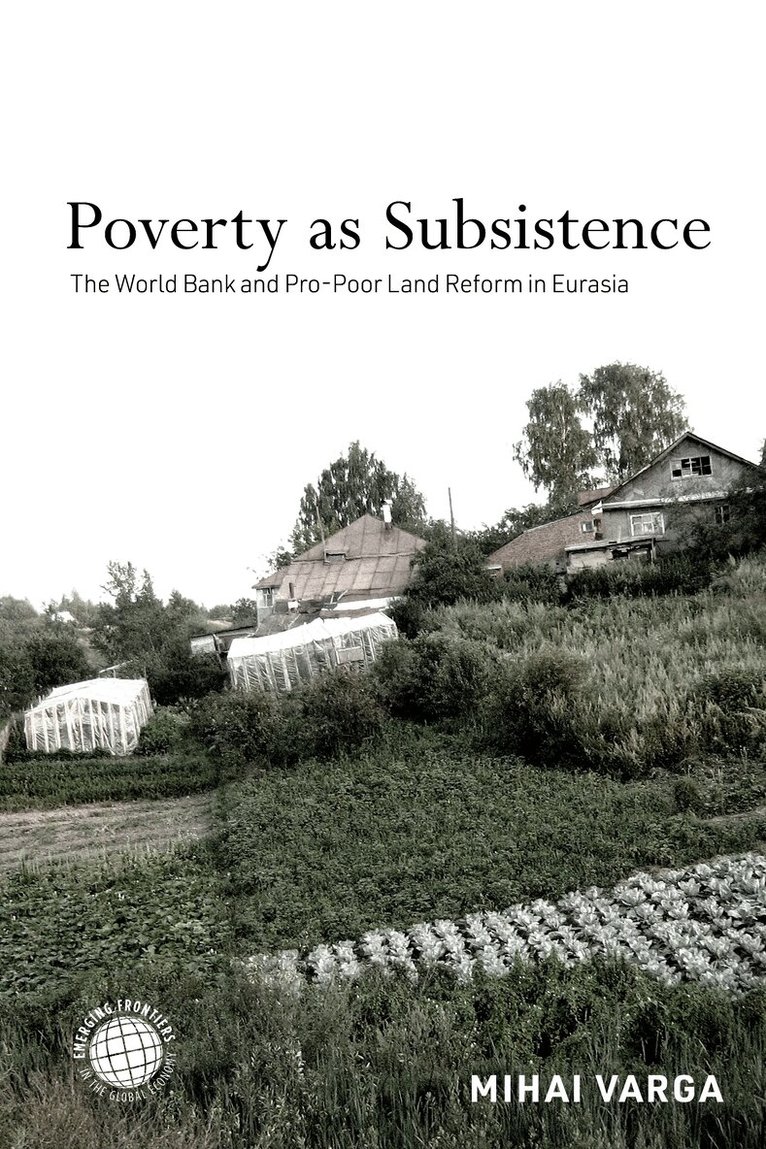
    Poverty As Subsistence

    The World Bank and Pro-Poor Land Reform in Eurasia

    AvMihai Varga

    Inbunden, Engelska, 2023

    Del i serien Emerging Frontiers in the Global Economy

    774 kr

    Beställningsvara. Skickas inom 5-8 vardagar. Fri frakt över 249 kr.

    Fler format och utgåvor

    E-bok

    872 kr

    Beskrivning

    Poverty as Subsistence explores the "propertizing" land reform policy that the World Bank advocated throughout the transitioning countries of Eurasia, expecting poverty reduction to result from distributing property titles over agricultural land to local (rural) populations. China's early 1980s land reform offered support for this expectation, but while the spread of propertizing reform to post-communist Eurasia created numerous "subsistence" smallholders, it failed to stimulate entrepreneurship or market-based production among the rural poor. Varga argues that the World Bank advocated a simplified version of China's land reform that ignored a key element of successful reforms: the smallholders' immediate environment, the structure of actors and institutions determining whether smallholders survive and grow in their communities. With concrete insights from analysis of the land reform program throughout post-communist Eurasia and multisited fieldwork in Romania and Ukraine, this book details how and why land reform led to subsistence and the mechanisms underpinning informal commercialization.

    Produktinformation

    • Utgivningsdatum:2023-02-21
    • Mått:152 x 229 x 20 mm
    • Vikt:472 g
    • Format:Inbunden
    • Språk:Engelska
    • Serie:Emerging Frontiers in the Global Economy
    • Antal sidor:218
    • Förlag:Stanford University Press
    • ISBN:9781503633049

    Utforska kategorier

    • Internationell ekonomi inom Ekonomi och Ledarskap
    • Sociala grupper och identitet inom Samhälle och politik
    • Digital ekonomi inom Ekonomi och Ledarskap

    Mer om författaren

    Mihai Varga is a Lecturer and Senior Research Fellow in Sociology at the Eastern Europe Institute, Freie Universität Berlin. He was a Max Weber Fellow in 2011-2012 and his research focuses on economic crises and their political and socioeconomic consequences.

    Recensioner i media

    "The creation of private property in land on the farms of post-communist Europe and Central Asia failed to produce a class of commercially-minded entrepreneurial farmers. Mihai Varga shows us why. This is a major book on post-communist agrarian change, with important insights of much wider contemporary relevance."—Haroon Akram-Lodhi, Trent University "Poverty as Subsistence is a must read for scholars, policy makers, and development practitioners considering land transfers and market-based solutions to rural poverty. Mihai Varga's timely analysis provides powerful insights on why and how agricultural reforms advocated by the World Bank and other agencies often undermine livelihoods of tightly knit rural economies."—Diana Mincyte, The City University of New York "This book demonstrates that the World Bank failed in post-communist transition by adopting a too narrow and ideological perspective on institutional reforms. It focused too much on creating individual property rights and not enough on the institutional environment of purchasing and distribution. Varga's insightful work reveals the result: that the World Bank reduced post-communist countries to a pre-war model of subsistence agriculture."—Mitchell A. Orenstein, University of Pennsylvania "As a work of sociology and political economy, Poverty as Subsistence adds to the critical studies of agrarian development in the contemporary era and raises new questions for scholars of environment and agrarian change.... Most crucially, the book demonstrates the continual relevance of land reform in agrarian economies and the versatile adaptation and resistance of rural people, showing that land is not simply an interchangeable property in the market but deeply rooted in interpersonal relationships and memory."—Leo Chu, H-Environment

    Innehållsförteckning

    • Introduction: Poverty Reduction through Land Transfers1. Pro-poor Reforms: The Propertizing Paradigm2. Pro-poor Land Reform In Eurasia3. The Reform Continuum: From China to Russia4. Smallholders: A Fieldwork Study of Resilience and Resistance5. Resilience: Survival and Growth of Smallholder Agriculture6. Resistance: Smallholders against CommercializationConclusions: The Limits of Pro-poor Land Reform