Mihai Varga – författare
Visar alla böcker från författaren Mihai Varga. Handla med fri frakt och snabb leverans.
8 produkter
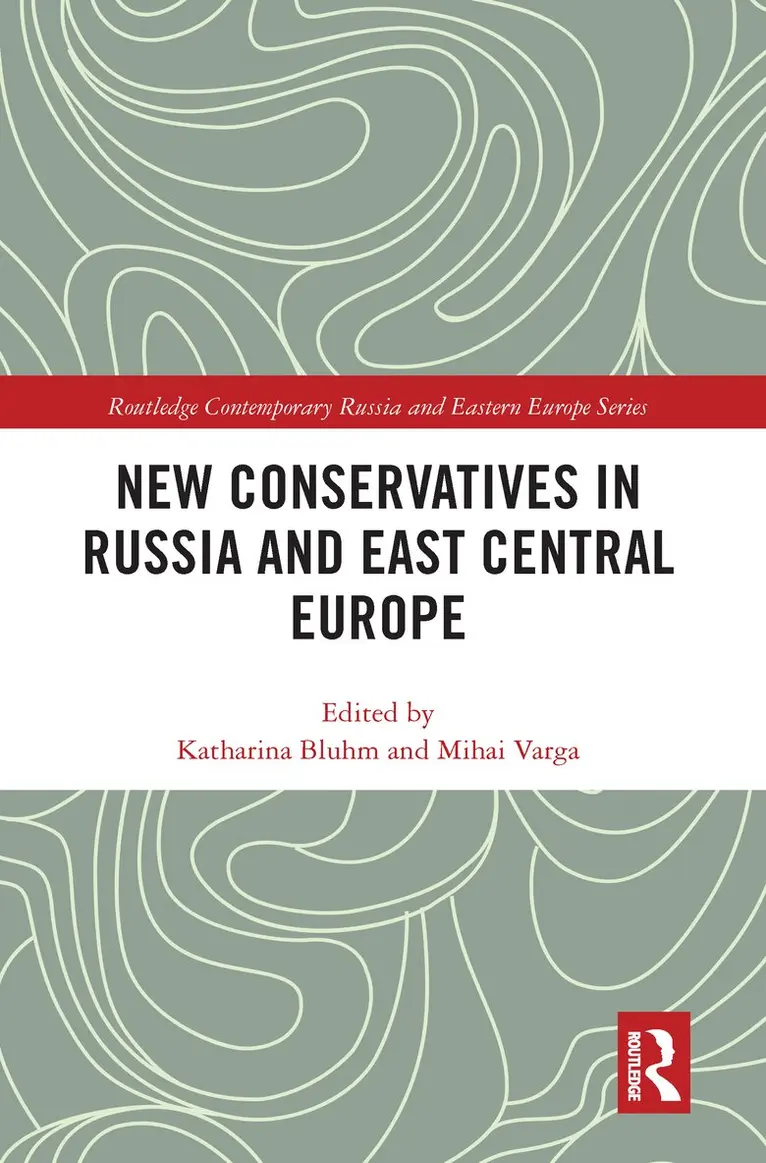
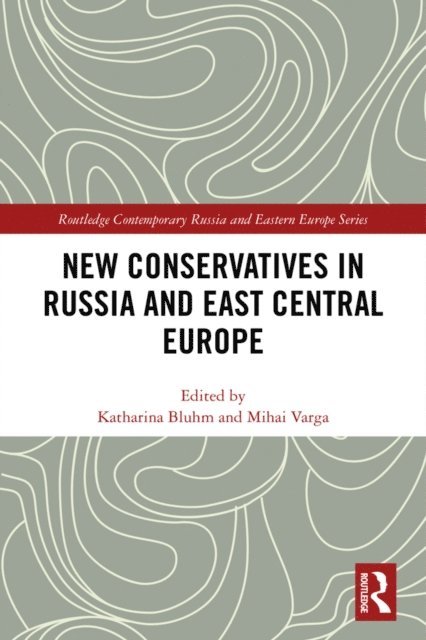
New Conservatives in Russia and East Central Europe
Av Katharina Bluhm, Mihai Varga
Häftad, 2020
689 kr
Lägg i varukorg
This book explores the emergence, and in Poland, Hungary, and Russia the coming to power, of politicians and political parties rejecting the consensus around market reforms, democratization, and rule of law that has characterized moves toward an "open society" from the 1990s. It discusses how over …
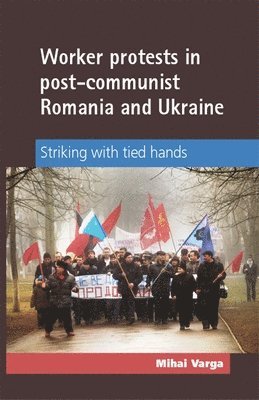
Worker Protests in Post-Communist Romania and Ukraine
Striking with Tied Hands
Av Mihai Varga
Inbunden, 2014
1227 kr
Lägg i varukorg
Worker protests in post-communist Romania and Ukraine is a book about strategies of trade unions confronting employers in difficult conditions. The book’s main idea is to study why and how successful forms of workers’ interest representation could emerge in a hostile context. The post-communist …
New Conservatives in Russia and East Central Europe
Av Katharina Bluhm, Mihai Varga
Inbunden, 2018
2504 kr
Lägg i varukorg
This book explores the emergence, and in Poland, Hungary, and Russia the coming to power, of politicians and political parties rejecting the consensus around market reforms, democratization, and rule of law that has characterized moves toward an "open society" from the 1990s. It discusses how over …
New Conservatives in Russia and East Central Europe
Av Mihai Varga, Katharina Bluhm
E-bok, 2018
796 kr
Lägg i varukorg
This book explores the emergence, and in Poland, Hungary, and Russia the coming to power, of politicians and political parties rejecting the consensus around market reforms, democratization, and rule of law that has characterized moves toward an "open society" from the 1990s. It discusses how over …
New Conservatives in Russia and East Central Europe
Av Mihai Varga, Katharina Bluhm
E-bok, 2018
814 kr
Lägg i varukorg
This book explores the emergence, and in Poland, Hungary, and Russia the coming to power, of politicians and political parties rejecting the consensus around market reforms, democratization, and rule of law that has characterized moves toward an "open society" from the 1990s. It discusses how over …
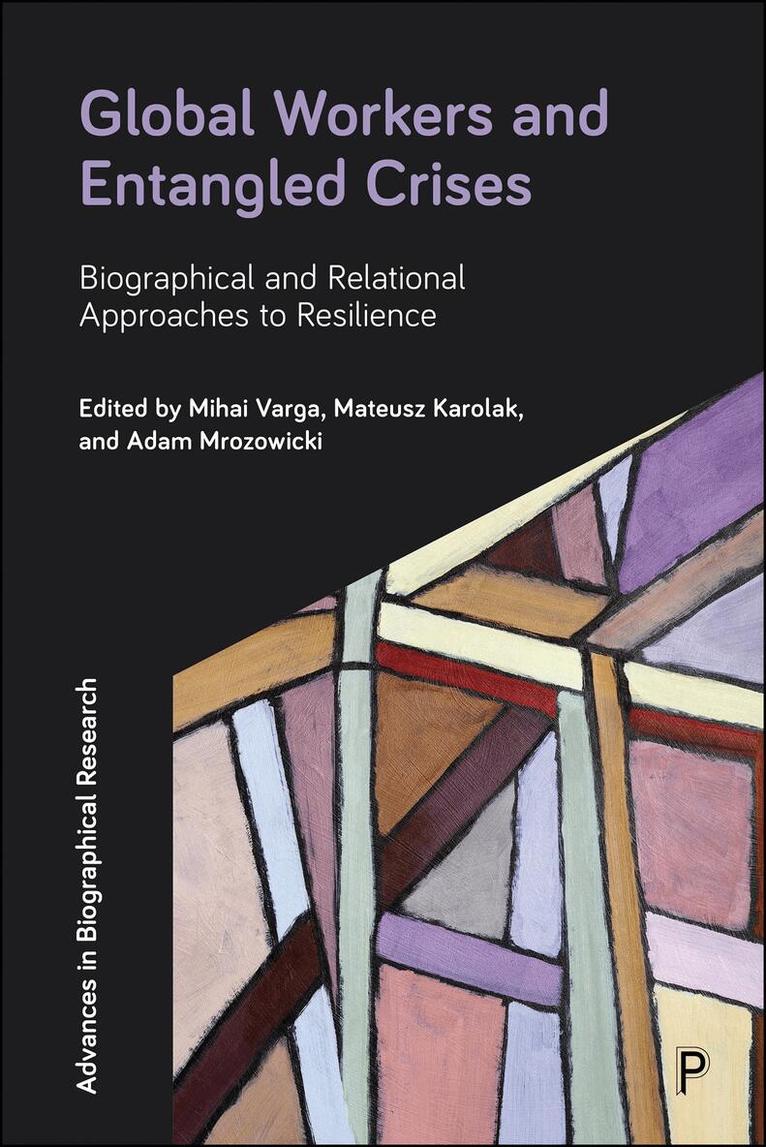
Global Workers and Entangled Crises
Biographical and Relational Approaches to Resilience
Av Mihai Varga, Mateusz Karolak m. fl.
Häftad, 2026
425 kr
Lägg i varukorg
Available open access digitally under CC-BY-NC-ND licence.The early 2020s brought a torrent of disruptions – COVID-19, war-amplified inflation and migration blockages – that reshaped global labour in uneven and deeply unequal ways. Across the Global North and South, vulnerable workers faced …
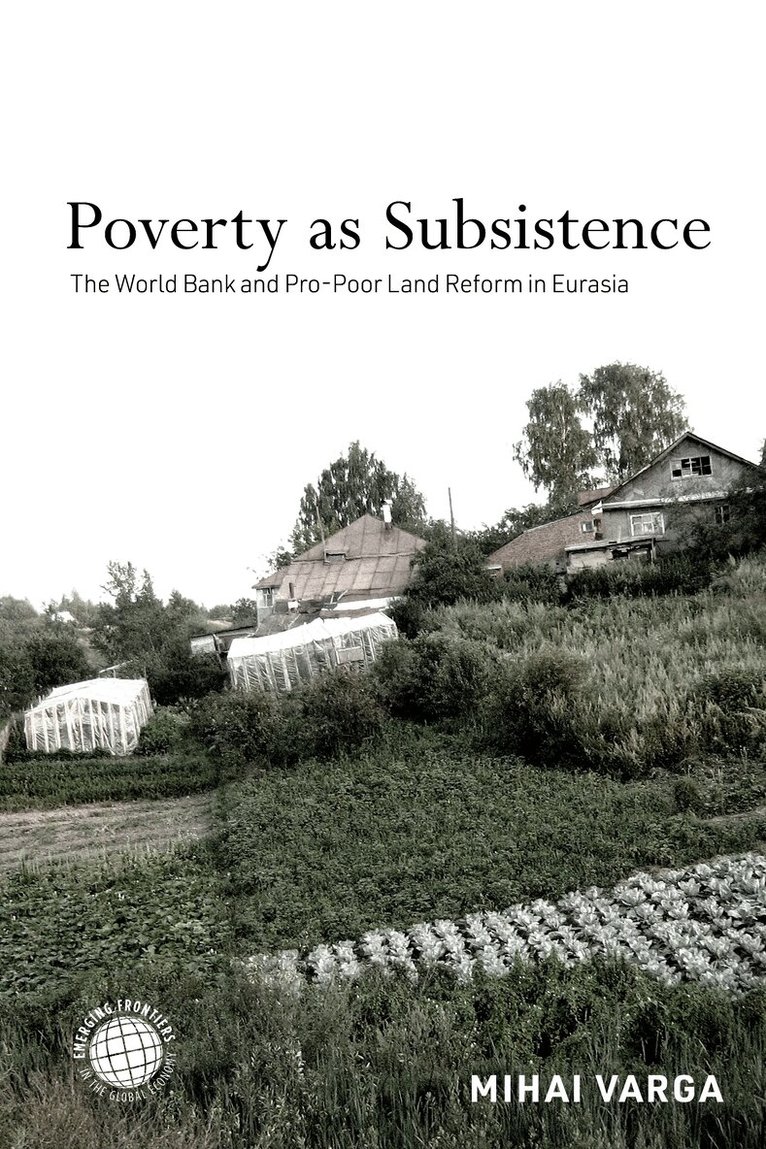
Poverty As Subsistence
The World Bank and Pro-Poor Land Reform in Eurasia
Av Mihai Varga
Inbunden, 2023
788 kr
Lägg i varukorg
Poverty as Subsistence explores the "propertizing" land reform policy that the World Bank advocated throughout the transitioning countries of Eurasia, expecting poverty reduction to result from distributing property titles over agricultural land to local (rural) populations. China's early 1980s …
Poverty as Subsistence
The World Bank and Pro-Poor Land Reform in Eurasia
Av Mihai Varga
E-bok, 2023
901 kr
Lägg i varukorg
Poverty as Subsistence explores the "propertizing" land reform policy that the World Bank advocated throughout the transitioning countries of Eurasia, expecting poverty reduction to result from distributing property titles over agricultural land to local (rural) populations. China''s early 1980s …