• Fri frakt över 249 kr
  • •
  • Snabba leveranser
  • •
  • Billiga böcker
Kundservice

Du är på sajten för privatpersoner.

Företag, bibliotek eller offentlig verksamhet?

Du handlar på classic.bokus.com, där alla dina funktioner finns intakta.
Till classic.bokus.com
Bokus logotyp. Gå till startsidan.
  • Erbjudanden
  • Nyheter
  • Student
  • Topplistor
  • Barn & ungdom
  • Bokus Play
  • E-böcker
  • Pocketböcker
  • Spel & pussel

Må bättre, för mindre! Upp till 50% rabatt på hälsoböcker

Sidfot

Mina sidor

    Hjälp

    • Kundservice
    • Vanliga frågor och svar
    • Frakt och leverans
    • Retur vid ångerrätt
    • Reklamera vara
    • Betalning
    • Köpvillkor
    • Allmänna villkor
    • Information om webbplatsens tillgänglighet

    Om Bokus

    • Om oss
    • Pressrum
    • För studenter
    • För företag
    • För bibliotek och offentlig verksamhet
    • För leverantörer
    • Hållbarhet

    Populärt

    • Aktuella erbjudanden
    • Presentkort
    • Studentlitteratur
    • Nya böcker
    • Topplistor
    • Signerade böcker
    • Engelska böcker

    Inspiration

    • Boktips
    • BookTok
    • Populära bokserier
    • Barnbokskaraktärer
    • Populära författare
    Logotyp för Bokus
    Följ oss på Facebook (extern länk)Följ oss på Instagram (extern länk)Följ oss på YouTube (extern länk)Följ oss på TikTok (extern länk)
    bokus @ CookiesAnpassa cookiesIntegritetspolicyKöpvillkor
    Till Citymail hemsida (extern länk)Till Budbee hemsida (extern länk)Till Postnord hemsida (extern länk)Till Schenker hemsida (extern länk)Till Early Bird hemsida (extern länk)Till Walleys hemsida (extern länk)
    1. Samhälle och politik
    2. Politik och statsskick
    3. Politiska ideologier och rörelser
    4. Konservatism och högerideologier

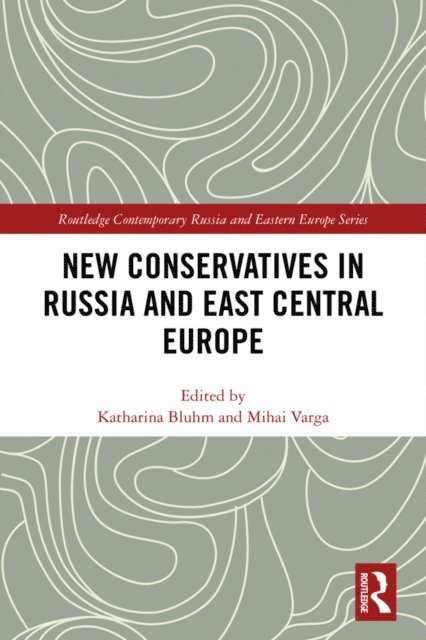
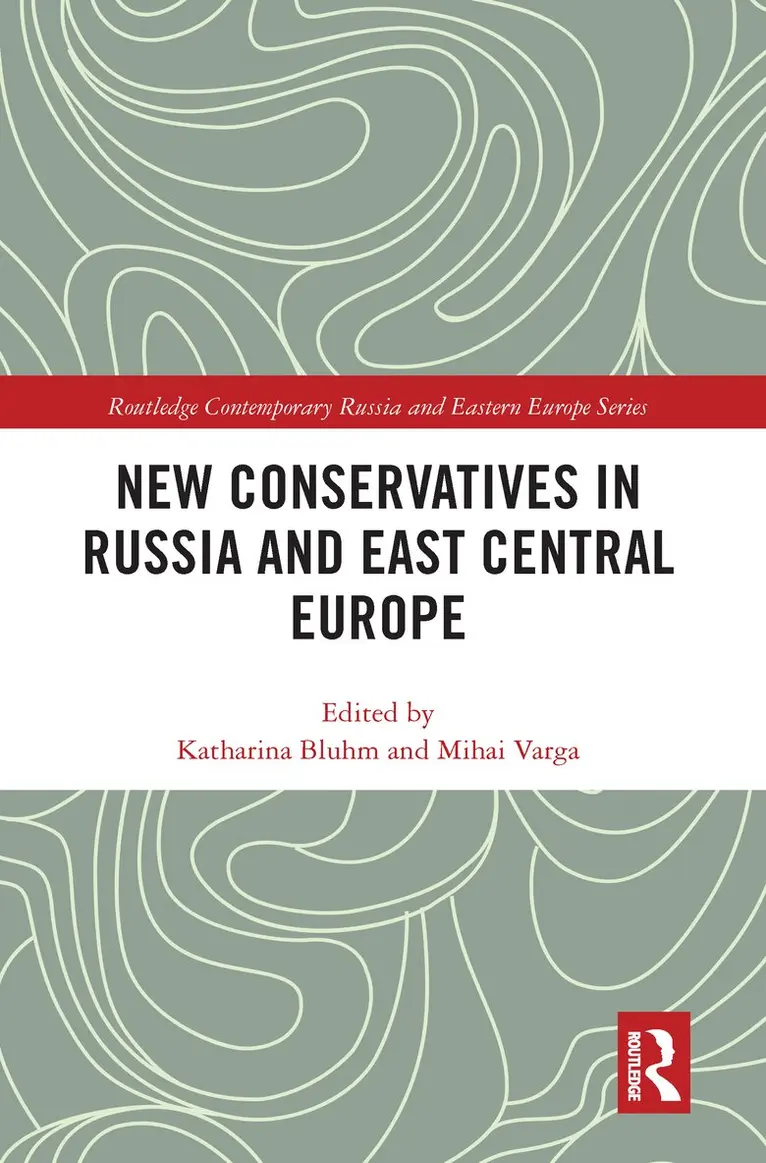
    New Conservatives in Russia and East Central Europe

    AvKatharina Bluhm,Mihai Varga

    Inbunden, Engelska, 2018

    Del i serien Routledge Contemporary Russia and Eastern Europe Series

    2 421 kr

    Beställningsvara. Skickas inom 10-15 vardagar. Fri frakt över 249 kr.

    Beskrivning

    This book explores the emergence, and in Poland, Hungary, and Russia the coming to power, of politicians and political parties rejecting the consensus around market reforms, democratization, and rule of law that has characterized moves toward an "open society" from the 1990s. It discusses how over the last decade these political actors, together with various think tanks, intellectual circles, and religious actors, have increasingly presented themselves as "conservatives," and outlines how these actors are developing a new local brand of conservatism as a full-fledged ideology that counters the perceived liberal overemphasis on individual rights and freedom, and differs from the ideology of the established, present-day conservative parties of Western Europe. Overall, the book argues that the "renaissance of conservatism" in these countries represents variations on a new, illiberal conservatism that aims to re-establish a strong state sovereignty defining and pursuing a national path of development.

    Produktinformation

    • Utgivningsdatum:2018-08-23
    • Mått:156 x 234 x 24 mm
    • Vikt:589 g
    • Format:Inbunden
    • Språk:Engelska
    • Serie:Routledge Contemporary Russia and Eastern Europe Series
    • Antal sidor:312
    • Förlag:Taylor & Francis Ltd
    • ISBN:9781138496866

    Utforska kategorier

    • Konservatism och högerideologier inom Samhälle och politik

    Mer om författaren

    Katharina Bluhm is Professor of Sociology at the Freie Universität, Berlin.Mihai Varga is Senior Researcher and Lecturer at the Institute for East European Studies at the Freie Universität, Berlin.

    Recensioner i media

    New Conservatives is a highly important collection which offers far more than a standard set of well-researched case studies. Its original reframing of illiberal trends in post-Communist Europe as a new conservative challenge, and stress on reflexive actors rooted in the evolving civil and political societies of the region goes a long way to filling the widening gaps in current explanations that have been over-focused on party politics and over-reliant on generic models of a populist surge brought about by economic shocks and flagging Europeanization. - Seán Hanley, UCL School of Slavonic and East European Studies, London in The Slavonic and East European ReviewThis excellent study […] focuses on three cases which are rarely combined, i.e. Russia, Poland and Hungary. Comparing them not only allows us to spot their differences and similarities (vide: the great conclusion chapter by the editors) but also enables a deeper understanding of conservatism in the realities of the post-communist East Central Europe. - Alicja Curanović, University of Warsaw in TRAFO – Blog for Transregional ResearchOver the past decade European democratic regimes have begun to take on the features of non-democracies by using legal restrictions on protest and constitutional amendments, refusing to register political parties and restricting referendums. This book focuses on how policymakers responsible for these changes self-legitimize and legitimize political decisions, which makes it a timely, interesting and relevant contribution to studies on illiberal democracies and contemporary political theory. - Joanna Rak, Adam Mickiewicz University, Poznań in JCMS - Journal of Common Market Studies

    Innehållsförteckning

    • 1 Introduction: toward a new illiberal conservatism in Russia and East Central EuropeKatharina Bluhm and Mihai VargaPart I. Genealogies2 Russia’s conservative counter-movement: genesis, actors, and core conceptsKatharina Bluhm3 The universal and the particular in Russian conservatismPaul Robinson4 Against "post-communism": the conservative dawn in HungaryAron Buzogány and Mihai Varga 5 New conservatism in Poland: the discourse coalition around Law and JusticeEwa Dąbrowska6 The national conservative parties in Poland and Hungary and their core supporters compared: values and socio-structural backgroundJochen Roose and Ireneusz Pawel Karolewski7 "Conservative modernization" and the rise of Law and Justice in PolandKrzysztof JasieckiPart II. Translations8 The limits of conservative influence on economic policy in Russia Irina Busygina and Mikhail Filippov 9 The "Budapest–Warsaw Express": conservatism and the diffusion of economic policies in Poland and Hungary Ewa Dąbrowska, Aron Buzogány, and Mihai Varga 10 Gender in the resurgent Polish conservatismAgnieszka Wierzcholska11 "Traditional values" unleashed: the ultraconservative influence on Russian family policy Katharina Bluhm and Martin Brand12 Religious conservatism in post-Soviet Russia and its relation to politics: empirical findings from ethnographic fieldworkTobias Köllner13 Ready for diffusion? Russia’s "cultural turn" and the post-Soviet spaceSebastian Schiek and Azam Isabaev14 The emergence and propagation of new conservatism in post-communist countries: systematization and outlookKatharina Bluhm and Mihai Varga