• Fri frakt över 249 kr
  • •
  • Snabba leveranser
  • •
  • Billiga böcker
Kundservice

Du är på sajten för privatpersoner.

Företag, bibliotek eller offentlig verksamhet?

Du handlar på classic.bokus.com, där alla dina funktioner finns intakta.
Till classic.bokus.com
Bokus logotyp. Gå till startsidan.
  • Erbjudanden
  • Nyheter
  • Student
  • Topplistor
  • Barn & ungdom
  • Bokus Play
  • E-böcker
  • Pocketböcker
  • Spel & pussel

10% rabatt på allt med kod NYSTART10 →

Sidfot

Mina sidor

    Hjälp

    • Kundservice
    • Vanliga frågor och svar
    • Frakt och leverans
    • Retur vid ångerrätt
    • Reklamera vara
    • Betalning
    • Köpvillkor
    • Allmänna villkor
    • Information om webbplatsens tillgänglighet

    Om Bokus

    • Om oss
    • Pressrum
    • För studenter
    • För företag
    • För bibliotek och offentlig verksamhet
    • För leverantörer
    • Hållbarhet

    Populärt

    • Aktuella erbjudanden
    • Presentkort
    • Studentlitteratur
    • Nya böcker
    • Topplistor
    • Signerade böcker
    • Engelska böcker

    Inspiration

    • Boktips
    • BookTok
    • Populära bokserier
    • Barnbokskaraktärer
    • Populära författare
    Logotyp för Bokus
    Följ oss på Facebook (extern länk)Följ oss på Instagram (extern länk)Följ oss på YouTube (extern länk)Följ oss på TikTok (extern länk)
    bokus @ CookiesAnpassa cookiesIntegritetspolicyKöpvillkor
    Till Citymail hemsida (extern länk)Till Budbee hemsida (extern länk)Till Postnord hemsida (extern länk)Till Schenker hemsida (extern länk)Till Early Bird hemsida (extern länk)Till Walleys hemsida (extern länk)
    1. Samhälle och politik
    2. Samhälle och kultur
    3. Kultur och medier
    4. Referensverk och tvärvetenskap

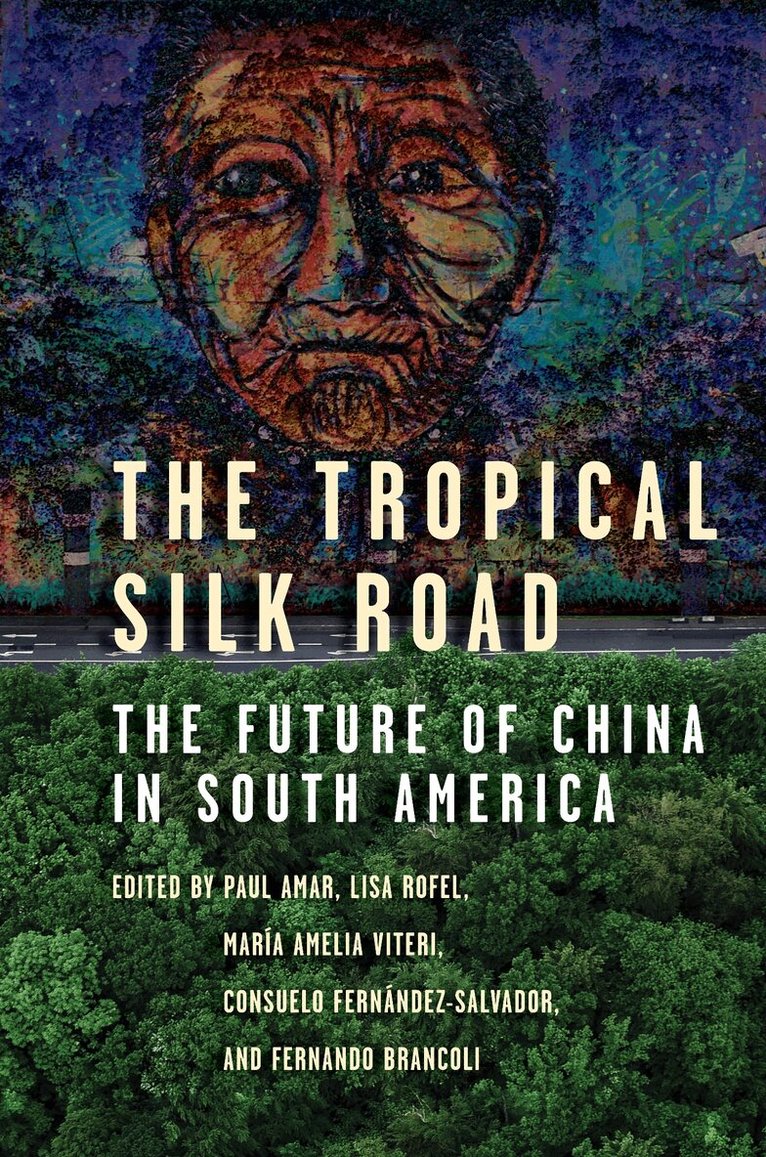
    Tropical Silk Road

    The Future of China in South America

    AvPaul Amar,Lisa Rofel

    E-bok
    Engelska, 2022

    537 kr

    Läs direkt i Bokus Reader – eller ladda ned till din enhet

    Beskrivning

    This book captures an epochal juncture of two of the world's most transformative processes: the People's Republic of China's rapidly expanding sphere of influence across the global south and the disintegration of the Amazonian, Cerrado, and Andean biomes. The intersection of these two processes took another step in April 2020, when Chinese President Xi Jinping launched a "New Health Silk Road" agenda of aid and investment that would wind through South America, extending the Eurasian-African "Belt and Road Initiative" to a series of mine, port, energy, infrastructure, and agrobusiness megaprojects in the Latin American tropics.Through thirty short essays, this volume brings together an impressive array of contributors, from economists, anthropologists, and political scientists to Black, feminist, and Indigenous community organizers, Chinese stakeholders, environmental activists, and local journalists to offer a pathbreaking analysis of China's presence in South America. As cracks in the progressive legacy of the Pink Tide and the failures of ecocidal right-wing populisms shape new political economies and geopolitical possibilities, this book provides a grassroots-based account of a post-US centered world order, and an accompanying map of the stakes for South America that highlights emerging voices and forms of resistance.

    Produktinformation

    • Utgivningsdatum:2022-11-29
    • Språk:Engelska
    • Antal sidor:472
    • Filformat:EPUB
    • Kopieringsskydd:LCP
    • ISBN:9781503633810
    • Förlag:Stanford University Press

    Utforska kategorier

    • Referensverk och tvärvetenskap inom Samhälle och politik
    • Internationell ekonomi inom Ekonomi och Ledarskap
    • Geografi inom Naturvetenskap och teknik

    Mer om författaren

    Paul Amar is Professor of Global Studies and Director of the Orfalea Center for Global and International Studies at the University of California, Santa Barbara. Lisa Rofel is Professor Emerita of Anthropology at the University of California, Santa Cruz. Maria Amelia Viteri is Professor of Anthropology at Universidad San Francisco de Quito (USFQ).Consuelo Fernández-Salvador is Associate Professor of Anthropology, Universidad San Francisco de Quito (USFQ).Fernando Brancoli is Adjunct Professor of International Security and Geopolitics at the Institute of International Relations and Defense at the Federal University of Rio de Janeiro (IRID-UFRJ).

    Recensioner i media

    "A result of deep and probing research, The Tropical Silk Road offers new critical writings, field observations, and ideas that situate the fate of Amazonian societies in the wake of China's bid for global prominence. The diverse array of experts in fine-tuned conversation with one another makes this a truly remarkable and exciting collection."—Long Bui, University of California, Irvine "The Tropical Silk Road is both an impressively ambitious and readable volume. An international cavalcade of authors examines contemporary China's outreach into Latin America, offering an engaging balance of thoughtful, interdisciplinary perspectives with considerable heft."—Carlos Rojas, Duke University "[Tropical Silk Road] is as ambitious as it is eclectic, and its contributors bring a range of valuable insights to bear on some of the most important political and economic developments facing the region."—Matthew Abel, NACLA Report on the Americas

    Innehållsförteckning

    • AcknowledgmentsIntroduction: China Stepping Out, the Amazon Biome,and South American Populism-Paul Amar, Lisa Rofel, María Amelia Viteri,Consuelo Fernández-Salvador, and Fernando BrancoliPart 1: Global Asia, New Imaginaries, and Media Visibilities1.1. China's State and Social Media Narratives about Brazil during the COVID-19 Pandemic-Li Zhang1.2. Cracks in the Coca Codo Sinclair Hydroelectric Project: Infrastructures and Disaster from a Masculine Vision of Development-Pedro Gutiérrez Guevara, Sofía Carpio, and Mayra Flores1.3. Brazil and China's "Inevitable Marriage"? Post-Bolsonaro Futures and Beijing's Shift from North America to South America-Zhou Zhiwei1.4. The China-Ecuador Relationship: From Correa's Neodevelopmentalist "Reformism" to Moreno's "Postreformism" during China's Credit Crunch (2006–2021)-Milton Reyes Herrera1.5. China Studies in Brazil: Leste Vermelho and Innovations in South-South Academic Partnership-Andrea Piazzaroli Longobardi1.6. Chinese Financing and Direct Foreign Investment in Ecuador: An Interests and Benefits Perspective on Relations between States through the Lens of the Win-Win Principle-David Mosquera NarváezPart 2: Indigenous Epistemologies and Maroon Modernities2.1. An Indigenous Theory of Risk: The Cosmopolitan Munduruku Analyze Chinese Megaprojects at Tapajós–Teles Pires-Luísa Pontes Molina and Alessandra Korap Silva Munduruku2.2. Challenges for the Shuar in the Face of Globalization and Extractivism: Reflections from the Shuar Federation of Zamora Chinchipe-Jefferson Pullaguari2.3. "Yes, We Do Know Why We Protest": Indigenous Challenges to Extractivism in Ecuador, Looking Beyond the National Strike of October 2019-Julia Correa, Israel Chumapi, Paúl Ghaitai Males, Jennifer Yajaira Masaquiza, Rina Pakari Marcillo, and David MenachoPart 3: Grassroots Perspectives on the Fragmentation of BRICS3.1. From Elusiveness to Ideological Extravaganza: Gender and Sexuality in Brazil-China Relations-Cai Yiping and Sonia Correa3.2. The Refraction of Chinese Capital in Amazonian Entrepôts and the Infrastructure of a Global Sacrifice Zone-Gustavo Oliveira3.3. "The Bank We Want": Chinese and Brazilian Activism around and within the BRICS New Development Bank-Laura Trajber Waisbich3.4. Río Blanco: The Big Stumbling Block to the Advancement of China's Mining Interests in Ecuador-The Yasunidos Guapondélig Collective3.5. Protectionism for Business, Precarization for Labor: China's Investment-Protection Treaties and Community Struggles in the Latin American and Caribbean Region-Ana Saggioro Garcia and Rodrigo Curty PereiraPart 4: Logistics Regimes and Mining4.1. A Mine, a Dam, and the Chinese-Ecuadorian Politics of Knowledge-Karolien van Teijlingen and Juan Pablo Hidalgo Bastidas4.2. Rafael Correa's Administration of Promises and the Impact of Its Policies on the Human Rights of Indigenous Groups-Emilia Bonilla4.3. China Oil and Foodstuffs Corporation in the Tapajós River "Logistics Corridor": A Case Study of Socioenvironmental Transformation in Brazil's Northeast-Alana Camoça and Bruno Hendler4.4. Deforestation, Enclosures, and Militias: The Logistics "Revolution" in the Port of Cajueiro, Maranhão-Sabrina Felipe and Lucilene Raimunda CostaPart 5: Hydroelectrics and Railroads5.1. Hungry and Backward Waters: Events, Actors, and Challenges Surrounding the Coca Codo Sinclair Hydroelectric Project in Times of COVID-19-Sigrid Vásconez D.5.2. Electrification of Forest Biomes: Xingu-Rio Lines, Chinese Presence, and the Sociotechnological Impact of the Belo Monte Hydroelectric Dam-Laís Forti Thomaz, Aline Regina Alves Martins, and Diego Trindade d'Ávila Magalhães5.3. Vanity Projects, Waterfall Implosions, and the Local Impacts of Megaproject Partnerships-Consuelo Fernández-Salvador and María Amelia Viteri5.4. "Yes We Do Exist": Ferrogrão Railway, Indigenous Voices in the Trail of Trade Corridors, and Building the Axis of "Brazilian Pragmatist Policy" toward China-Diana Aguiar5.5. Green Marketing Extractivism in the Amazon: Imaginaries of the Ministry versus Realities of the Land-Maria Elena RodríguezPart 6: Race, Class, and Urban Geographies6.1. Steel Industry's Legacies on the Outskirts of Rio de Janeiro and White Brazilian Capital-State Alliances: A Feminist Approach-Ana Luisa Queiroz, Marina Praça, and Yasmin Bitencourt6.2. Rio de Janeiro's Unruly Carbon Periphery: Community Entrepreneurs, Chinese Investors, and the Reappropriation of the Ruins of the COMPERJ Oil Port-and-Pipeline Megaproject-Fernando Brancoli and Wander Guerra6.3. From Cheap Credit to Rapid Frustration: Real Estate in Rio de Janeiro-Pedro Henrique Vasques6.4. The China-Ecuador Economic Relationship's Impact on Unemployment during the Administration of President Moreno-David F. Delgado del HierroPart 7: Hybridity of Transnational Labor7.1. Savage Factories of the Manaus Free Trade Zone: Chinese Investments in the Amazon and Social Impacts on Workers-Cleiton Ferreira Maciel Brito7.2. National Development Priorities and Transnational Workplace Inequalities: Challenges for China's State-Sponsored Construction Projects in Ecuador-Rui Jie Peng7.3. Rio's Phantom Dubai?: Porto do Açu, Chinese Investments, and the Geopolitical Specter of Brazilian Mineral Booms-Marcos A. Pedlowski