• Fri frakt över 249 kr
  • •
  • Snabba leveranser
  • •
  • Billiga böcker
Kundservice

Du är på sajten för privatpersoner.

Företag, bibliotek eller offentlig verksamhet?

Du handlar på classic.bokus.com, där alla dina funktioner finns intakta.
Till classic.bokus.com
Bokus logotyp. Gå till startsidan.
  • Erbjudanden
  • Student
  • Topplistor
  • Barn & ungdom
  • Bokus Play
  • E-böcker
  • Ljudböcker
  • Pocketböcker
  • Spel & pussel

Upp till 25% på utvalda nyheter →

Sidfot

Mina sidor

    Hjälp

    • Kundservice
    • Vanliga frågor och svar
    • Frakt och leverans
    • Retur vid ångerrätt
    • Reklamera vara
    • Betalning
    • Köpvillkor
    • Allmänna villkor
    • Information om webbplatsens tillgänglighet

    Om Bokus

    • Om oss
    • Pressrum
    • För studenter
    • För företag
    • För bibliotek och offentlig verksamhet
    • För leverantörer
    • Hållbarhet

    Populärt

    • Aktuella erbjudanden
    • Presentkort
    • Studentlitteratur
    • Nya böcker
    • Topplistor
    • Signerade böcker
    • Engelska böcker

    Inspiration

    • Boktips
    • BookTok
    • Populära bokserier
    • Barnbokskaraktärer
    • Populära författare
    Logotyp för Bokus
    Följ oss på Facebook (extern länk)Följ oss på Instagram (extern länk)Följ oss på YouTube (extern länk)Följ oss på TikTok (extern länk)
    bokus @ CookiesAnpassa cookiesIntegritetspolicyKöpvillkor
    Till Citymail hemsida (extern länk)Till Budbee hemsida (extern länk)Till Postnord hemsida (extern länk)Till Schenker hemsida (extern länk)Till Early Bird hemsida (extern länk)Till Walleys hemsida (extern länk)
    1. Historia och arkeologi
    2. Historia
    3. Historia: särskilda händelser och ämnen
    4. Socialhistoria och kulturhistoria

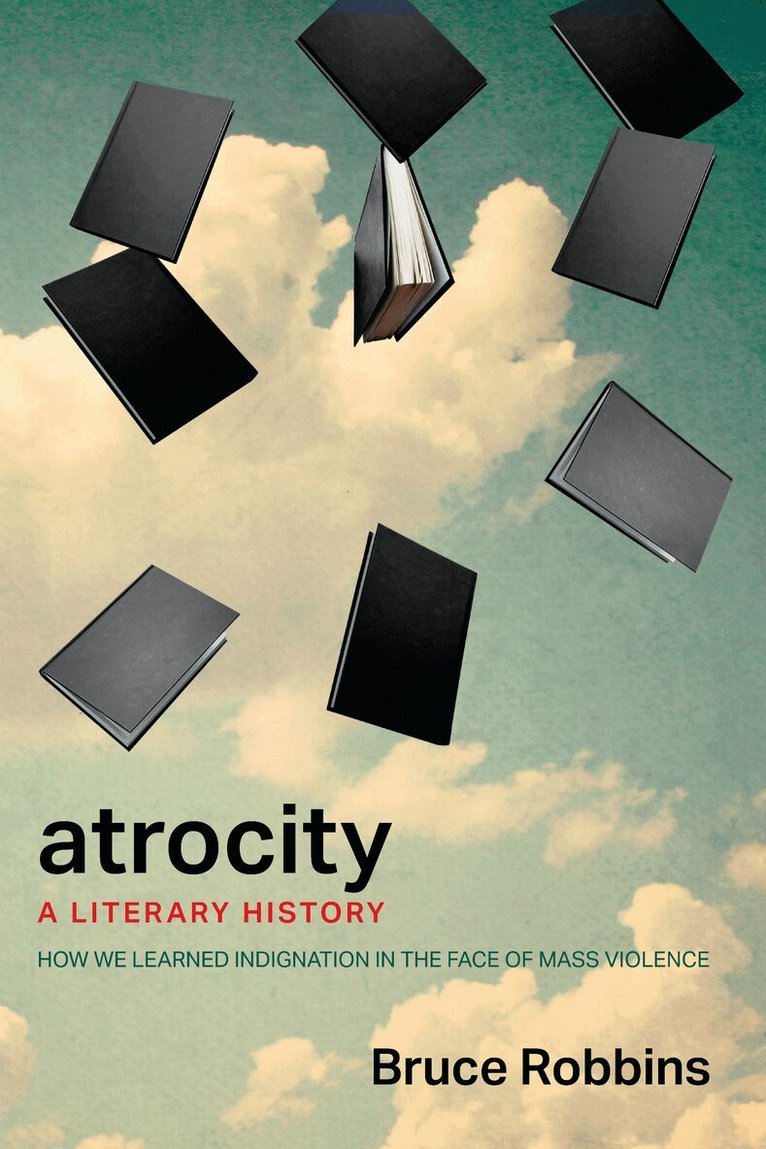
    Atrocity

    A Literary History

    AvBruce Robbins

    Inbunden, Engelska, 2025

    364 kr

    Beställningsvara. Skickas inom 3-6 vardagar. Fri frakt över 249 kr.

    Fler format och utgåvor

    E-bok

    415 kr

    Beskrivning

    Exploring literary representations of mass violence, Bruce Robbins traces the emergence of a cosmopolitan recognition of atrocity. Mass violence did not always have a name. Like conquest, what we think of now as atrocities have not always invited indignation or been seen to violate moral norms. Venturing from the Bible to Zadie Smith, Robbins explores the literature of suffering, to show how, over time, abhorrence of mass violence takes shape. With it comes the emergence of a necessary element of cosmopolitanism: the ability to look at one's own nation with the critical eyes of a stranger.Drawing on a vast written archive and with penetrating insight, Robbins takes up such literary representations of violence as Bartolomé de las Casas's account of his fellow Spaniards' atrocities, Kurt Vonnegut's Slaughterhouse-Five, Grimmelshausen's 1668 novel Simplicissimus, David Mitchell's Cloud Atlas, Gabriel García Márquez's One Hundred Years of Solitude, Homero Aridjis's short novel Smyrna in Flames, and Tolstoy's Hadji Murat. These essential texts do more than simply testify to atrocious acts. In their literariness, they take the risk of contextualizing and relativizing, thereby extending beyond the legal paradigm of accusation. They recognize atrocity as a moral scandal about which something should be done and can be done, while they also place that scandal within a larger and more uncertain history.

    Produktinformation

    • Utgivningsdatum:2025-02-04
    • Mått:152 x 229 x 24 mm
    • Vikt:542 g
    • Format:Inbunden
    • Språk:Engelska
    • Antal sidor:294
    • Förlag:Stanford University Press
    • ISBN:9781503640559

    Utforska kategorier

    • Socialhistoria och kulturhistoria inom Historia och arkeologi

    Mer om författaren

    Bruce Robbins is Old Dominion Foundation Professor in the Humanities at Columbia University. He has authored several books, among them Criticism and Politics: A Polemical Introduction (Stanford, 2022).

    Recensioner i media

    "Combining a creatively skeptical critical intelligence and an undercurrent of mordant irony, Atrocity is a superb literary and stylistic achievement. Anyone allergic to moral obviousness will find it as impossible to stop reading as I did."—Laura Kipnis, author of Love in the Time of Contagion: A Diagnosis "Robbins' brilliant, sweeping Atrocity seeks to release us from the 'indignation-free zone' into which atrocities normally fall. A counterintuitive reading of current discourses on violence."—Bonnie Honig, author of A Feminist Theory of Refusal "A probing study of the moral imagination, written with the erudite informality—and the ethical commitment—that we have come to expect from Bruce Robbins, one of our leading critics on the left." —Adam Shatz, author of The Rebel's Clinic: The Revolutionary Lives of Frantz Fanon "Robbins's affirmative genealogy of cosmopolitan human rights documents the making of moral expectations that deserve to be met in a persistently violent world."—Samuel Moyn, author of Humane: How the United States Abandoned Peace and Reinvented War "This book carries readers along with clarity, wit, and undogmatic moral seriousness."–Christian Thorne, author of The Dialectic of Counter-Enlightenment "Robbins makes a humane and exhilarating case for the critical consciousness of atrocity. This is an essential, unsparing and often searing exploration of representations of violence that locates narratives of atrocity at the ethical heart of the humanities."–Patrick Deer, author of Culture in Camouflage: War, Empire, and Modern British Literature

    Innehållsförteckning

    • PrefaceIntroduction1. Violence Was Like the Weather2. Plunder: Historicizing Atrocity3. Self-Scrutiny in the Era of High Imperialism4. Contextualizing and Decontextualizing in the Twentieth Century5. Confusions of Self-Indictment6. Strategy from BelowEpilogueAcknowledgmentsNotesIndex