• Fri frakt över 249 kr
  • •
  • Snabba leveranser
  • •
  • Billiga böcker
Kundservice

Du är på sajten för privatpersoner.

Företag, bibliotek eller offentlig verksamhet?

Du handlar på classic.bokus.com, där alla dina funktioner finns intakta.
Till classic.bokus.com
Bokus logotyp. Gå till startsidan.
  • Erbjudanden
  • Nyheter
  • Student
  • Topplistor
  • Barn & ungdom
  • Bokus Play
  • E-böcker
  • Pocketböcker
  • Spel & pussel

Må bättre, för mindre! Upp till 50% rabatt på hälsoböcker

Sidfot

Mina sidor

    Hjälp

    • Kundservice
    • Vanliga frågor och svar
    • Frakt och leverans
    • Retur vid ångerrätt
    • Reklamera vara
    • Betalning
    • Köpvillkor
    • Allmänna villkor
    • Information om webbplatsens tillgänglighet

    Om Bokus

    • Om oss
    • Pressrum
    • För studenter
    • För företag
    • För bibliotek och offentlig verksamhet
    • För leverantörer
    • Hållbarhet

    Populärt

    • Aktuella erbjudanden
    • Presentkort
    • Studentlitteratur
    • Nya böcker
    • Topplistor
    • Signerade böcker
    • Engelska böcker

    Inspiration

    • Boktips
    • BookTok
    • Populära bokserier
    • Barnbokskaraktärer
    • Populära författare
    Logotyp för Bokus
    Följ oss på Facebook (extern länk)Följ oss på Instagram (extern länk)Följ oss på YouTube (extern länk)Följ oss på TikTok (extern länk)
    bokus @ CookiesAnpassa cookiesIntegritetspolicyKöpvillkor
    Till Citymail hemsida (extern länk)Till Budbee hemsida (extern länk)Till Postnord hemsida (extern länk)Till Schenker hemsida (extern länk)Till Early Bird hemsida (extern länk)Till Walleys hemsida (extern länk)
    1. Samhälle och politik
    2. Samhälle och kultur
    3. Sociala grupper och identitet

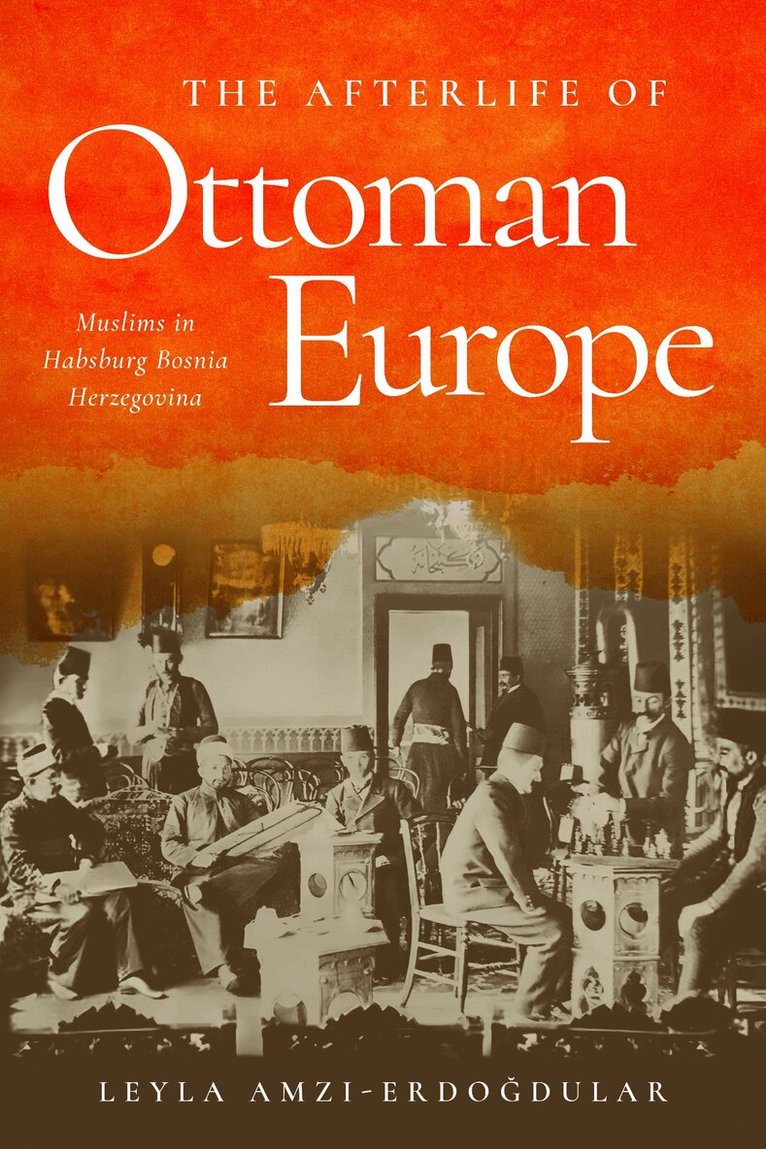
    Afterlife of Ottoman Europe

    Muslims in Habsburg Bosnia Herzegovina

    AvLeyla Amzi-Erdogdular

    Häftad, Engelska, 2026

    Del i serien Stanford Studies on Central and Eastern Europe

    364 kr

    Skickas . Fri frakt över 249 kr.

    Fler format och utgåvor

    Inbunden

    853 kr

    E-bok

    450 kr

    Beskrivning

    The Afterlife of Ottoman Europe examines how Bosnian Muslims navigated the Ottoman and Habsburg domains following the Habsburg occupation of Bosnia Herzegovina after the 1878 Berlin Congress. Prominent members of the Ottoman imperial polity, Bosnian Muslims became minority subjects of Austria-Hungary, developing a relationship with the new authorities in Vienna while transforming their interactions with Istanbul and the rest of the Muslim world. Leyla Amzi-Erdoğdular explores the enduring influence of the Ottoman Empire during this period—an influence perpetuated by the efforts of the imperial state from afar, and by its former subjects in Bosnia Herzegovina negotiating their new geopolitical reality. Muslims' endeavors to maintain their prominence and shape their organizations and institutions influenced imperial considerations and policies on occupation, sovereignty, minorities, and migration.This book introduces Ottoman archival sources and draws on Ottoman and Eastern European historiographies to reframe the study of Habsburg Bosnia Herzegovina within broader intellectual and political trends at the turn of the twentieth century. Tracing transregional connections, imperial continuities, and multilayered allegiances, The Afterlife of Ottoman Europe bridges Ottoman, Islamic, Middle Eastern, and Balkan studies. Amzi-Erdoğdular tells the story of Muslims who redefined their place and influence in both empires and the modern world, and argues for the inclusion of Islamic intellectual history within the history of Bosnia Herzegovina and Eastern Europe.

    Produktinformation

    • Utgivningsdatum:2026-03-03
    • Mått:152 x 229 x 21 mm
    • Vikt:512 g
    • Format:Häftad
    • Språk:Engelska
    • Serie:Stanford Studies on Central and Eastern Europe
    • Antal sidor:332
    • Förlag:Stanford University Press
    • ISBN:9781503645899

    Utforska kategorier

    • Sociala grupper och identitet inom Samhälle och politik
    • Europas historia inom Historia och arkeologi
    • Mellanösterns historia inom Historia och arkeologi

    Mer om författaren

    Leyla Amzi-Erdogdular is Associate Professor in the Department of History at Rutgers University–Newark.

    Recensioner i media

    "Crossing over multiple intellectual networks and travel routes, Leyla Amzi-Erdogdular opens an expansive view of the emerging debates between the late Ottoman and Habsburg empires. Taking us through Sarajevo, Istanbul, Vienna, and many surprising stops along the way, her outstanding analysis contributes insights about overlapping allegiances and transimperial notions of sovereignty that will resonate with scholars well beyond Balkan history." - Edin Hajdarpasic, Loyola University Chicago"Never before has a study of the Habsburg period in Bosnia Herzegovina placed Bosnian Muslim agency and loyalties to both the Habsburg and Ottoman empires at the center of its analysis. Centering Ottoman sources, this pathbreaking work shows that Bosnia did not 'stop being Ottoman' in 1878. Under Habsburg rule, Bosnian Muslims continued to appeal to Ottoman authority and developed a form of Muslim modernity that outlasted both empires." - Maureen Healy, Lewis & Clark College"Few works have been able to scrutinize empire's influence on the modern world with the rigor, focus and brilliance displayed in this remarkable monograph. Offering a thoroughly researched case study of the afterlife of Ottoman Bosnia, it provides a model for how to think about the lasting effects of the old empires and will prove indispensable not only to historians of the Balkans, but to anyone interested in modern Europe and its relationship to the world around it." - Mark Mazower, Columbia University"Rather than rely solely on Slavic and other European sources as previous studies on this topic have, this volume incorporates Ottoman materials that provide valuable insights into how Muslims navigated their Ottoman and Habsburg loyalties and their participation in transimperial Islamic networks.... This is a valuable contribution to the study of post-Ottoman Muslims. Highly recommended." - R. W. Zens, CHOICE"By placing Bosnian Muslims at the center of historical analysis, [The Afterlife of Ottoman Europe] breaks new ground in the study of empires and the place of the Balkans in Islamic history." - Lâle Can, H-Diplo"Amzi-Erdogdular's methodological innovation is found in her novel use of heretofore overlooked Ottoman sources, wanting to show the mechanisms developed by the Ottoman Empire to continue to leave its imprint on the life of Bosnian Muslims. The author utilizes a wide range of historiographical findings and published sources in various languages; she pays special attention to professional terminology and meticulously analyzes and interprets her sources. The result is a thorough, well-conceptualized, and well-written study." - Amila Kasumović, Austiran History Yearbook"Using Bosnian local archives and Ottoman imperial sources, Leyla Amzi-Erdoğdular's new book, The Afterlife of Ottoman Europe: Muslims in Habsburg Bosnia Herzegovina, bridges the gaps between multiple fields. It moves beyond lasting dichotomies in historiography to recount a new history of the region and its Muslims at the intersection of two empires." - Uğur Zekeriya Peçe, Journal of the Ottoman and Turkish Studies Association"The Afterlife of Ottoman Europe is both an important rethinking of Bosnian history as well as significant contribution to our understanding of the crises of the late Ottoman Empire." - Jared Manasek, American Historical Review"The detail about individuals is perhaps the strongest part of the book. The author has also demonstrated an ability to frame the narrative from several geographical angles simultaneously and in doing so has constructed a genuinely transnational history." - Cathie Carmichael, Journal of Modern History

    Innehållsförteckning

    • Introduction1. Diplomacies of Separation2. Migration: Those Who Left3. Hijra: Views and Debates on Migration4. Competing Empires5. Negotiating Imperial Ties: Mobilization and Politics6. Allegiances and Final SeparationEpilogue: Alternative Muslim Modernities