• Fri frakt över 249 kr
  • •
  • Snabba leveranser
  • •
  • Billiga böcker
Kundservice

Du är på sajten för privatpersoner.

Företag, bibliotek eller offentlig verksamhet?

Du handlar på classic.bokus.com, där alla dina funktioner finns intakta.
Till classic.bokus.com
Bokus logotyp. Gå till startsidan.
  • Erbjudanden
  • Nyheter
  • Student
  • Topplistor
  • Barn & ungdom
  • Bokus Play
  • E-böcker
  • Pocketböcker
  • Spel & pussel

10% rabatt på allt med kod NYSTART10 →

Sidfot

Mina sidor

    Hjälp

    • Kundservice
    • Vanliga frågor och svar
    • Frakt och leverans
    • Retur vid ångerrätt
    • Reklamera vara
    • Betalning
    • Köpvillkor
    • Allmänna villkor
    • Information om webbplatsens tillgänglighet

    Om Bokus

    • Om oss
    • Pressrum
    • För studenter
    • För företag
    • För bibliotek och offentlig verksamhet
    • För leverantörer
    • Hållbarhet

    Populärt

    • Aktuella erbjudanden
    • Presentkort
    • Studentlitteratur
    • Nya böcker
    • Topplistor
    • Signerade böcker
    • Engelska böcker

    Inspiration

    • Boktips
    • BookTok
    • Populära bokserier
    • Barnbokskaraktärer
    • Populära författare
    Logotyp för Bokus
    Följ oss på Facebook (extern länk)Följ oss på Instagram (extern länk)Följ oss på YouTube (extern länk)Följ oss på TikTok (extern länk)
    bokus @ CookiesAnpassa cookiesIntegritetspolicyKöpvillkor
    Till Citymail hemsida (extern länk)Till Budbee hemsida (extern länk)Till Postnord hemsida (extern länk)Till Schenker hemsida (extern länk)Till Early Bird hemsida (extern länk)Till Walleys hemsida (extern länk)
    1. Samhälle och politik
    2. Politik och statsskick
    3. Statsvetenskap och politisk teori

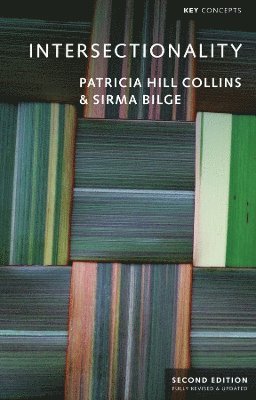
    Intersectionality

    AvPatricia Hill Collins,Sirma Bilge

    Häftad, Engelska, 2020

    Del i serien Key Concepts

    250 kr

    Beställningsvara. Skickas inom 5-8 vardagar. Fri frakt över 249 kr.

    Fler format och utgåvor

    Inbunden

    712 kr

    Beskrivning

    The concept of intersectionality has become a central topic in academic and activist circles alike. But what exactly does it mean, and why has it emerged as such a vital lens through which to explore how social inequalities of race, class, gender, sexuality, age, ability, and ethnicity shape one another?  In this fully revised and expanded second edition of their popular text, Patricia Hill Collins and Sirma Bilge provide a much-needed introduction to the field of intersectional knowledge and praxis. Analyzing the emergence, growth, and contours of the concept of intersectionality, the authors also consider its global reach through an array of new topics such as the rise of far-right populism, reproductive justice, climate change, and digital environments and cultures. Accessibly written and drawing on a plethora of lively examples to illustrate its arguments, the book highlights intersectionality’s potential for understanding complex architecture of social and economic inequalities and bringing about social justice-oriented change. Intersectionality will be an invaluable resource for anyone grappling with the main ideas, debates, and new directions in this field.Also available as an audiobook.

    Produktinformation

    • Utgivningsdatum:2020-04-10
    • Mått:137 x 213 x 23 mm
    • Vikt:377 g
    • Format:Häftad
    • Språk:Engelska
    • Serie:Key Concepts
    • Antal sidor:304
    • Upplaga:2
    • Förlag:Polity Press
    • ISBN:9781509539680

    Utforska kategorier

    • Statsvetenskap och politisk teori inom Samhälle och politik

    Mer om författaren

    Patricia Hill Collins is Distinguished University Professor of Sociology at the University of Maryland. Sirma Bilge is Full Professor of Sociology at the Université de Montréal.

    Recensioner i media

    “The second edition of Intersectionality is a gift. Collins and Bilge have done it again, and somehow they’ve improved on the already stellar contributions of the first edition. At once incisive and accessible, this is a text for novice scholars looking for an entry point into intersectionality studies, as well as for more seasoned readers seeking a rich text with which to deepen engagement with this critical field. Intersectionality is a dynamic, interdisciplinary, and hotly contested terrain of scholar-activism, and Collins and Bilge are generous guides and teachers. Rather than merely tell, the second edition of Intersectionality expertly shows readers the key tenets of intersectional approaches and important applications of the concepts in a thoroughly global context. Perhaps most importantly, Collins and Bilge never let you forget that for all the hand-wringing over what intersectionality is, where it comes from, and what it can or cannot do, intersectionality is about social justice. This book is a remarkable contribution from two of the most vitally important and generous leaders of the field.”Patrick R. Grzanka, editor of Intersectionality: Foundations and Frontiers, 2nd edition“Patricia Hill Collins and Sirma Bilge provide a rich and nuanced framework for understanding the meanings of intersectionality and why it is so powerful for addressing issues of social justice in these times.”Barbara Smith, Co-founder Combahee River Collective“An illuminating and accessible entry into intersectionality, which acknowledges creative tensions between academic inquiry and political praxis. The authors’ careful and rigorous work symbolizes the best of what intersectionality has to offer a world that is desperate for new solutions and battle-scarred by quick fixes.” Ange-Marie Hancock Alfaro, University of Southern California"a timely release and much­ needed follow­-up"Atlantis: Critical Studies in Gender, Culture and Social Justice

    Innehållsförteckning

    • PrefaceChapter 1 What Is Intersectionality?Chapter 2 Intersectionality as Critical Inquiry and PraxisChapter 3 Getting the History of Intersectionality Straight?Chapter 4 Intersectionality’s Global ReachChapter 5 Intersectionality, Social Protest and NeoliberalismChapter 6 Intersectionality and IdentityChapter 7 Intersectionality and Critical EducationChapter 8 Intersectionality RevisitedEndnotesReferences