• Fri frakt över 249 kr
  • •
  • Snabba leveranser
  • •
  • Billiga böcker
Kundservice

Du är på sajten för privatpersoner.

Företag, bibliotek eller offentlig verksamhet?

Du handlar på classic.bokus.com, där alla dina funktioner finns intakta.
Till classic.bokus.com
Bokus logotyp. Gå till startsidan.
  • Erbjudanden
  • Nyheter
  • Student
  • Topplistor
  • Barn & ungdom
  • Bokus Play
  • E-böcker
  • Pocketböcker
  • Spel & pussel

10% rabatt på allt med kod NYSTART10 →

Sidfot

Mina sidor

    Hjälp

    • Kundservice
    • Vanliga frågor och svar
    • Frakt och leverans
    • Retur vid ångerrätt
    • Reklamera vara
    • Betalning
    • Köpvillkor
    • Allmänna villkor
    • Information om webbplatsens tillgänglighet

    Om Bokus

    • Om oss
    • Pressrum
    • För studenter
    • För företag
    • För bibliotek och offentlig verksamhet
    • För leverantörer
    • Hållbarhet

    Populärt

    • Aktuella erbjudanden
    • Presentkort
    • Studentlitteratur
    • Nya böcker
    • Topplistor
    • Signerade böcker
    • Engelska böcker

    Inspiration

    • Boktips
    • BookTok
    • Populära bokserier
    • Barnbokskaraktärer
    • Populära författare
    Logotyp för Bokus
    Följ oss på Facebook (extern länk)Följ oss på Instagram (extern länk)Följ oss på YouTube (extern länk)Följ oss på TikTok (extern länk)
    bokus @ CookiesAnpassa cookiesIntegritetspolicyKöpvillkor
    Till Citymail hemsida (extern länk)Till Budbee hemsida (extern länk)Till Postnord hemsida (extern länk)Till Schenker hemsida (extern länk)Till Early Bird hemsida (extern länk)Till Walleys hemsida (extern länk)
    1. Naturvetenskap och teknik
    2. Geovetenskap
    3. Miljövetenskap och miljöpolitik

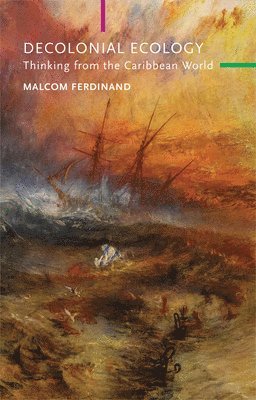
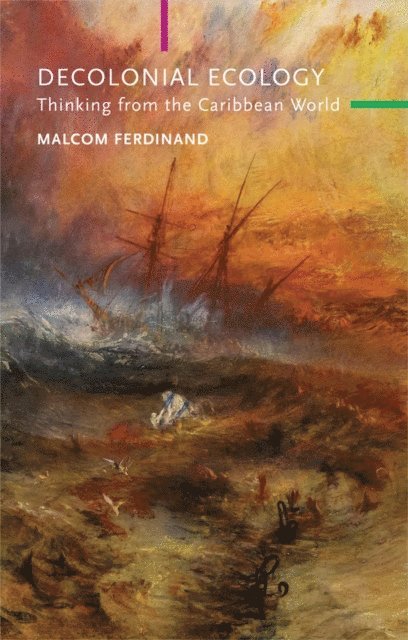
    Decolonial Ecology

    Thinking from the Caribbean World

    AvMalcom Ferdinand

    Inbunden, Engelska, 2021

    Del i serien Critical South

    962 kr

    Beställningsvara. Skickas inom 5-8 vardagar. Fri frakt över 249 kr.

    Fler format och utgåvor

    Häftad

    253 kr

    E-bok

    284 kr

    Beskrivning

    The world is in the midst of a storm that has shaped the history of modernity along a double fracture: on the one hand, an environmental fracture driven by a technocratic and capitalist civilization that led to the ongoing devastation of the Earth’s ecosystems and its human and non-human communities and, on the other, a colonial fracture instilled by Western colonization and imperialism that resulted in racial slavery and the domination of indigenous peoples and women in particular.In this important new book, Malcom Ferdinand challenges this double fracture, thinking from the Caribbean world. Here, the slave ship reveals the inequalities that continue during the storm: some are shackled inside the hold and even thrown overboard at the first gusts of wind. Drawing on empirical and theoretical work in the Caribbean, Ferdinand conceptualizes a decolonial ecology that holds protecting the environment together with the political struggles against (post)colonial domination, structural racism, and misogynistic practices.Facing the storm, this book is an invitation to build a world-ship where humans and non-humans can live together on a bridge of justice and shape a common world. It will be of great interest to students and scholars in environmental humanities and Latin American and Caribbean studies, as well as anyone interested in ecology, slavery, and (de)colonization.

    Produktinformation

    • Utgivningsdatum:2021-11-26
    • Mått:145 x 218 x 31 mm
    • Vikt:544 g
    • Format:Inbunden
    • Språk:Engelska
    • Serie:Critical South
    • Antal sidor:300
    • Förlag:Polity Press
    • Medarbetare:Angela Davis
    • ISBN:9781509546220
    • Översättare:Anthony Paul Smith

    Utforska kategorier

    • Miljövetenskap och miljöpolitik inom Naturvetenskap och teknik

    Mer om författaren

    Malcom Ferdinand is a researcher in political ecology and environmental humanities at the CNRS and Université Paris Dauphine-PSL.

    Recensioner i media

    “Malcom Ferdinand brilliantly breaks away from the spider web of canonical ecological narratives and arguments. The wrongdoing of modernity is diagnosed from the decolonial Caribbean experience of coloniality. Decolonial Ecology reveals – through the power of storytelling – that the sacralization of reason, statistics, and mega-data has prevented us from realizing that ecological and colonial problems cannot be solved within the blindness of the Western modernity that created the problems.”Walter D. Mignolo, author of The Politics of Decolonial Investigations“This book is a powerful political and scholarly statement that exposes, in order to undermine, reductive enframings of modernity that themselves sustain epistemological barriers between groups that should be on the same side. Its richest contributions lie in the Caribbean-inspired, creolised deployment of political concepts, and of thinkers such as Hannah Arendt, Henry David Thoreau, and Jean-Jacques Rousseau. For example, Ferdinand spends considerable time building the conceptual framework of “the Maroon” from the history and modern-day descendants of escaped slaves – people who rejected their oppression and had to live off the land and forge a new creolised culture and identity in the mountains – to build a fresh ecological political theory of freedom. […] The book is a provocation to those thinkers who stress the importance of thinking about the environment through the perspective of geological time, which is a temporal horizon that considers the details of events like colonialism to be insignificant on a planetary scale. Ferdinand’s work is a vehement rejection of that move, an insistence that any thought about modernity’s “crisis” must start with the racist and ecocidal violence of colonialism that created it.”Grace Garland, Environmental Politics"Ferdinand’s Decolonial Ecology contributes to a rich history of anti-colonial Afro-Caribbean philosophy, cements Caribbean values within the global environmental justice movement, and speaks to the struggles of marginalised people around the world as they attempt to shape a world that includes their own visions for the future."Environmental Values

    Innehållsförteckning

    • List of IllustrationsIndex of ShipsAcknowledgementsForeword – Angela DavisProloguePart 1: The Modern Tempest: Environmental Violence and Colonial RupturesChapter 1: Colonial Inhabitation: An Earth without a WorldChapter 2: The Matricides of the PlantationoceneChapter 3: The Hold and the NegroceneChapter 4: The Colonial HurricanePart 2: Noah’s Ark: When Environmentalism Refuses the World Chapter 5: Noah’s Ark: Boarding, or the abandonment of the worldChapter 6: Reforesting without the World (Haiti)Chapter 7: Paradise or Hell in the Nature Preserves (Puerto Rico)Chapter 8: The Masters’ Chemistry (Martinique and Guadeloupe)Chapter 9: A Colonial Ecology: At the Heart of the Double FracturePart 3: The Slave Ship: Rising Up from Modernity’s Hold in Search of a WorldChapter 10: The Slave Ship: Debarking Off-WorldChapter 11: Maroon Ecology: Fleeing the PlantationoceneChapter 12: Rousseau, Thoreau, and Civil MarronageChapter 13: A Decolonial Ecology: Rising up from the holdPart 4: A World-Ship: World-Making Beyond the Double FractureChapter 14: A World-Ship: Politics of encounterChapter 15: Forming a Body in the World: Reconnecting with a Mother-EarthChapter 16: Interspecies Alliances: The Animal Cause and The Negro CauseChapter 17: A Worldly-Ecology: On the Bridge of Justice EpilogueWorld-Making The Intrusion of AyitiRecovering the Sun of AfricaNotes