• Fri frakt över 249 kr
  • •
  • Snabba leveranser
  • •
  • Billiga böcker
Kundservice

Du är på sajten för privatpersoner.

Företag, bibliotek eller offentlig verksamhet?

Du handlar på classic.bokus.com, där alla dina funktioner finns intakta.
Till classic.bokus.com
Bokus logotyp. Gå till startsidan.
  • Erbjudanden
  • Nyheter
  • Student
  • Topplistor
  • Barn & ungdom
  • Bokus Play
  • E-böcker
  • Pocketböcker
  • Spel & pussel

10% rabatt på allt med kod: NYSTART10 →

Sidfot

Mina sidor

    Hjälp

    • Kundservice
    • Vanliga frågor och svar
    • Frakt och leverans
    • Retur vid ångerrätt
    • Reklamera vara
    • Betalning
    • Köpvillkor
    • Allmänna villkor
    • Information om webbplatsens tillgänglighet

    Om Bokus

    • Om oss
    • Pressrum
    • För studenter
    • För företag
    • För bibliotek och offentlig verksamhet
    • För leverantörer
    • Hållbarhet

    Populärt

    • Aktuella erbjudanden
    • Presentkort
    • Studentlitteratur
    • Nya böcker
    • Topplistor
    • Signerade böcker
    • Engelska böcker

    Inspiration

    • Boktips
    • BookTok
    • Populära bokserier
    • Barnbokskaraktärer
    • Populära författare
    Logotyp för Bokus
    Följ oss på Facebook (extern länk)Följ oss på Instagram (extern länk)Följ oss på YouTube (extern länk)Följ oss på TikTok (extern länk)
    bokus @ CookiesAnpassa cookiesIntegritetspolicyKöpvillkor
    Till Citymail hemsida (extern länk)Till Budbee hemsida (extern länk)Till Postnord hemsida (extern länk)Till Schenker hemsida (extern länk)Till Early Bird hemsida (extern länk)Till Walleys hemsida (extern länk)
    1. Juridik
    2. Särskilda rättsområden
    3. Författningsrätt och förvaltningsrätt
    4. Mänskliga och medborgerliga rättigheter

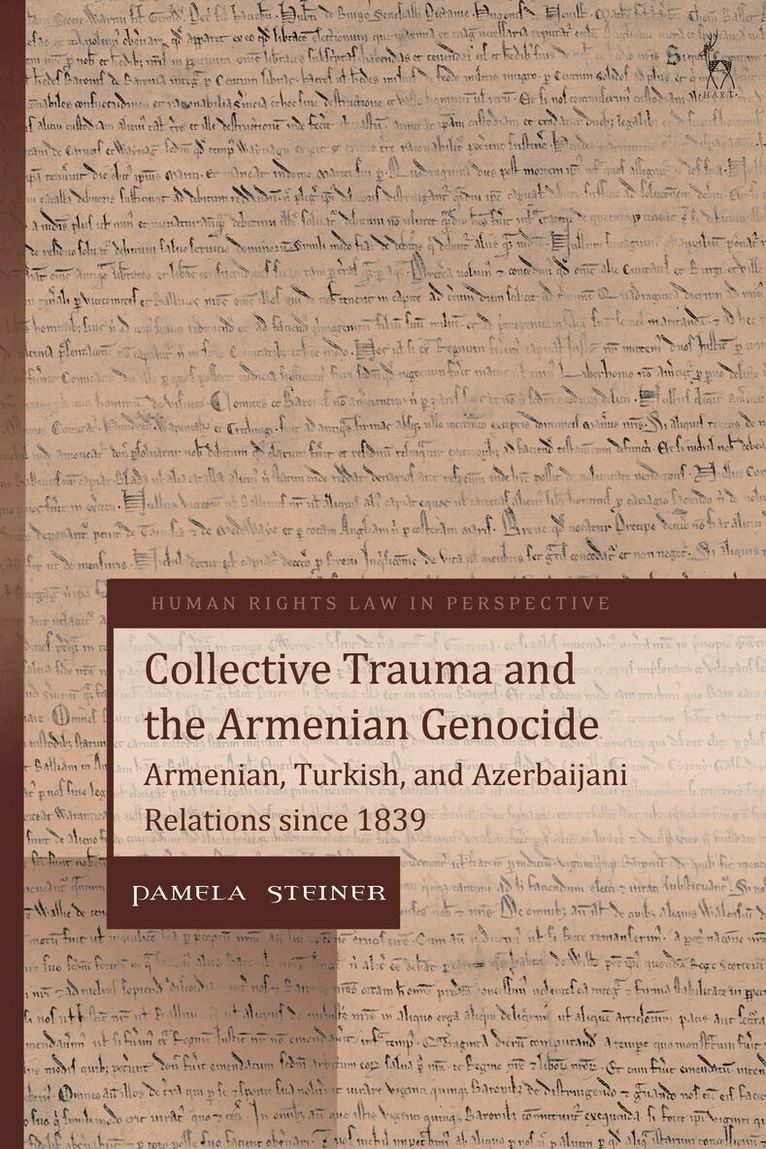
    Collective Trauma and the Armenian Genocide

    Armenian, Turkish, and Azerbaijani Relations since 1839

    AvPamela Steiner,Colin Harvey

    Inbunden, Engelska, 2021

    Del i serien Human Rights Law in Perspective

    1 411 kr

    Beställningsvara. Skickas inom 10-15 vardagar. Fri frakt över 249 kr.

    Fler format och utgåvor

    E-bok

    764 kr

    E-bok

    766 kr

    Häftad

    793 kr

    Beskrivning

    In this pathbreaking study, Pamela Steiner deconstructs the psychological obstacles that have prevented peaceful settlements to longstanding issues.The book re-examines more than 100 years of destructive ethno-religious relations among Armenians, Turks, and Azerbaijanis through the novel lens of collective trauma.The author argues that a focus on embedded, transgenerational collective trauma is essential to achieving more trusting, productive, and stable relationships in this and similar contexts. The book takes a deep dive into history - analysing the traumatic events, examining and positing how they motivated the actions of key players (both victims and perpetrators), and revealing how profoundly these traumas continue to manifest today among the three peoples, stymying healing and inhibiting achievement of a basis for positive change.The author then proposes a bold new approach to “conflict resolution” as a complement to other perspectives, such as power-based analyses and international human rights. Addressing the psychological core of the conflict, the author argues that a focus on embedded collective trauma is essential in this and similar arenas.

    Produktinformation

    • Utgivningsdatum:2021-02-25
    • Mått:156 x 234 x 28 mm
    • Vikt:694 g
    • Format:Inbunden
    • Språk:Engelska
    • Serie:Human Rights Law in Perspective
    • Antal sidor:368
    • Förlag:Bloomsbury Publishing PLC
    • ISBN:9781509934836

    Utforska kategorier

    • Mänskliga och medborgerliga rättigheter inom Juridik
    • Politiskt förtryck inom Samhälle och politik

    Mer om författaren

    Pamela Steiner is Senior Fellow, FXB Center for Health and Human Rights, Harvard University.

    Recensioner i media

    The author’s statement that 'I decided to write this book when I believed I had a fresh and useful perspective to share,' perfectly encapsulates the importance and value of the book you are holding in your hands. Steiner examines, perhaps for the first time, the role collective trauma played among three peoples – Armenians, Azerbaijanis and Turks – and in their mutual relations. She shows how this collective trauma and those that followed are not only the product of their yet unresolved conflicts, but also serve as major stumbling blocks for a better future in the region. For them, the Armenian genocide is like an inescapable psychic maze of trauma, one in which they are trapped and unable to see beyond. If there is indeed a way out of this labyrinth, Steiner's work will serve as a torch, lighting the way.

    Innehållsförteckning

    • PART ICOLLECTIVE TRAUMA: AN INTRODUCTION1. Introduction to Trauma, a Capacious Social Concept 2. Impaired Meaning Making, Trauma’s Meta-Effect 3. Some Distinctive Aspects of Collective Trauma PART IIA BRIEF HISTORY OF THE ARMENIAN-TURKISH RELATIONSHIP4. The Tangled Roots of Homeland and Identity 5. The Riddle of Ottomanism 6. The Unlikely Alliance against the Sultan 7. The Final Path to Imperial Ruin 8. Five Men’s Traumatisation before they Acquired Power 9. The Armenian Genocide PART IIIVIOLENT ENTITLEMENT CARRIED INTO ARMENIAN-AZERBAIJANI RELATIONS IN TRANSCAUCASIA10. Enemies or Allies? Armenian–Azerbaijani Relations, 1850–1915 11. A Kaleidoscope of Armenian–Muslim Relations in the Intense Dynamics of Transcaucasia and Baku in 1917 12. Bolshevik Decrees and Anarchy in the Borderlands, Late 1917–Early 1918 13. How World War I Ended in Transcaucasia: Betrayal, New Republics, Race Murder 14. Baku, 1917–1918: More Conflict, its Seeds Planted for Transmission15. World War I’s End in Eastern Transcaucasia: War Fever Sparks the Turan Quest and Race Murder PART IVANALYSING AND PROCESSING COLLECTIVE TRAUMA: IS A DIFFERENT FUTURE POSSIBLE?16. How People Make Meaning in General, and Illustrated by an Armenian and a Turk 17. Meaning Making with Trauma and Relative Powerlessness in the Armenian People as a Whole 18. Meaning Making with Trauma and Relative Power among Turks Conclusion: Processing Collective Trauma Collectively: Will We?