• Fri frakt över 249 kr
  • •
  • Snabba leveranser
  • •
  • Billiga böcker
Kundservice

Du är på sajten för privatpersoner.

Företag, bibliotek eller offentlig verksamhet?

Du handlar på classic.bokus.com, där alla dina funktioner finns intakta.
Till classic.bokus.com
Bokus logotyp. Gå till startsidan.
  • Erbjudanden
  • Nyheter
  • Student
  • Topplistor
  • Barn & ungdom
  • Bokus Play
  • E-böcker
  • Pocketböcker
  • Spel & pussel

10% rabatt på allt med kod: NYSTART10 →

Sidfot

Mina sidor

    Hjälp

    • Kundservice
    • Vanliga frågor och svar
    • Frakt och leverans
    • Retur vid ångerrätt
    • Reklamera vara
    • Betalning
    • Köpvillkor
    • Allmänna villkor
    • Information om webbplatsens tillgänglighet

    Om Bokus

    • Om oss
    • Pressrum
    • För studenter
    • För företag
    • För bibliotek och offentlig verksamhet
    • För leverantörer
    • Hållbarhet

    Populärt

    • Aktuella erbjudanden
    • Presentkort
    • Studentlitteratur
    • Nya böcker
    • Topplistor
    • Signerade böcker
    • Engelska böcker

    Inspiration

    • Boktips
    • BookTok
    • Populära bokserier
    • Barnbokskaraktärer
    • Populära författare
    Logotyp för Bokus
    Följ oss på Facebook (extern länk)Följ oss på Instagram (extern länk)Följ oss på YouTube (extern länk)Följ oss på TikTok (extern länk)
    bokus @ CookiesAnpassa cookiesIntegritetspolicyKöpvillkor
    Till Citymail hemsida (extern länk)Till Budbee hemsida (extern länk)Till Postnord hemsida (extern länk)Till Schenker hemsida (extern länk)Till Early Bird hemsida (extern länk)Till Walleys hemsida (extern länk)
    1. Juridik
    2. Rättsvetenskap
    3. Lag och samhälle

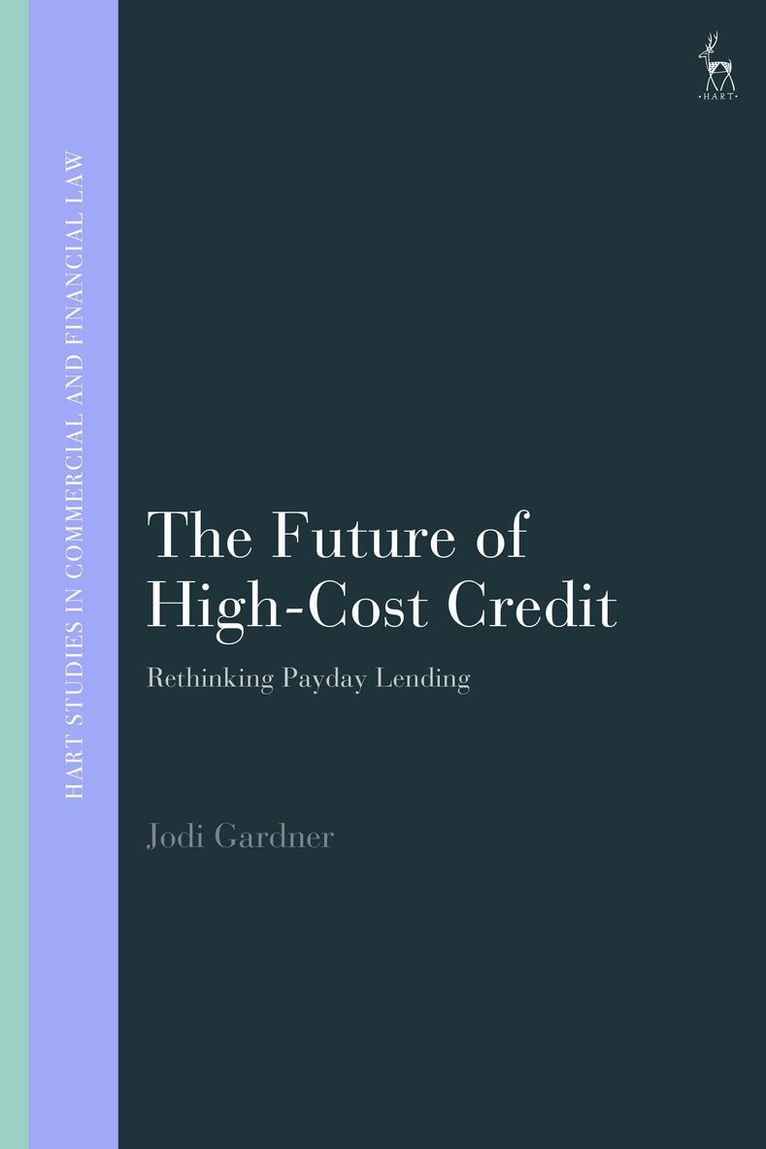
    Future of High-Cost Credit

    Rethinking Payday Lending

    AvJodi Gardner,John Linarelli

    Inbunden, Engelska, 2022

    Del i serien Hart Studies in Commercial and Financial Law

    1 219 kr

    Beställningsvara. Skickas inom 10-15 vardagar. Fri frakt över 249 kr.

    Fler format och utgåvor

    E-bok

    611 kr

    E-bok

    611 kr

    Häftad

    568 kr

    Beskrivning

    This book proposes a new way of thinking about the controversial and complex challenges associated with the regulation of high-cost credit, specifically payday lending. These products have received significant attention in both the media and political arena. The inadequacy of regulatory interventions has created ongoing problems with the provision of high-cost credit, particularly for consumers with lesser bargaining power and who are already financially vulnerable.The book tackles two specific gaps in the existing literature. The first involves inadequate analysis of the relevant philosophical concepts around high-cost credit, which can result in an over-simplification of what are particularly complex issues. The second is a lack of engagement in both the market and lived experience of borrowers, resulting in limited understanding of those who use these financial products.The Future of High-Cost Credit explores the theoretical grounding, policy initiatives and interdisciplinary perspectives associated with high-cost credit, making a novel and insightful contribution to the existing literature. The problems with debt extend far beyond the legal sphere, and the book will therefore be of interest to many other academic disciplines, as well as for those working in public policy and ‘the third sector’.

    Produktinformation

    • Utgivningsdatum:2022-07-14
    • Mått:160 x 236 x 20 mm
    • Vikt:620 g
    • Format:Inbunden
    • Språk:Engelska
    • Serie:Hart Studies in Commercial and Financial Law
    • Antal sidor:264
    • Förlag:Bloomsbury Publishing PLC
    • ISBN:9781509939350

    Utforska kategorier

    • Lag och samhälle inom Juridik
    • Socialrätt och hälso- och sjukvårdsrätt inom Juridik
    • Finansrätt inom Juridik

    Mer om författaren

    Jodi Gardner is Fellow of Law at St John’s College, University of Cambridge, UK.

    Recensioner i media

    In a world of increasingly insecure work and runaway inflation, the regulation of payday loans is a central policy priority. The challenge is complex, requiring a broad, interdisciplinary understanding not only of current legal regimes, but also their history, political economy, and lived reality. In this pathbreaking book, Dr Jodi Gardner brilliantly draws on these perspectives to provide urgently required directions for reform.

    Innehållsförteckning

    • 1. Introduction 1.1. Payday Problems 1.2. Why High-Cost Credit? 1.3. Method, Scope and Jurisdiction 1.4. Outline PART IPHILOSOPHICAL CONTEXT: THE CONCEPTS OF HIGH-COST CREDIT2. High-Cost Credit in the UK 2.1. How is High-Cost Credit Regulated? 2.1.1. The History of Moneylending Regulation 2.1.2. The Office of Fair Trading 2.1.3. The Financial Conduct Authority 2.1.4. Non-Regulatory Legal Enforcement 2.1.5. What Can We Learn? 2.2. What are the Challenges to Regulation?2.2.1. Victim Blaming 2.2.2. Inadequate Engagement with the Market 2.2.3. What Can We Do? 2.3. Conclusion 3. Freedom 3.1. What is Freedom? 3.2. The History of Freedom 3.3. Justifying Freedom 3.3.1. Consent 3.3.2. Human Rights Approaches 3.3.3. Responsibilisation and Financialisation3.3.4. Differing Approaches to Financial and Physical Products 3.4. Examples of Freedom 3.4.1. Restrictions on Who Can Lend 3.4.2. Disclosure Obligations and Advertising Restrictions 3.4.3. Cooling-Off Rights3.4.4. Unfair Relationship Test 3.4.5. Vitiating Factors 3.5. Limitations of Freedom 3.5.1. Failure of Disclosure 3.5.2. Lack of Meaningful Choice 3.5.3. Poverty 3.6. Conclusion 4. Regulation 4.1. What is Regulation? 4.2. The History of Regulation 4.2.1. Usury, Religion and High-Cost Credit 4.2.2. The Development of Regulation 4.2.3. What Can We Learn? 4.3. Explanations for Regulation 4.3.1. Preventing Harmful Outcomes 4.3.2. Stopping Unconscionable Behaviour 4.3.3. Defending the Vulnerable 4.4. Examples of Regulation 4.4.1. Amending or Prohibiting Contract Terms 4.4.2. Prohibiting or Limiting Interest 4.4.3. Responsible Lending Obligations 4.4.4. Unfair Terms Legislation 4.4.5. Common Law Protections 4.5. Limitations of Regulation 4.5.1. Overlap with Limitations of Freedom 4.5.2. Illegal Lending 4.5.3. Financial Exclusion 4.6. Conclusion 5. A Social Minimum 5.1. What is a Social Minimum? 5.2. The History of A Social Minimum 5.2.1. Religious and Charitable Obligations 5.2.2. The Poor Laws 5.2.3. The Beveridge Report 5.2.4. After the ‘Welfare State’ 5.3. Explanations for a Social Minimum 5.3.1. Equality and Liberal Democracy 5.3.2. Government Duty 5.3.3. Social Minimum and Happiness 5.4. Examples of a Social Minimum Provision 5.4.1. Welfare Provision 5.4.2. Bankruptcy Relief 5.4.3. Vitiating Factors 5.5. Limitations of a Social Minimum 5.5.1. Impact on Property Rights 5.5.2. Responsibility for the Social Minimum 5.5.3. Moral Hazards 5.6. Conclusion PART IITHE SOCIAL CONTEXT: IDENTIFYING HIGH-COST CREDIT BORROWERS6. The Lived Experience 6.1. Research Method and Results 6.1.1. Methodology of Stakeholder Interviews 6.1.2. Methodology of Borrower Interviews 6.1.3. Interview Results 6.2. Financially Secure Borrowers 6.2.1. Lending Scenarios 6.2.2. Application to High-Cost Credit Concepts 6.2.3. Application to Current Legal Approach 6.3. Financially Insecure Borrowers 6.3.1. Lending Scenarios 6.3.2. Application to High-Cost Credit Concepts 6.3.3. Application to Current Legal Approach 6.4. Significantly Impaired Borrowers 6.4.1. Lending Scenarios 6.4.2. Application to High-Cost Credit Concepts 6.4.3. Application to Current Legal Approach 6.5. Conclusion 7. Future Directions 7.1. Law Reform Recommendations 7.1.1. Enhanced and Meaningful Disclosure 7.1.2. Responsible Lending Obligations 7.1.3. Opt Out Processes 7.2. Social Welfare Responses 7.2.1. Providing a Social Minimum 7.2.2. Maintaining a Social Minimum 7.3. Further Research 8. Conclusion