• Fri frakt över 249 kr
  • •
  • Snabba leveranser
  • •
  • Billiga böcker
Kundservice

Du är på sajten för privatpersoner.

Företag, bibliotek eller offentlig verksamhet?

Du handlar på classic.bokus.com, där alla dina funktioner finns intakta.
Till classic.bokus.com
Bokus logotyp. Gå till startsidan.
  • Erbjudanden
  • Nyheter
  • Student
  • Topplistor
  • Barn & ungdom
  • Bokus Play
  • E-böcker
  • Pocketböcker
  • Spel & pussel

10% rabatt på allt med kod NYSTART10 →

Sidfot

Mina sidor

    Hjälp

    • Kundservice
    • Vanliga frågor och svar
    • Frakt och leverans
    • Retur vid ångerrätt
    • Reklamera vara
    • Betalning
    • Köpvillkor
    • Allmänna villkor
    • Information om webbplatsens tillgänglighet

    Om Bokus

    • Om oss
    • Pressrum
    • För studenter
    • För företag
    • För bibliotek och offentlig verksamhet
    • För leverantörer
    • Hållbarhet

    Populärt

    • Aktuella erbjudanden
    • Presentkort
    • Studentlitteratur
    • Nya böcker
    • Topplistor
    • Signerade böcker
    • Engelska böcker

    Inspiration

    • Boktips
    • BookTok
    • Populära bokserier
    • Barnbokskaraktärer
    • Populära författare
    Logotyp för Bokus
    Följ oss på Facebook (extern länk)Följ oss på Instagram (extern länk)Följ oss på YouTube (extern länk)Följ oss på TikTok (extern länk)
    bokus @ CookiesAnpassa cookiesIntegritetspolicyKöpvillkor
    Till Citymail hemsida (extern länk)Till Budbee hemsida (extern länk)Till Postnord hemsida (extern länk)Till Schenker hemsida (extern länk)Till Early Bird hemsida (extern länk)Till Walleys hemsida (extern länk)
    1. Juridik
    2. Särskilda rättsområden
    3. Författningsrätt och förvaltningsrätt
    4. Grundlagar, konstitution

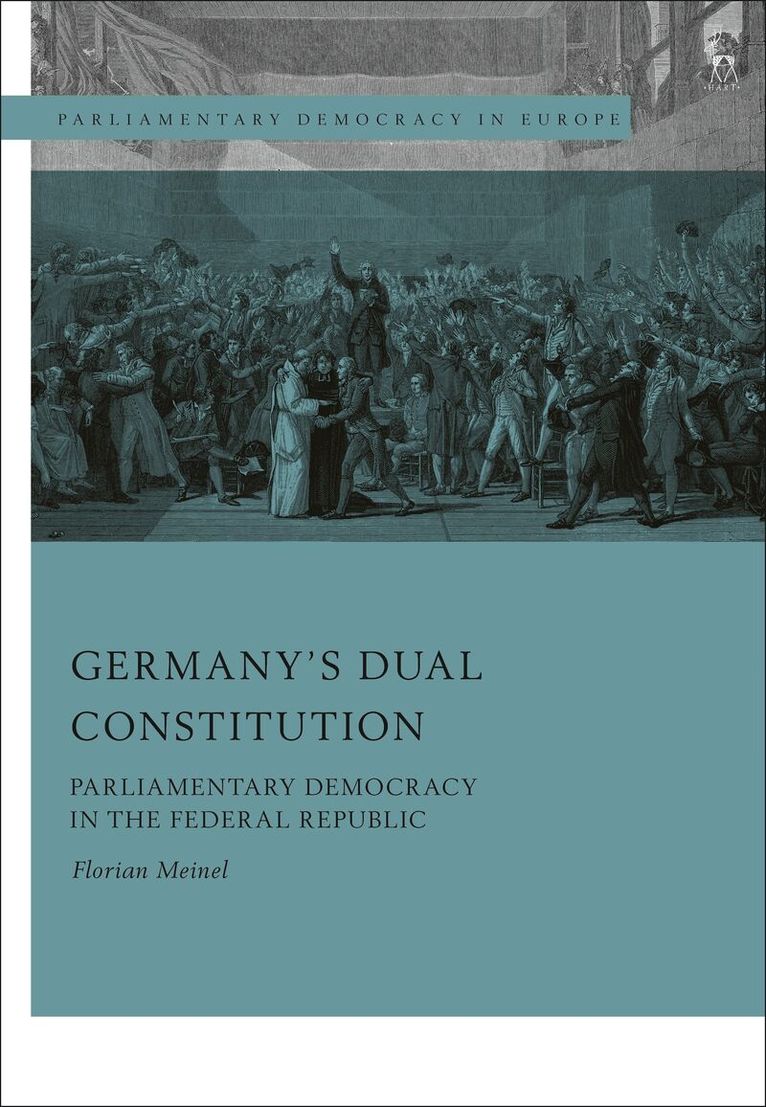
    Germany’s Dual Constitution

    Parliamentary Democracy in the Federal Republic

    AvFlorian Meinel,Nicola Lupo

    Häftad, Engelska, 2023

    Del i serien Parliamentary Democracy in Europe

    466 kr

    Beställningsvara. Skickas inom 10-15 vardagar. Fri frakt över 249 kr.

    Fler format och utgåvor

    Inbunden

    619 kr

    E-bok

    500 kr

    E-bok

    500 kr

    Beskrivning

    This book offers a compelling and persuasive framework for understanding the German constitutional system. It argues that it can only be fully understood as a dual structure combining two layers with little in common. The first layer is the basic administrative institutional structure, comprised of federal institutions. The second layer is that of parliamentary democracy. It is the interplay between the two, as mediated by the chancellery, the major political parties and the Federal Constitutional Court, which lies at the heart of the German constitutional arrangement. This innovative hybrid perspective allows for a better understanding of the current challenges of parliamentary government and its potential long-term development. An updated translation of its impactful German edition, this provides one of the most brilliant introductions to governmental systems of one of the world’s most influential states.

    Produktinformation

    • Utgivningsdatum:2023-01-26
    • Mått:166 x 242 x 12 mm
    • Vikt:280 g
    • Format:Häftad
    • Språk:Engelska
    • Serie:Parliamentary Democracy in Europe
    • Antal sidor:152
    • Förlag:Bloomsbury Publishing PLC
    • ISBN:9781509943432

    Utforska kategorier

    • Grundlagar, konstitution inom Juridik

    Mer om författaren

    Florian Meinel is Chair of Public Law and Philosophy of Law at the University of Würzburg, Germany.

    Innehållsförteckning

    • 1. Introduction: The Two Crises of Parliamentary Government I. Brexit and the Europeanisation of Westminster Parliamentarianism II. Master Narratives of the German Democracy – and Recent Doubts III. Realities of Mass and Social Media IV. Outline2. The Two Worlds of German Constitutionalism I. What is Parliamentary Government? A. The Monism of Powers B. Reservations about Parliamentary Rule C. Confidence, Power and Control D. The Asymmetric Juridification of the System of Government II. The Dual Structure of the German Constitution A. The Administration’s Uncoupling from the Political System B. Continuity as Principle C. The Constitution as an Achievement III. The Outsider’s Republic: Parliamentary Government and the Political Culture of the Merkel Era A. Technocracy or Morality? B. The Weakness of Parliamentary Instruments of Power C. The Drama of the Social Democrats IV. Merkel’s Legacy and the Cautionary Tale of the Grand Coalition A. The Supermajority as Working Principle B. The Democratic Costs of the Multi-Party System C. The Future of the Constitution V. Parliamentarianism and Anti-Parliamentarianism 3. Transformations of Parliamentary Government in Germany Since World War I I. The Written and the Real Constitution A. A Constitution without a Theory B. The Link between Parliament and Government II. 1919: Weimar – A Semi-Parliamentary Bureaucracy A. The Very Different Example of England B. The German Problem C. Organising Responsibility D. Distorted Images in Parliamentary Theory: A Weimar Legacy III. 1949: Parliamentarianism and the Basic Law A. The Point of Departure B. A Turn Away from the Parliamentary System of Government? C. The House that Adenauer Built (With a Little Help from the SPD) D. The Federal Chancellery as Parliamentary Government Headquarters E. The Chancellor’s De Facto Right to Dissolve Parliament IV. 1969: The Normality of Parliamentary Changes of Power and the ‘Popular Parties’ as Mediating Institutions A. Parliamentary State Secretaries: Their Uses and Abuses B. In Praise of Party PatronageV. The Legal Connection between Parliament and Government Forged by the Constitutional Court A. Limits of Constitutional Review in Parliamentary Democracies B. A Political Court C. The Constitutional Enabling of Parliamentary Minorities and of the Parties D. The Reservation of Statutory Powers and its Democratic Reinterpretation E. Parliament as an Agency of Legalisation and a Machine of Legislation 4. What is the Bundestag? Political Representation in a Working Legislature I. What is Parliamentary Representation? A. Representation without Decision? B. Constitutional Problems of Representation II. The Constitutional Importance of the Electoral System A. Is there a Democratic Precedence of Proportional Representation? B. The Political Consequences C. The Eternal Question of Electoral ReformIII. The Tasks of Political Theory 5. The Crisis of the Mediating Institutions I. The Abiding Peculiarity of Parliamentary Government in the Federal RepublicII. The Creeping Decline of the Popular Parties as a Constitutional Factor A. The Limits of Culturalist Explanations B. In Praise of Lobbyism, or: The End of West German Corporatism C. There are No Small Parties Any More D. At the Borders of Government and Opposition E. Forming Governments I: Why do Coalition Talks Take Longer and LongerF. Forming Governments II: Intervals of the Political System G. Forming Governments III: The Latency of the Presidential Factor III. The Dilemma of the Federal Constitutional Court A. The Temptations of the Grand Coalition B. Europe and the Difficulties of Bringing Back in Parliament C. Formalising the Informal: A Juridical Dilemma IV. The Chancellery Unchained A. What Matters when it’s a Matter for the Boss B. The Creeping Unitarisation of the Executive 6. Potentials and Weaknesses of Parliamentary Control I. What is Parliamentary Scrutiny? A. Trust and Scrutiny B. The Dialectic of Ministerial ResponsibilityC. Who is the Federal Government? or: The Object of Scrutiny II. Functions and Limits of Plenary Control A. Questions of Style, Rules of Procedure B. The Lack of Rhetorical Culture C. The Complicity of the Opposition III. In the Engine Room of Responsibility: The Committees A. The Masterstroke of the 1969 Parliamentary Reform B. Politics and Bureaucracy in the Committees IV. The Multi-Level System, Information Overkill and NewAdministrative Models – Aspects of Unbounded Control Tasks A. How to Control ‘Europe’? B. Scrutiny or Executive Self-Control? A Passive Parliament C. The Rise of Agencies and the Limits of Inquiry Rights D. Government Scrutiny by Corporate Governance: An Unconstitutional Fallacy 7. The Future of Parliamentarianism and the German Constitution I. What Chances for Minority Governments? II. A New Chance for a Bargaining Democracy?III. A Renaissance of Parliamentarianism? IV. Constitutional Implications V. Institutional Alternatives