• Fri frakt över 249 kr
  • •
  • Snabba leveranser
  • •
  • Billiga böcker
Kundservice

Du är på sajten för privatpersoner.

Företag, bibliotek eller offentlig verksamhet?

Du handlar på classic.bokus.com, där alla dina funktioner finns intakta.
Till classic.bokus.com
Bokus logotyp. Gå till startsidan.
  • Erbjudanden
  • Nyheter
  • Student
  • Topplistor
  • Barn & ungdom
  • Bokus Play
  • E-böcker
  • Pocketböcker
  • Spel & pussel

10% rabatt på allt med kod: NYSTART10 →

Sidfot

Mina sidor

    Hjälp

    • Kundservice
    • Vanliga frågor och svar
    • Frakt och leverans
    • Retur vid ångerrätt
    • Reklamera vara
    • Betalning
    • Köpvillkor
    • Allmänna villkor
    • Information om webbplatsens tillgänglighet

    Om Bokus

    • Om oss
    • Pressrum
    • För studenter
    • För företag
    • För bibliotek och offentlig verksamhet
    • För leverantörer
    • Hållbarhet

    Populärt

    • Aktuella erbjudanden
    • Presentkort
    • Studentlitteratur
    • Nya böcker
    • Topplistor
    • Signerade böcker
    • Engelska böcker

    Inspiration

    • Boktips
    • BookTok
    • Populära bokserier
    • Barnbokskaraktärer
    • Populära författare
    Logotyp för Bokus
    Följ oss på Facebook (extern länk)Följ oss på Instagram (extern länk)Följ oss på YouTube (extern länk)Följ oss på TikTok (extern länk)
    bokus @ CookiesAnpassa cookiesIntegritetspolicyKöpvillkor
    Till Citymail hemsida (extern länk)Till Budbee hemsida (extern länk)Till Postnord hemsida (extern länk)Till Schenker hemsida (extern länk)Till Early Bird hemsida (extern länk)Till Walleys hemsida (extern länk)
    1. Juridik
    2. Särskilda rättsområden
    3. Författningsrätt och förvaltningsrätt
    4. Offentlig förvaltning

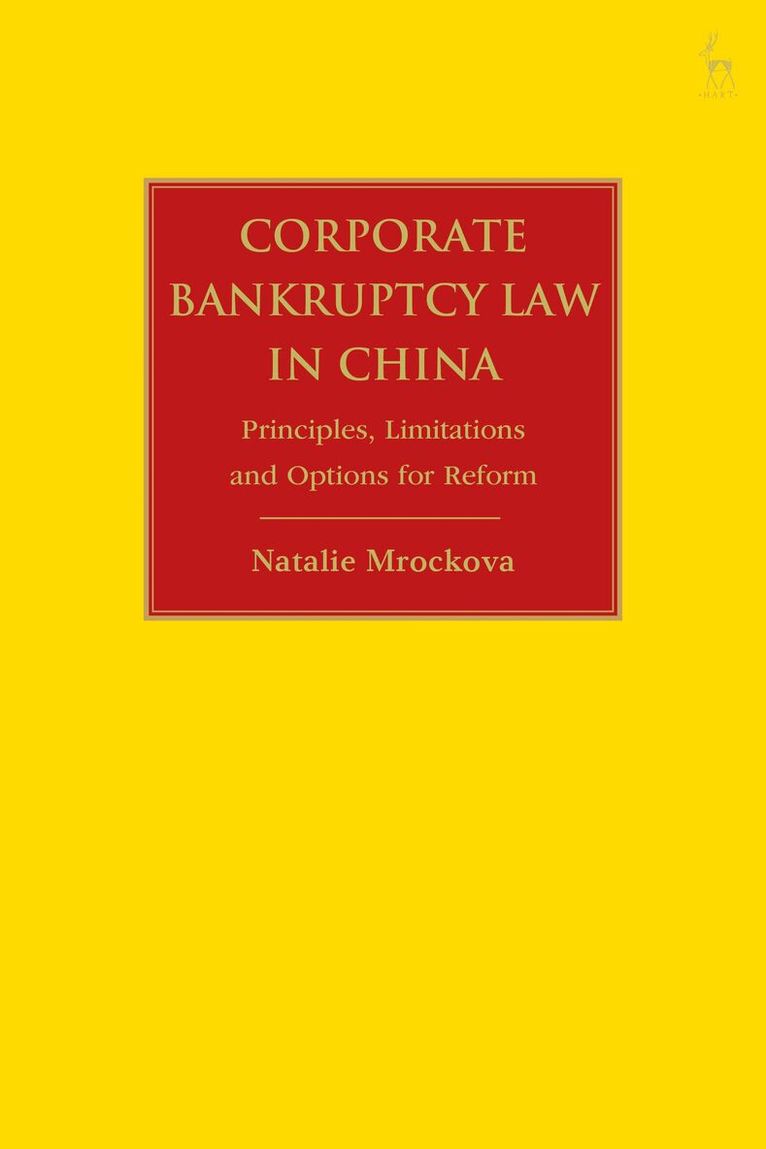
    Corporate Bankruptcy Law in China

    Principles, Limitations and Options for Reform

    AvNatalie Mrockova

    Häftad, Engelska, 2022

    581 kr

    Beställningsvara. Skickas inom 10-15 vardagar. Fri frakt över 249 kr.

    Fler format och utgåvor

    Inbunden

    1 283 kr

    E-bok

    625 kr

    E-bok

    625 kr

    Beskrivning

    This fascinating study uses qualitative and quantitative data and insights from interviews with judges, lawyers, government officials, entrepreneurs, bankers, consultants, and academics in China and abroad, to provide a new perspective on the problems that have hindered the implementation of the Enterprise Bankruptcy Law in China, and recent attempts at reform.The analysis provides unique insights into China’s business world and its interaction with the judicial and political system in China.In addition, the book also provides important information about how the Enterprise Bankruptcy Law affects foreign companies, agencies and governments that are active in China. The author draws on empirical data, decided cases and her experience of how the law and surrounding practices deal with foreign stakeholders whose interests are affected by corporate bankruptcy in China.The book will improve understanding of how China’s corporate bankruptcy law has been used in practice, what has limited its practical effectiveness, whether it is desirable for the law to be used more readily in China, and the possible options for its reform.

    Produktinformation

    • Utgivningsdatum:2022-07-28
    • Mått:154 x 232 x 22 mm
    • Vikt:540 g
    • Format:Häftad
    • Språk:Engelska
    • Antal sidor:384
    • Förlag:Bloomsbury Publishing PLC
    • ISBN:9781509945658

    Utforska kategorier

    • Offentlig förvaltning inom Juridik

    Mer om författaren

    Natalie Mrockova is Researcher and Lecturer at Merton College and Law and Finance Associate at the China Centre, University of Oxford.

    Recensioner i media

    This is an excellent book comprehensively examining the Chinese corporate bankruptcy law and investigating not only the law on the books but also the law in action. The most valuable contribution of this book is that many arguments rely on the firsthand data, both quantitative and qualitative, meticulously collected from official sources and fieldwork interviews. This evidence-based approach, deployed throughout the book, makes the analysis considerably insightful.

    Innehållsförteckning

    • 1. Introduction 1.1. Theoretical Framework: Economic Analysis of Law 1.2. Why Bankruptcy Law Matters 1.3. Methodology 1.4. Structure of the Book PART IBACKGROUND2. China’s Socio-Economic, Political and Legal Environment 2.1. Economic and Political Transformation of China 2.2. Power and the Party-State 2.3. Laws and Rules in China 2.4. Courts, the Party-State and Limited Law Enforcement in China 2.5. Corporate Ownership and Control in China 3. Debt Finance and Enforcement in China 3.1. Debt Finance in China 3.2. Companies’ Access to Credit in China 3.3. Debt Enforcement Mechanisms in China 3.4. General Challenges to Debt Enforcement in China PART IITHE EBL AND ITS PRACTICAL LIMITATIONS4. Bankruptcy Law in China 4.1. History of Bankruptcy Law in China 4.2. Black-letter Overview of the Enterprise Bankruptcy Law 2006 4.3. Supreme People’s Court’s Interpretations and Judicial Cases 4.4. Personal Bankruptcy Law 5. Limited Use of the Enterprise Bankruptcy Law 2006 and its Causes 5.1. Limited Use of the Enterprise Bankruptcy Law 2006 5.2. Reasons for the Limited Use of the EBL – The Four ‘Constraints’ 6. The First Constraint – Creditors and Debtors Feel Insufficiently Protected under the EBL 6.1. Implications of Courts’ Duties to Protect Employees 6.2. Heightened Threat of Scrutiny and Liability under the EBL 6.3. Insolvency as De Facto Entry Requirement for Reorganisation 7. The Second Constraint – Reduced Recoveries under the EBL 7.1. General Flaws in Debt Enforcement that Negatively Affect Recoveries under the EBL 7.2. Shortcomings that Specifically Affect EBL Enforcement 7.3. The EBL not Viable for Certain Types of Debt Contracts 8. The Third Constraint – Limitations and Biases of EBL Enforcers 8.1. Courts’ and Lawyers’ Internal Limitations 8.2. Administrators’ Passivity 8.3. The Party-state’s Influence over Court Enforcement of the EBL 9. The Fourth Constraint – Non-EBL Debt Enforcement Mechanisms 9.1. Private Alternatives and their Perceived Advantages 9.2. Politically Driven Alternatives and their Perceived Advantages PART IIIDESIRABILITY AND OPTIONS FOR REFORM10. Desirability of Reforming Bankruptcy Law in China 10.1. Is a Greater Use of Bankruptcy Law in China Desirable? 10.2. Benefits of Greater Use of (Reformed) EBL 10.3. Nature of Further Reform 11. Options for Reform 11.1. Reforms Aimed at Improving EBL Provisions 11.2. Reforms Aimed at Improving EBL Enforcement Practices and Surrounding Rules 11.3. Reforms Aimed at EBL Enforcers 12. Recent Reform Initiatives 2015–20 12.1. What Set Off Recent Bankruptcy Law Reform? 12.2. Summary of Key Reforms 2015–20 12.3. Reform 1: Encourage Greater Use of the EBL – Resolving Zombie Companies 12.4. Reform 2: Specialised Bankruptcy Courts and Administrator Associations 12.5. Reform 3: EBL Platform 12.6. Reform 4: Judicial and Political Guidance 12.7. Reform 5: Local Conferences and Experience-sharing Events 12.8. Reform 6: Simplified EBL Procedure 12.9. Reform 7: Personal Bankruptcy 12.10. Reform 8: Bankruptcy Assistance Fund 12.11. Reform 9: Judges’ Evaluation System for Resolving EBL Cases 12.12. Reform 10: Cooperation with Local Party-state 12.13. The Future PART IVFOREIGN STAKEHOLDERS AND THE EBL13. The Role of Foreign Parties in Corporate Bankruptcy Cases in China 13.1. Foreign Influence in the Making of the EBL 13.2. Rules and Guidance that Govern Cross-border Bankruptcies in China 13.3. Foreign Stakeholders in Corporate Bankruptcy Cases in China Conclusion