• Fri frakt över 249 kr
  • •
  • Snabba leveranser
  • •
  • Billiga böcker
Kundservice

Du är på sajten för privatpersoner.

Företag, bibliotek eller offentlig verksamhet?

Du handlar på classic.bokus.com, där alla dina funktioner finns intakta.
Till classic.bokus.com
Bokus logotyp. Gå till startsidan.
  • Erbjudanden
  • Nyheter
  • Student
  • Topplistor
  • Barn & ungdom
  • Bokus Play
  • E-böcker
  • Pocketböcker
  • Spel & pussel

10% rabatt på allt med kod: NYSTART10 →

Sidfot

Mina sidor

    Hjälp

    • Kundservice
    • Vanliga frågor och svar
    • Frakt och leverans
    • Retur vid ångerrätt
    • Reklamera vara
    • Betalning
    • Köpvillkor
    • Allmänna villkor
    • Information om webbplatsens tillgänglighet

    Om Bokus

    • Om oss
    • Pressrum
    • För studenter
    • För företag
    • För bibliotek och offentlig verksamhet
    • För leverantörer
    • Hållbarhet

    Populärt

    • Aktuella erbjudanden
    • Presentkort
    • Studentlitteratur
    • Nya böcker
    • Topplistor
    • Signerade böcker
    • Engelska böcker

    Inspiration

    • Boktips
    • BookTok
    • Populära bokserier
    • Barnbokskaraktärer
    • Populära författare
    Logotyp för Bokus
    Följ oss på Facebook (extern länk)Följ oss på Instagram (extern länk)Följ oss på YouTube (extern länk)Följ oss på TikTok (extern länk)
    bokus @ CookiesAnpassa cookiesIntegritetspolicyKöpvillkor
    Till Citymail hemsida (extern länk)Till Budbee hemsida (extern länk)Till Postnord hemsida (extern länk)Till Schenker hemsida (extern länk)Till Early Bird hemsida (extern länk)Till Walleys hemsida (extern länk)
    1. Juridik
    2. Särskilda rättsområden
    3. Rättsordning

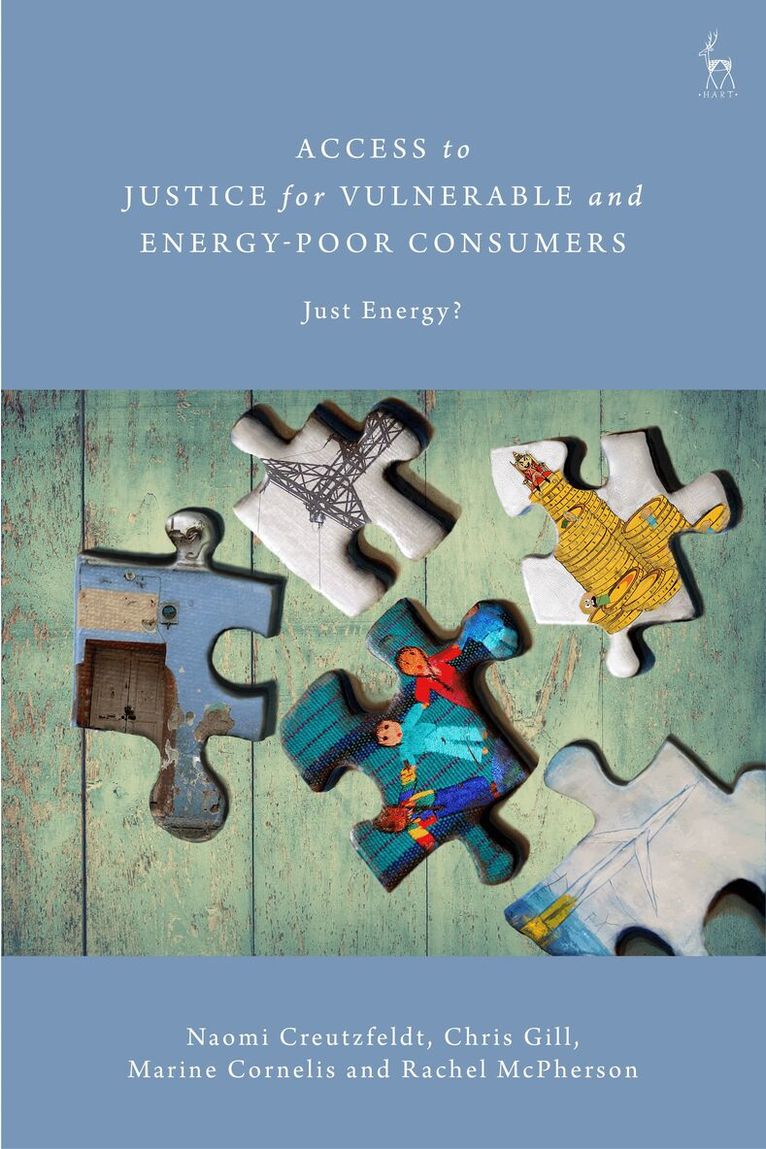
    Access to Justice for Vulnerable and Energy-Poor Consumers

    Just Energy?

    AvNaomi Creutzfeldt,Chris Gill

    Häftad, Engelska, 2023

    568 kr

    Beställningsvara. Skickas inom 10-15 vardagar. Fri frakt över 249 kr.

    Fler format och utgåvor

    Inbunden

    1 213 kr

    E-bok

    591 kr

    E-bok

    611 kr

    Beskrivning

    How do ordinary people access justice? This book offers a novel socio-legal approach to access to justice, alternative dispute resolution, vulnerability and energy poverty. It poses an access to justice challenge and rethinks it through a lens that accommodates all affected people, especially those who are currently falling through the system. It raises broader questions about alternative dispute resolution, the need for reform to include more collective approaches, a stronger recognition of the needs of vulnerable people, and a stronger emphasis on delivering social justice. The authors use energy poverty as a site of vulnerability and examine the barriers to justice facing this excluded group. The book assembles the findings of an interdisciplinary research project studying access to justice and its barriers in the UK, Italy, France, Bulgaria and Spain (Catalonia). In-depth interviews with regulators, ombuds, energy companies, third-sector organisations and vulnerable people provide a rich dataset through which to understand the phenomenon. The book provides theoretical and empirical insights which shed new light on these issues and sets out new directions of inquiry for research, policy and practice. It will be of interest to researchers, students and policymakers working on access to justice, consumer vulnerability, energy poverty, and the complex intersection between these fields.The book includes contributions by Cosmo Graham (UK), Sarah Supino and Benedetta Voltaggio (Italy), Marine Cornelis (France), Anais Varo and Enric Bartlett (Catalonia) and Teodora Peneva (Bulgaria).

    Produktinformation

    • Utgivningsdatum:2023-02-23
    • Mått:154 x 234 x 16 mm
    • Vikt:520 g
    • Format:Häftad
    • Språk:Engelska
    • Antal sidor:384
    • Förlag:Bloomsbury Publishing PLC
    • ISBN:9781509950492

    Utforska kategorier

    • Rättsordning inom Juridik
    • Lag och samhälle inom Juridik
    • Socialrätt och hälso- och sjukvårdsrätt inom Juridik

    Mer om författaren

    Naomi Creutzfeldt is Reader in Socio-Legal Studies at the University of Westminster, UK.Chris Gill is Lecturer in Public Law at the University of Glasgow, UK.Marine Cornelis is Executive Director and Founder of the policy consultancy Next Energy Consumer, Italy. Rachel McPherson is Lecturer in Criminal Law at the University of Glasgow, UK.

    Recensioner i media

    A compelling and original contribution to the socio-legal literature on access to justice … the first such study of access to justice relating to the European energy market … It should appeal to any scholar – experienced academic or student … [and] of great value to those working in or on energy poverty because it makes a powerful and well-informed case for reform and ensuring that systems of ADR feel accessible to those who need them. The current energy crisis highlights the need for such reform.

    Innehållsförteckning

    • Introduction I. Introduction II. An Orientation to Key Concepts III. Contribution to Socio-Legal Scholarship IV. Outline of the Book’s Content and Argument V. A Note on Case Study Selection and Methodology VI. The Structure of this Book PART IACCESS TO JUSTICE FOR VULNERABLE AND ENERGY-POOR CONSUMERS1. The Access to Justice Challenge I. Introduction II. The Scale and Nature of the Access to Justice Challenge III. Understanding the Barriers to Access to Justice IV. Particular Barriers Facing Energy Consumers V. Consumer Vulnerability and Energy Poverty as Barriers to Accessing Justice VI. Barriers Experienced by Vulnerable and Energy-Poor Consumers: Highlights from Our Data VII. Conclusion 2. A Holistic Vision of Access to Justice I. Introduction II. Access to Justice Beyond Lawyers and Courts III. Beyond Procedural Access to Justice IV. Reforming Access to Justice V. Conclusion 3. European Union Law and Policy on Access to Justice I. Introduction II. Recognition of Vulnerability and Energy Poverty in EU Law and Policy III. The Development of ADR for Consumer Disputes in the Energy Sector IV. Access to Justice, Collective Redress and Consumer Protection Measures V. Ongoing Problems for Vulnerable and Energy-Poor Consumers in the European Energy Market VI. Conclusion 4. ADR and Access to Justice I. Introduction II. Initial Observations Based on the Access to Justice Literature III. The Critical Debate on Access to Justice and ADR IV. Specific Issues in the Consumer-Disputing Context V. Conclusions 5. ADR and Access to Justice: Empirical Insights I. Introduction II. Empirical Insights III. Discussion IV. Conclusion 6. Everyday Experiences and the Role of Local Actors I. Introduction II. Legal Alienation, Relational Distance and Access to Justice III. Vulnerable and Energy-Poor Consumers, the Energy Market and Formal Institutions: Stories of Alienationand Disconnection IV. Local Actors: More than Intermediaries V. Conclusion 7. Towards a More Holistic System of Access to Justice I. Introduction II. Recapping the Argument of the Book III. Dispute System Design and the Delivery of Holistic Access to Justice IV. From Added Value to Inclusive Design: Overview of Design Options V. Limitations and Directions for Future Research VI. Conclusion PART IIACCESS TO JUSTICE, ADR AND ENERGY POVERTY IN FIVE COUNTRIES8. Introduction to Part II I. Outline of Chapters 9. Energy Injustice in Bulgaria Teodora PenevaI. Introduction II. Energy Poverty in Bulgaria III. Consumer Protection Mechanism IV. Key Areas of Energy Injustice V. The Energy Injustice Labyrinth in Bulgaria VI. Constraints for Energy Justice in Bulgaria VII. Conclusions 10. Energy Poverty and Access to Justice in Catalonia Anaïs Varo and Enric R Bartlett CastellàI. Introduction II. The Spanish Electrical System III. Vulnerable Consumers and Access to Energy Justice in CataloniaIV. Energy Poverty: What are the Gaps in the Current Measures? V. Moving Towards a Just Energy Model:Policy Implications VI. Conclusions 11. Access to Justice and Energy Poverty in France Marine CornelisI. Introduction II. Energy Poverty III. A Complex ADR Landscape: Divided between the National Public Ombudsman, Company Mediators and Other Public Parties IV. What are the Barriers to Access Justice for Energy Consumers? V. What Role does ADR (Ombuds) Play in Accessing Justice for Energy-Poor and Vulnerable Consumers? VI. How can Vulnerable Consumers Access Justice? VII. What can be done to Improve the Situation? VIII. Conclusion 12. Access to Justice for Vulnerable and Energy-Poor Consumers in Italy: Policy Measures and the Role of ADR Sarah Supino and Benedetta VoltaggioI. Italian Policies to Tackle Energy Poverty II. Access to Justice for Vulnerable and Energy-Poor Consumers in Italy: The Role of ADR III. Data on ADR Procedures in the Energy Sector IV. Conclusions 13. Access to Justice in Energy: United KingdomCosmo GrahamI. Introduction II. The Legal Framework of Energy Regulation in Great Britain III. The GB Energy Industry IV. The Fuel Poverty Strategy V. Complaints against Energy Companies VI. Conclusion