• Fri frakt över 249 kr
  • •
  • Snabba leveranser
  • •
  • Billiga böcker
Kundservice

Du är på sajten för privatpersoner.

Företag, bibliotek eller offentlig verksamhet?

Du handlar på classic.bokus.com, där alla dina funktioner finns intakta.
Till classic.bokus.com
Bokus logotyp. Gå till startsidan.
  • Erbjudanden
  • Nyheter
  • Student
  • Topplistor
  • Barn & ungdom
  • Bokus Play
  • E-böcker
  • Pocketböcker
  • Spel & pussel

10% rabatt på allt med kod: NYSTART10 →

Sidfot

Mina sidor

    Hjälp

    • Kundservice
    • Vanliga frågor och svar
    • Frakt och leverans
    • Retur vid ångerrätt
    • Reklamera vara
    • Betalning
    • Köpvillkor
    • Allmänna villkor
    • Information om webbplatsens tillgänglighet

    Om Bokus

    • Om oss
    • Pressrum
    • För studenter
    • För företag
    • För bibliotek och offentlig verksamhet
    • För leverantörer
    • Hållbarhet

    Populärt

    • Aktuella erbjudanden
    • Presentkort
    • Studentlitteratur
    • Nya böcker
    • Topplistor
    • Signerade böcker
    • Engelska böcker

    Inspiration

    • Boktips
    • BookTok
    • Populära bokserier
    • Barnbokskaraktärer
    • Populära författare
    Logotyp för Bokus
    Följ oss på Facebook (extern länk)Följ oss på Instagram (extern länk)Följ oss på YouTube (extern länk)Följ oss på TikTok (extern länk)
    bokus @ CookiesAnpassa cookiesIntegritetspolicyKöpvillkor
    Till Citymail hemsida (extern länk)Till Budbee hemsida (extern länk)Till Postnord hemsida (extern länk)Till Schenker hemsida (extern länk)Till Early Bird hemsida (extern länk)Till Walleys hemsida (extern länk)
    1. Juridik
    2. Särskilda rättsområden
    3. Arbetsrätt

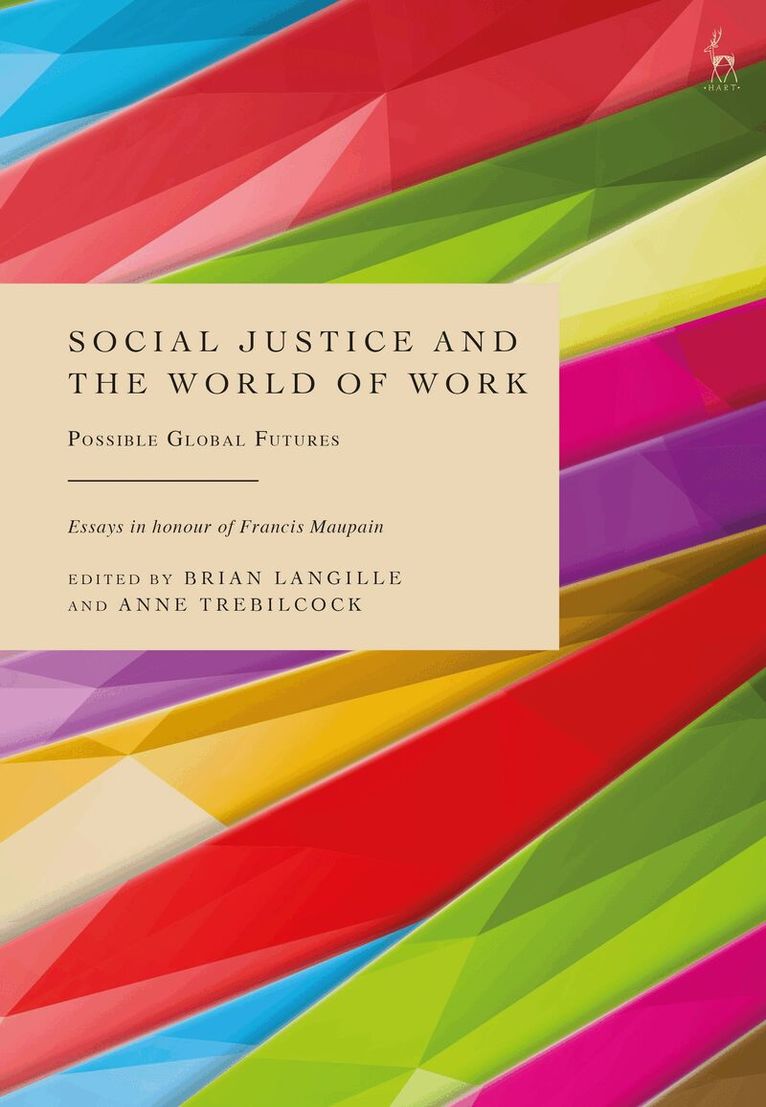
    Social Justice and the World of Work

    Possible Global Futures

    AvBrian Langille,Anne Trebilcock

    Inbunden, Engelska, 2023

    1 538 kr

    Beställningsvara. Skickas inom 10-15 vardagar. Fri frakt över 249 kr.

    Beskrivning

    In this book, leading international thinkers take up the demanding challenge to rethink our understanding of social justice at work and our means for achieving it – at a time when global forces are tearing the familiar fabric of our working lives and the laws regulating them. When fabric is torn we can see deeply into it, understand its structural weaknesses, and imagine alterations in the name of resilience and sustainability. Seizing that opportunity, the authoritative commentators examine the lessons revealed by the pandemic and other global shocks for our ideas about justice at work, and how to advance that cause in the world as we now find it. The chapters deliver critical re-assessments of our goals, explore our new challenges, and creatively re-imagine trajectories for progress on two global fronts - via international institutions and by a myriad of other transnational techniques. These forward-looking essays are in honour of Francis Maupain, whose international career and scholarly writing are inspiring models for those who, in a changing world, seize opportunities for creativity in the pursuit of global justice at work.

    Produktinformation

    • Utgivningsdatum:2023-02-23
    • Mått:176 x 246 x 28 mm
    • Vikt:860 g
    • Format:Inbunden
    • Språk:Engelska
    • Antal sidor:400
    • Förlag:Bloomsbury Publishing PLC
    • ISBN:9781509961252

    Utforska kategorier

    • Arbetsrätt inom Juridik
    • Mänskliga och medborgerliga rättigheter inom Juridik

    Mer om författaren

    Brian Langille is Professor of Law at the University of Toronto, Canada.Anne Trebilcock is associated with the Institute of Labour Law, University of Göttingen, Germany, and is former ILO Legal Adviser/Director of Legal Services.

    Recensioner i media

    This is an outstanding book... The realization of the enormity and urgency of the challenge of applying social justice may be overwhelming but, in a testament to its value, the book allows the reader to feel some optimism that reforms may be possible and realistic.

    Innehållsförteckning

    • Introduction: A Framework for Thinking about the Future of Social JusticeBrian Langille (University of Toronto, Canada) and Anne Trebilcock (University of Göttingen, Germany)PART IGOALS AND CHALLENGESA. Clarifying the Idea of Social Justice in Work1. Globalisation or ‘Mondialisation’? Taking Social Models SeriouslyAlain Supiot (College de France, France)2. Social Justice and Reform of CapitalismAdalberto Perulli (Ca’ Foscari University, Italy)3. Learning from the Past for the Future of International Labour LawAdelle Blackett (McGill Law School, Canada)4. Two Institutional Paths Toward the Future of Work – A View from the Edge of the FieldKerry Rittich (University of Toronto, Canada)5. International Axiologies for Social Justice at the International Labour Organization: Value-based Perspectives and Ways ForwardJordi Agustí-Panareda (International Labour Organisation, Switzerland)6. ‘A Just Share of the Fruits of Progress’: What Does It Mean?K D Ewing (King’s College, London, UK) and Lord Hendy KC (Barrister, UK)B. Critical Dimensions of the Global Future of Social Justice in Work7. International Environmental Law and Social Justice: On EncountersLaurence Boisson de Chazournes (University of Geneva, Switzerland)8. Sustainability as a Guide for the Future Development of International Labour Law?Tonia Novitz (University of Bristol, UK)9. On the Irrelevance of Citizenship in the House of LabourAlan Hyde (Rutgers University Law School, USA)10. Restrictive Visa Schemes and Global Labour JusticeVirginia Mantouvalou (University College London, UK)11. Persistent Gender Gaps: Past Priorities, Future Prospects for the Pursuit of Equality in the World of WorkShauna Olney (International Civil Service Commission, Canada)PART IIMEANSA. International Institutions and the Future of Global Labour Justice I. The International Labour Organization 12. The Past and Future of Governance: Epistemic Authority and the ILOJan Klabbers (University of Helsinki, Finland)13. The Resilience of Multilateralism: An ILO Introspection for a System-wide VisionTomi Kohiyama (International Labour Organization, Switzerland) and Thomas Lieby (International Labour Organization, Switzerland)14. The Contemporary Quest for Social Justice: Some Further Thoughts on the ILO ContributionJean-Michel Servais (University of Gerona, Spain)15. The Impact of the Standards Review Mechanism on the Future of International Labour Standards: Not Even Diamonds are ForeverClaire La Hovary (International Labour Office, Switzerland) 16. Is the ILO a Legitimate Global Institution?Supriya Routh (University of British Columbia, Canada)II. The World Trade Organization and the Trade and Labour Nexus17. Reforming the WTO to Better Promote Social JusticeSteve Charnovitz (George Washington University, USA)18. A Tale of Tripartism, a Tribunal and TradeDesirée LeClercq (Cornell University, USA)III. The Potential of Regional Systems19. Achieving Social Justice through Investor-related Labour Obligations? Brief Insights from the African Investment Treaty PracticeMakane Moïse Mbengue (University of Geneva, Switzerland)20. A Regional Revitalisation of Labour Rights? The Emerging Approach of the Inter-American Court of Human RightsFranz Christian Ebert (Max Planck Institute of Comparative Public and International Law, Germany) 21. Social Sustainability and Labour rights in a Resilient EUBruno Caruso (University of Catania, Italy) and Veronica Papa (University of Catania, Italy)B. Possible Futures of Global Labour Justice by Other Means: Public and Private Actors 22. Peeling the Onion: On Choices Judges Make in Transnational Labour LitigationJudy Fudge (McMaster University, Canada) and Guy Mundlak (Tel Aviv University, Israel)23. The Use of Arbitration to Resolve Transnational Labour DisputesKaterina Yiannibas (Columbia Law School, USA)24. Buying beyond our Borders: Public Procurement and Labour Rights in Global Supply ChainsOlga Martin-Ortega (University of Greenwich, UK) and Martina Trusgnach (University of Greenwich, UK) 25. EU Trade Preferences and Human Rights in MyanmarRichard Horsey (independent expert, Myanmar)26. The Future of Health and Safety at Work as a Fundamental Principle and Right: Will it meet ISO and UN challenges?Isabelle Daugareilh (University of Bordeaux, France)C. ‘Labour Law Itself’ and the Future of Global Social Justice27. On Social Justice and Artificial Intelligence: Trade Unions as Instruments for the Dissemination of Transnational NormsJulia López López (Pompeu Fabra University, Spain) and Eusebi Colàs Neila (Pompeu Fabra University, Spain)28. It’s About Time – Gender, Justice and Working Time Regulation in Employment and Care WorkKirsten Scheiwe (University of Hildesheim, Germany)29. Epistemic Secrets of Labour Law: Towards a Decolonial TurnFlavia Souza Máximo Pereira (Federal University of Ouro Preto, Brazil) and Pedro Augusto Gravatá Nicoli (Federal University of Minas Gerais, Brazil)30. After ‘Subsistence Work’: Labour Commodification and Social Justice in the Household WorkplaceLiam McHugh-Russell (Dalhousie School of Law, Canada)31. Social Justice for an Ongoing Theoretical Reconfiguration of Labour LawAdrián Goldin (University of Buenos Aires, Argentina)Publications of Francis Maupain