• Fri frakt över 249 kr
  • •
  • Snabba leveranser
  • •
  • Billiga böcker
Kundservice

Du är på sajten för privatpersoner.

Företag, bibliotek eller offentlig verksamhet?

Du handlar på classic.bokus.com, där alla dina funktioner finns intakta.
Till classic.bokus.com
Bokus logotyp. Gå till startsidan.
  • Erbjudanden
  • Student
  • Topplistor
  • Barn & ungdom
  • Bokus Play
  • E-böcker
  • Ljudböcker
  • Pocketböcker
  • Spel & pussel

Upp till 25% på utvalda nyheter →

Sidfot

Mina sidor

    Hjälp

    • Kundservice
    • Vanliga frågor och svar
    • Frakt och leverans
    • Retur vid ångerrätt
    • Reklamera vara
    • Betalning
    • Köpvillkor
    • Allmänna villkor
    • Information om webbplatsens tillgänglighet

    Om Bokus

    • Om oss
    • Pressrum
    • För studenter
    • För företag
    • För bibliotek och offentlig verksamhet
    • För leverantörer
    • Hållbarhet

    Populärt

    • Aktuella erbjudanden
    • Presentkort
    • Studentlitteratur
    • Nya böcker
    • Topplistor
    • Signerade böcker
    • Engelska böcker

    Inspiration

    • Boktips
    • BookTok
    • Populära bokserier
    • Barnbokskaraktärer
    • Populära författare
    Logotyp för Bokus
    Följ oss på Facebook (extern länk)Följ oss på Instagram (extern länk)Följ oss på YouTube (extern länk)Följ oss på TikTok (extern länk)
    bokus @ CookiesAnpassa cookiesIntegritetspolicyKöpvillkor
    Till Citymail hemsida (extern länk)Till Budbee hemsida (extern länk)Till Postnord hemsida (extern länk)Till Schenker hemsida (extern länk)Till Early Bird hemsida (extern länk)Till Walleys hemsida (extern länk)
    1. Kultur
    2. Konstböcker
    3. Konsthistoria

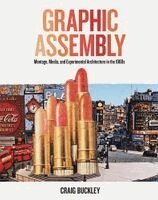
    Graphic Assembly

    Montage, Media, and Experimental Architecture in the 1960s

    AvCraig Buckley

    Häftad, Engelska, 2027

    301 kr

    Kommande

    Beskrivning

    An innovative look at the contribution of montage to twentieth-century architecture—now in paperbackGraphic Assembly unearths the role played by montage and collage in the development of architectural culture over the past century, revealing their unexamined yet crucial significance. Craig Buckley brings together experimental architectural practices based in London, Paris, Vienna, and Florence, showing how breakthroughs in optical media and printing technologies enabled avant-garde architects to reimagine their field.Graphic Assembly considers a range of architects and movements from the 1950s through the early '70s, including Theo Crosby, Hans Hollein, and John McHale; the magazine Clip-Kit; and the groups Archigram, Superstudio, and Utopie. It gives a thorough account of how montage concepts informed the design of buildings, prototypes, models, exhibitions, and multimedia environments, accompanied by Buckley's insightful interpretations of the iconic images, exhibitions, and buildings of the 1960s that mark how the decade is remembered.Richly illustrated with never-before-published material from more than a dozen archives and private collections, Graphic Assembly offers a comparative overview of the network of experimental architectural practice in Europe. It provides a deep historical account of the cut-and-paste techniques now prevalent with architecture's digital turn, demonstrating the great importance of montage to architecture past, present, and future.

    Produktinformation

    • Utgivningsdatum:2027-01-26
    • Mått:203 x 254 x 51 mm
    • Format:Häftad
    • Språk:Engelska
    • Antal sidor:400
    • Förlag:University of Minnesota Press
    • ISBN:9781517901622

    Utforska kategorier

    • Konsthistoria inom Kultur
    • Arkitekturhistoria inom Kultur

    Mer om författaren

    Craig Buckley is associate professor of art history at Yale University. He is editor or coeditor of several books, including Screen Genealogies: From Optical Device to Environmental Media.

    Recensioner i media

    "Graphic Assembly traces recent ineluctable change in the DNA of architecture with compelling force. Connecting media construction to construction on building sites, Craig Buckley convincingly argues that print-based montage shared conceptual ground with metallic assembly after WWII in a critical historical intersection. By tying together a range of activities heretofore only notionally connected, the book ushers out a period of postwar history that haunts the present with images of ad hoc material improvisation and manual work. Graphic Assembly will shift the ground for studies of architecture and media, prompting new research on what followed and preceded the history it narrates."—Claire Zimmerman, author of Photographic Architecture in the Twentieth Century "Graphic Assembly stages a brilliant recasting of the role of montage practices within the experimental architecture of the 1960s, turning toward the media-technical underpinning, material specificity, and visual logics of practices of ‘assembly’ as well as the cultural effects of their ‘envisioning.’ Full of vivid, original, precise, and archivally-rich readings of works by Archigram, Hans Hollein, Utopie, Superstudio and more, Craig Buckley draws out the technical and historical nuances of their construction to provide a powerful new account of architecture’s entanglements with media and the ‘intermedial tension’ to which it gave rise. A major contribution to architectural and media-historical scholarship, Graphic Assembly dismantles conventional distinctions—the semiotic and the concrete, images and buildings, print and electronic media—to offer a rich and compelling reading of such ‘mediating entities’ as they emerged from and operated within the dispersed and fluid dispositif of this historical moment."—Felicity Scott, author of Outlaw Territories: Environments of Insecurity/Architectures of Counterinsurgency "The writing is crisp and academic with a rich appendix that appends a meticulously researched text. The images themselves, including forty-seven color plates, are particularly illuminating."—ARLIS/NA "With many illustrations, 47 color images, and endnotes, this hefty, sturdy volume will appeal to enthusiasts of the avant-garde."—CHOICE

    Innehållsförteckning

    • ContentsIntroduction: Envisioning Assembly1. Clipping2. The Infamous Plug3. Everything Is Architecture4. The Rhetoric of Disassembly5. Scenarios6. Epilogue: Image as AssemblageAcknowledgmentsNotesIndex