• Fri frakt över 249 kr
  • •
  • Snabba leveranser
  • •
  • Billiga böcker
Kundservice

Du är på sajten för privatpersoner.

Företag, bibliotek eller offentlig verksamhet?

Du handlar på classic.bokus.com, där alla dina funktioner finns intakta.
Till classic.bokus.com
Bokus logotyp. Gå till startsidan.
  • Erbjudanden
  • Nyheter
  • Student
  • Topplistor
  • Barn & ungdom
  • Bokus Play
  • E-böcker
  • Pocketböcker
  • Spel & pussel

10% rabatt på allt med kod: NYSTART10 →

Sidfot

Mina sidor

    Hjälp

    • Kundservice
    • Vanliga frågor och svar
    • Frakt och leverans
    • Retur vid ångerrätt
    • Reklamera vara
    • Betalning
    • Köpvillkor
    • Allmänna villkor
    • Information om webbplatsens tillgänglighet

    Om Bokus

    • Om oss
    • Pressrum
    • För studenter
    • För företag
    • För bibliotek och offentlig verksamhet
    • För leverantörer
    • Hållbarhet

    Populärt

    • Aktuella erbjudanden
    • Presentkort
    • Studentlitteratur
    • Nya böcker
    • Topplistor
    • Signerade böcker
    • Engelska böcker

    Inspiration

    • Boktips
    • BookTok
    • Populära bokserier
    • Barnbokskaraktärer
    • Populära författare
    Logotyp för Bokus
    Följ oss på Facebook (extern länk)Följ oss på Instagram (extern länk)Följ oss på YouTube (extern länk)Följ oss på TikTok (extern länk)
    bokus @ CookiesAnpassa cookiesIntegritetspolicyKöpvillkor
    Till Citymail hemsida (extern länk)Till Budbee hemsida (extern länk)Till Postnord hemsida (extern länk)Till Schenker hemsida (extern länk)Till Early Bird hemsida (extern länk)Till Walleys hemsida (extern länk)
    1. Samhälle och politik
    2. Politik och statsskick
    3. Statsvetenskap och politisk teori

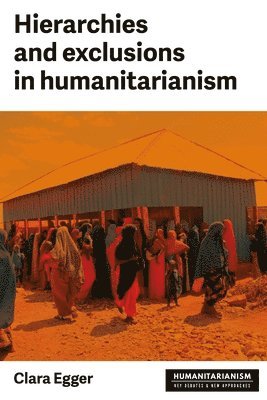
    Hierarchies and exclusion in humanitarianism

    AvClara Egger

    Inbunden, Engelska, 2025

    Del i serien Humanitarianism: Key Debates and New Approaches

    1 326 kr

    Beställningsvara. Skickas inom 5-8 vardagar. Fri frakt över 249 kr.

    Beskrivning

    While humanitarians generally present themselves as ‘do-gooders’ and use this image to gather support and funding, this edited volume addresses hierarchies and exclusions in humanitarianism – an issue that has gained increased attention. Contributions analyse how hierarchies, power asymmetries and exclusion emerge, are maintained and can ultimately be challenged in humanitarian governance. Leading scholars on humanitarianism coming from a variety of disciplinary fields such as international relations, philosophy, organisational science and management, and sociology analyse exclusion dynamics at the individual, organisational and structural levels. Authors thereby combine data from a diverse range of methods, including ethnography, survey and statistical analysis. The volume informs current efforts to increase inclusiveness and equity in humanitarian practice.

    Produktinformation

    • Utgivningsdatum:2025-06-24
    • Mått:156 x 234 x 17 mm
    • Vikt:595 g
    • Format:Inbunden
    • Språk:Engelska
    • Serie:Humanitarianism: Key Debates and New Approaches
    • Antal sidor:296
    • Förlag:Manchester University Press
    • ISBN:9781526177957

    Utforska kategorier

    • Statsvetenskap och politisk teori inom Samhälle och politik
    • Socialt arbete och välfärd inom Samhälle och politik
    • Internationella relationer inom Samhälle och politik

    Mer om författaren

    Clara Egger is an Assistant Professor of Global Governance at the Department of Public Administration and Sociology of the Erasmus School of Social and Behavioural Sciences, Erasmus University Rotterdam

    Recensioner i media

    'This volume provides an honest and much-needed examination of the power dynamics and exclusionary practices within the humanitarian field. By unpacking the mechanisms that sustain hierarchies, it offers invaluable insights for anyone seeking to understand or reform humanitarianism, its governance, and real practices.' Rodrigo Mena, Assistant Professor of Disasters and Humanitarian Studies, Erasmus University Rotterdam 'Behind the benign face of humanitarian organizations working hard to save lives and relieve suffering in crises, there is competition, hierarchy, and exclusion. Some humanitarian actors become powerful organizations, other weak ones, and some are not even noticed as "real" humanitarians. In this innovative volume, Clara Egger and her co-authors do a great job explaining why this is the case. Well documented, well studied and revealing, this edited volume is essential reading for anyone who wants to understand humanitarian action and its governance. It is not just a superb scholarly work, but also a call to action to improve the humanitarian system.' Dennis Dijkzeul, Professor in Conflict and Organization Research, Ruhr University Bochum'Egger shows clearly that among humanitarian organizations are better and worse, those who have access to a great portion of resources and those who struggle to take at least a bit of humanitarian cake. Egger, combining her experience in governance and humanitarian studies, managed to create a cold, painfully objective picture of the humanitarian world susceptible to all known abuses. Egger’s book helps us to understand another dimension of the hierarchy of global governance which is of particular importance having in mind that humanitarian aspects are at the first front of every crisis debate in the main governance bodies, including the Security Council of the United Nations.' Patrycja Grzebyk, Associate Professor at the University of Warsaw'This book provides conceptual tools and empirical insights needed for making sense of the decolonising of humanitarian aid. Going beyond the ‘global-local’ and ‘North-South’ dichotomies that define the localisation agenda, it serves as a vantage point for thinking more systematically about equality and inclusion in the humanitarian ecosystem.' Kristoffer Lidén, Senior Researcher at PRIO and the Norwegian Centre for Humanitarian Studies'Hierarchies and exclusions in humanitarianism troubles the narrative of a humanitarianism grounded in solidarity, justice and noble self-sacrifice, painting instead a picture of a complex, messy field where power depends on the maintenance of categorical distinctions.'International AffairsCHOICE Recommended: Advanced undergraduates through faculty; professionals.'This edited volume, which brings together scholars primarily specializing in sociology and international relations, analyzes the mechanisms by which hierarchies of power are maintained between and within humanitarian organizations. Most of these essays consider how humanitarian organizations constitute a field with rules of inclusion and exclusion, drawing from Bourdieu’s social theories. Michal Barnett’s contribution is an especially useful consideration of humanitarian organizations as an exclusive club, whose members (especially the handful of dominant NGOs) use their cultural, economic, and symbolic capital to keep access to resources to themselves and block competitors from challenging their position... this book deserves a wide readership among scholars engaged in research on humanitarianism, past and present.'--J. M. Rich, Marywood University

    Innehållsförteckning

    • Introduction: Analysing Hierarchies and Exclusion Dynamics in Humanitarianism - Clara Egger and Andrea Schneiker1 Hierarchy in Humanitarian Governance - Michael Barnett2 Hierarchies and the drawing of boundaries in humanitarian action - Anna Khakee3 Decolonising Humanitarianism: Beyond the Politics of Morality - Michael Onyebuchi Eze,4 SCHR and Humanitarian Standard-setting: How field dynamics produce coordination and hierarchy - Maryam Zarnegar Deloffre5 The Good, the Rogue and the Others: Donors’ hierarchies in humanitarianism - Clara Egger6 Hierarchies, Exclusion and Solidarity in the Maritime Humanitarian Space: Sea Rescue NGOs in the Mediterranean - Eugenio Cusumano7 Stairway to Heaven: Humanitarian NGOs, Distinction, and Hierarchies of Professionalism - Monique J. Beerli8 When gender is not enough – intersectional perspectives on hierarchies in aid relationships - Silke Roth9 International NGOs as brokers of hierarchies in the localisation agenda: a case study from the Philippines - Marie-Claude Savard, Nelson Dueñas and François Audet10 Why they stay and why they go: The effect of role clarity and social relations on turnover and exclusion in Médecins sans Frontières Holland - Liesbet Heyse and Melinda Mills, Miranda Visser, Rafael Wittek11 Power hierarchies within research collaborations: the potential of co-production in humanitarian settings - Michelle Lokot and Caitlin WakeConclusion Joost Herman and Dorothea Hilhorst