• Fri frakt över 249 kr
  • •
  • Snabba leveranser
  • •
  • Billiga böcker
Kundservice

Du är på sajten för privatpersoner.

Företag, bibliotek eller offentlig verksamhet?

Du handlar på classic.bokus.com, där alla dina funktioner finns intakta.
Till classic.bokus.com
Bokus logotyp. Gå till startsidan.
  • Erbjudanden
  • Nyheter
  • Student
  • Topplistor
  • Barn & ungdom
  • Bokus Play
  • E-böcker
  • Pocketböcker
  • Spel & pussel

10% rabatt på allt med kod NYSTART10 →

Sidfot

Mina sidor

    Hjälp

    • Kundservice
    • Vanliga frågor och svar
    • Frakt och leverans
    • Retur vid ångerrätt
    • Reklamera vara
    • Betalning
    • Köpvillkor
    • Allmänna villkor
    • Information om webbplatsens tillgänglighet

    Om Bokus

    • Om oss
    • Pressrum
    • För studenter
    • För företag
    • För bibliotek och offentlig verksamhet
    • För leverantörer
    • Hållbarhet

    Populärt

    • Aktuella erbjudanden
    • Presentkort
    • Studentlitteratur
    • Nya böcker
    • Topplistor
    • Signerade böcker
    • Engelska böcker

    Inspiration

    • Boktips
    • BookTok
    • Populära bokserier
    • Barnbokskaraktärer
    • Populära författare
    Logotyp för Bokus
    Följ oss på Facebook (extern länk)Följ oss på Instagram (extern länk)Följ oss på YouTube (extern länk)Följ oss på TikTok (extern länk)
    bokus @ CookiesAnpassa cookiesIntegritetspolicyKöpvillkor
    Till Citymail hemsida (extern länk)Till Budbee hemsida (extern länk)Till Postnord hemsida (extern länk)Till Schenker hemsida (extern länk)Till Early Bird hemsida (extern länk)Till Walleys hemsida (extern länk)
    1. Naturvetenskap och teknik
    2. Geovetenskap
    3. Miljövetenskap och miljöpolitik

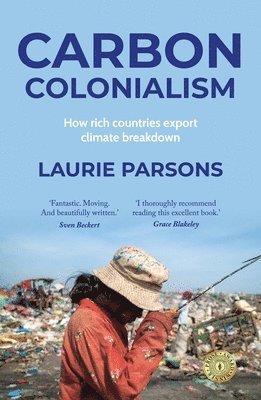
    Carbon Colonialism

    How Rich Countries Export Climate Breakdown

    AvLaurie Parsons

    Häftad, Engelska, 2025

    126 kr

    Skickas . Fri frakt över 249 kr.

    Fler format och utgåvor

    Inbunden

    269 kr

    Beskrivning

    A hard-hitting exposé that reveals how rich countries outsource the climate crisis to poor ones.Around the world, leading economies are announcing significant success in the struggle against climate change. Heads of government proclaim their commitment to tackling the crisis, pointing to data that shows the progress they have made. Yet the atmosphere is still warming at a record rate. Are we being deceived?In Carbon colonialism, Laurie Parsons exposes how rich countries cook the books on climate change – by outsourcing it to the global South. Conducting first-hand research across Asia, he reveals how exporting emissions and waste allows states and corporations to maintain a clean, green image. Meanwhile, landfills expand and droughts and floods intensify, with devastating effects on the world’s most vulnerable communities.Technical fixes and creative accounting are a mirage. The real obstacles to effective action are deeply embedded in the political systems and structures of our society. Parsons calls on readers to wake up from the fairy tales of greenwashing and ethical consumerism and end carbon colonialism now.

    Produktinformation

    • Utgivningsdatum:2025-05-27
    • Mått:129 x 198 x 14 mm
    • Vikt:358 g
    • Format:Häftad
    • Språk:Engelska
    • Antal sidor:248
    • Förlag:Manchester University Press
    • ISBN:9781526184955

    Utforska kategorier

    • Miljövetenskap och miljöpolitik inom Naturvetenskap och teknik
    • Projektledning inom Ekonomi och Ledarskap
    • Tillverkningsindustri inom Ekonomi och Ledarskap

    Mer om författaren

    Laurie Parsons is Reader in Human Geography at Royal Holloway, University of London and Principal Investigator of the projects The Disaster Trade: The Hidden Footprint of UK Imports and Investment Overseas and Hot Trends: How the Global Garment Industry Shapes Climate Vulnerability in Cambodia. His other books include Going Nowhere Fast: Inequality in the Age of Translocality (2020) and Climate Change in the Global Workplace (2021).

    Recensioner i media

    Winner of the 2024 AAP PROSE Award for EconomicsShortlisted for the Penn Libraries Book Prize in Sustainability 'Carbon colonialism is a timely analysis of the contradictions of climate politics. It not only makes visible the concealed costs of extraction hidden beneath the shiny sustainability commitments of global north politics, but also provides an eye-opening account of climate breakdown in the global south.'Matthias Schmelzer, author of The Future Is Degrowth'By taking readers on a journey through landscapes poisoned by the effluvia of economic growth, Laurie Parsons exposes the ongoing impact of colonialism and global capitalism on some of the most vulnerable places on earth. Read this book if you want to understand how the impacts of history are still reverberating today.'Carry Somers, founder of Fashion Revolution'I thoroughly recommend reading this excellent book. A fascinating and well-written explanation of how global capitalism exports environmental destruction to poor places while extracting wealth to rich ones.'Grace Blakeley, author of The Corona Crash 'Carbon colonialism is an uncomfortable book to read from the comforts of the rich world. It is unsettling because Laurie Parsons renders visible through curated cases and close argument the global signatures of environmental risk, exposure and reward, and the structural violence of climate change.'Jonathan Rigg, Professor of Human Geography, University of Bristol'An eye-opening, fact-based indictment of the path we’re on, where rich countries and companies are accumulating the resources to mitigate the impacts of climate change rather than moving to stop environmental destruction.'Assaad Razzouk, author of Saving the Planet without the Bull'Fantastic. Moving. And beautifully written.'Sven Beckert, author of Empire of Cotton'Carbon colonialism exposes the uneven geography of the climate crises through thoughtful field work, detailing how destructive global environmental change is teleconnected to impoverishment. Parsons traces the ways in which the most egregious effects of climate change are found at the bottom of global gradients of inequality while tackling head on the myths that surround the political economy of climate change.'Andrew Brooks, author of Clothing Poverty'Carbon colonialism is a welcome salve to the pernicious greenwashing that pollutes contemporary capitalism. Laurie Parsons skillfully weaves ethnographic encounters with detailed research to craft a book that is both timely and urgently necessary. Carbon colonialism asks critical questions about the status quo, where life is cheap, destruction is uneven and profit is extracted from our planetary future.'Thom Davies, co-editor of Toxic Truths'Parsons takes everyday objects – bricks, a pair of socks, teabags – and draws out lessons from their global supply chains. And it was great to hear more from Cambodia, a country we don’t hear from very much, and where Parsons has spent a lot of time. Altogether, Carbon colonialism is a stark reminder that for all its apparent environmental progress, consumer capitalism still relies on invisible "elsewheres" to keep the economic wheels turning.'Jeremy Williams, The Earthbound Report'This book explains how wealth is ruling and harming the environment. We are all accountable for our unsustainable overuse of natural resources and climate change. Therefore, this book must be read by every individual, not just those with a specific interest.'Ankita Sharma, Studies of Transition States and Societies'The paramount merit of Carbon colonialism resides in shedding light on our present environmental panorama and exposing the intricate interweaving of the capitalist production model with the generation and dissemination of environmental vulnerability worldwide. Acknowledging this underlying rationale within our global economy marks the primary pivotal stride towards steering actions and crafting genuinely effective regulations to mitigate the environmental impact of consumption.'Leonardo Macedo, Ethnic and Racial Studies'Its direct and colloquial language moves readers and lays bare the ongoing injustices, exploitation and destruction unfolding in the global south. It has an activist agenda as much as an academic one, and we believe it should reach beyond an academic audience, and even be available in grocery stores, newsstands and clothing retailers at the very least!'Seray Ergene and Erim Ergene, Organization'Parsons’s major contribution through this book is to identify the political economy of climate change and the vulnerabilities which emerge from it. The book will be especially helpful for economists, political economists and geographers who research issues around climate change policy and accountability. However, anyone interested the current global environmental problem, climate change and sustainability issues will find this book captivating. The book lays bare the dismal state of the global climate crisis and argues convincingly that protecting the planet must go hand in hand with ensuring fairness, equity and social justice for all people.'Sneha Biswas, LSE Review of Books'Fabulous and much-needed.'Melody Kemp, Society of Environmental Journalists'Whether you are deeply involved in environmental conservation or simply interested in preserving our planet, this book provides a thought-provoking exploration of the vulnerabilities emerging from the current climate crisis and global economy.'Mohd Amin Khan, AAG Review of Books'Parsons’s lively and accessible synthesis debunks the myth of a livable and just future under carbon colonialism.'Z. Albertson, CHOICE

    Innehållsförteckning

    • 1 Moving forwards, or dumping sideways? The myth of a sustainable future Part I: Greenwashing the global factory2 Founding the global factory: the first five hundred years3 Consumer power in the global factory: a lucrative illusion4 Carbon colonialism: hidden emissions in the global peripheryPart II: Manufacturing disaster in the global factory5 Climate precarity: how global inequality shapes environmental vulnerability6 Money talks: who gets to speak for the environment and how7 Wolves in sheep’s clothing: how corporate logic co-opts climate action8 Six myths that fuel carbon colonialism – and how to think differentlyIndex