• Fri frakt över 249 kr
  • •
  • Snabba leveranser
  • •
  • Billiga böcker
Kundservice

Du är på sajten för privatpersoner.

Företag, bibliotek eller offentlig verksamhet?

Du handlar på classic.bokus.com, där alla dina funktioner finns intakta.
Till classic.bokus.com
Bokus logotyp. Gå till startsidan.
  • Erbjudanden
  • Nyheter
  • Student
  • Topplistor
  • Barn & ungdom
  • Bokus Play
  • E-böcker
  • Pocketböcker
  • Spel & pussel

10% studentrabatt med kod TERM26

Sidfot

Mina sidor

    Hjälp

    • Kundservice
    • Vanliga frågor och svar
    • Frakt och leverans
    • Retur vid ångerrätt
    • Reklamera vara
    • Betalning
    • Köpvillkor
    • Allmänna villkor
    • Information om webbplatsens tillgänglighet

    Om Bokus

    • Om oss
    • Pressrum
    • För studenter
    • För företag
    • För bibliotek och offentlig verksamhet
    • För leverantörer
    • Hållbarhet

    Populärt

    • Aktuella erbjudanden
    • Presentkort
    • Studentlitteratur
    • Nya böcker
    • Topplistor
    • Signerade böcker
    • Engelska böcker

    Inspiration

    • Boktips
    • BookTok
    • Populära bokserier
    • Barnbokskaraktärer
    • Populära författare
    Logotyp för Bokus
    Följ oss på Facebook (extern länk)Följ oss på Instagram (extern länk)Följ oss på YouTube (extern länk)Följ oss på TikTok (extern länk)
    bokus @ CookiesAnpassa cookiesIntegritetspolicyKöpvillkor
    Till Citymail hemsida (extern länk)Till Budbee hemsida (extern länk)Till Postnord hemsida (extern länk)Till Schenker hemsida (extern länk)Till Early Bird hemsida (extern länk)Till Walleys hemsida (extern länk)
    1. Kultur
    2. Konstböcker
    3. Konsthistoria

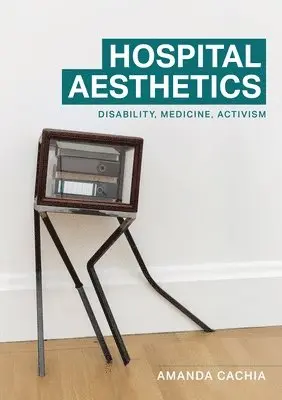
    Hospital aesthetics

    Disability, medicine, activism

    AvAmanda Cachia

    Inbunden, Engelska, 2025

    1 224 kr

    Beställningsvara. Skickas inom 5-8 vardagar. Fri frakt över 249 kr.

    Fler format och utgåvor

    Häftad

    349 kr

    Beskrivning

    Hospital aesthetics: Disability, medicine, activism argues that contemporary disabled artists are offering a new hospital aesthetics, where health and care are being taken into their own hands and body-minds. Hospital aesthetics is defined as artwork that explores the ever-subjective experience of illness, set apart from and outside of a clinical or therapeutic setting, and in opposition to the medical model of disability. The author examines the work of nine contemporary disabled artists and four care collectives from the United States, Canada, and Europe across five chapters, utilising a range of mediums including drawing, sculpture, installation, painting, performance, video, and socially engaged art practice to illustrate “hospital aesthetics.”The visual culture of medicine typically undermines and controls disabled bodies, often resulting in unfavourable physical and psychological outcomes. It is therefore imperative that disabled artists establish a hospital aesthetics to rescript medical images of disability, both past and present, particularly in the context of the COVID-19 pandemic. In doing so, contemporary disabled artists contribute to a form of disability activism that seeks to improve mainstream bioethics as well as ableist museum and gallery culture. Hospital aesthetics presents a different perspective on disabled bodies, aiming to undo the social and cultural impacts hospitals have had on disabled patients, both historically and today.

    Produktinformation

    • Utgivningsdatum:2025-09-30
    • Mått:170 x 240 x 21 mm
    • Vikt:724 g
    • Format:Inbunden
    • Språk:Engelska
    • Antal sidor:240
    • Förlag:Manchester University Press
    • ISBN:9781526187864

    Utforska kategorier

    • Konsthistoria inom Kultur
    • Sociala och etiska frågor inom Samhälle och politik
    • Rättsliga frågor i hälso- och sjukvården inom Medicin

    Mer om författaren

    Amanda Cachia is Professor of Practice in Museum Studies in the School of Art at the Herberger Institute for Design and the Arts at Arizona State University. She is a curator, consultant, writer and art historian who specializes in disability art activism.

    Recensioner i media

    ‘In Hospital aesthetics, art historian and curator, Amanda Cachia, illuminates connections amongst disability, medicine, and activism, realms of culture seldom considered compatible. This innovative juxtaposition of art and artists shows us that the common, shared human experiences of disability, illness, and care are recorded in the aesthetic archive in elegant and surprising ways.’—Rosemarie Garland-Thomson, Professor Emerita of English and bioethics, Emory University, Hastings Center Fellow and Senior Advisor on Disability ‘Amanda Cachia builds on her leading role in disability art history with Hospital aesthetics, a field-defining book that brings a deep and scholarly understanding of modern and contemporary art to practices that are considered through the conceptual space of the hospital, a site introduced as a framework for discussions about pain, death, and disability experience, and a critical focus of institutional critique.’—Lisa Cartwright, Professor of Visual Arts, University of California San Diego‘In this beautifully written, compelling and extremely original book, Cachia focuses on outstanding artists whose works incorporate experiences of health impairments and long-term hospitalization. Their “rescripting” of medical affordances, she argues, is a powerful form of radical disability activism, decolonizing and transforming both the hospital and the gallery.’—Faye Ginsburg, David B. Kriser Professor of Anthropology, New York University‘In Hospital aesthetics: Disability, medicine, activism Amanda Cachia analyzes the work of artists who incorporate experiences with hospitalization and illness while rejecting the medical model of disability. Organized into case studies, the cumulative effect is that of a manifesto for disability activism. Urgent and impassioned, it burns with writing theorized from the body out.’—Suzanne Hudson, Professor of Art History and Fine Arts, University of Southern California

    Innehållsförteckning

    • Introduction 1 Charting immunocompromised bodies 2 Disabling medical assistive devices3 Sensual hospital aesthetics4 Intersectional crip networks of care5 Alt medicineConclusion: Moving the needleBibliographyIndex