• Fri frakt över 249 kr
  • •
  • Snabba leveranser
  • •
  • Billiga böcker
Kundservice

Du är på sajten för privatpersoner.

Företag, bibliotek eller offentlig verksamhet?

Du handlar på classic.bokus.com, där alla dina funktioner finns intakta.
Till classic.bokus.com
Bokus logotyp. Gå till startsidan.
  • Erbjudanden
  • Nyheter
  • Student
  • Topplistor
  • Barn & ungdom
  • Bokus Play
  • E-böcker
  • Pocketböcker
  • Spel & pussel

Må bättre, för mindre! Upp till 50% rabatt på hälsoböcker

Sidfot

Mina sidor

    Hjälp

    • Kundservice
    • Vanliga frågor och svar
    • Frakt och leverans
    • Retur vid ångerrätt
    • Reklamera vara
    • Betalning
    • Köpvillkor
    • Allmänna villkor
    • Information om webbplatsens tillgänglighet

    Om Bokus

    • Om oss
    • Pressrum
    • För studenter
    • För företag
    • För bibliotek och offentlig verksamhet
    • För leverantörer
    • Hållbarhet

    Populärt

    • Aktuella erbjudanden
    • Presentkort
    • Studentlitteratur
    • Nya böcker
    • Topplistor
    • Signerade böcker
    • Engelska böcker

    Inspiration

    • Boktips
    • BookTok
    • Populära bokserier
    • Barnbokskaraktärer
    • Populära författare
    Logotyp för Bokus
    Följ oss på Facebook (extern länk)Följ oss på Instagram (extern länk)Följ oss på YouTube (extern länk)Följ oss på TikTok (extern länk)
    bokus @ CookiesAnpassa cookiesIntegritetspolicyKöpvillkor
    Till Citymail hemsida (extern länk)Till Budbee hemsida (extern länk)Till Postnord hemsida (extern länk)Till Schenker hemsida (extern länk)Till Early Bird hemsida (extern länk)Till Walleys hemsida (extern länk)
    1. Samhälle och politik
    2. Samhälle och kultur
    3. Sociala och etiska frågor

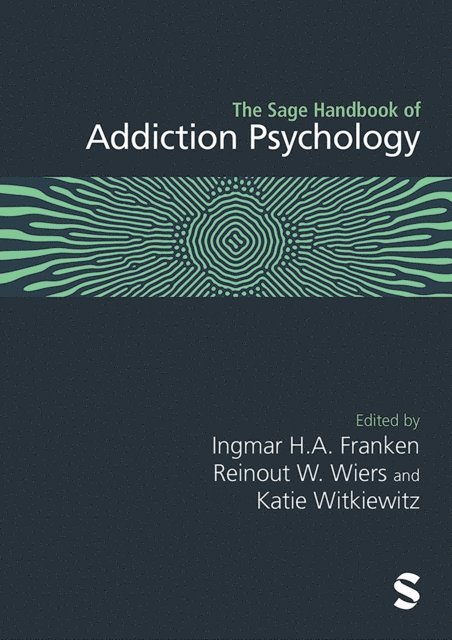
    The Sage Handbook of Addiction Psychology

    AvIngmar H.A. Franken,Reinout Wiers

    Inbunden, Engelska, 2024

    3 170 kr

    Beställningsvara. Skickas inom 3-6 vardagar. Fri frakt över 249 kr.

    Beskrivning

    The Sage Handbook of Addiction Psychology presents a comprehensive overview of the state of the science behind the psychology of addiction, offering a crucial resource for psychologists engaged in both research and practice.

    The Handbook features a distinguished international group of contributors, all renowned specialists in their respective fields and emphasizes a forward-looking perspective. Chapters delve into psychological theories of addiction and evidence-based addiction treatment, offering practical insights on the intricacies of addiction psychology.

    The handbook takes a holistic approach by incorporating neighbouring fields traditionally outside of psychology; it explores economics, genetics, public health, neurobiology, computer science, and sociology, recognizing that psychology and individual-centered perspectives are just one facet of addiction. This multifaceted approach ensures that readers gain a broad understanding of the psychology of addiction, fostering a comprehensive and nuanced comprehension of this complex subject.

    With Substance Use Disorders ranking among the most prevalent mental health concerns globally, this handbook, designed from the ground up for students and researchers, is an essential resource for those seeking a deep understanding of the field of addiction psychology.


    Part 1. Background, including history and epidemiology.

    PART 2. Vulnerability, including psychological, environmental, and biological factors.

    PART 3 Interventions

    PART 4 Specific addictions

    PART 5 Future directions

    Produktinformation

    • Utgivningsdatum:2024-10-30
    • Mått:174 x 246 x 44 mm
    • Vikt:1 290 g
    • Format:Inbunden
    • Språk:Engelska
    • Antal sidor:688
    • Upplaga:1
    • Förlag:SAGE Publications
    • ISBN:9781529624748

    Utforska kategorier

    • Sociala och etiska frågor inom Samhälle och politik
    • Folkhälsa och hälsopedagogik inom Medicin
    • Missbruk inom Medicin

    Mer om författaren

    Ingmar Franken is a full professor of clinical psychology at Erasmus University Rotterdam, the Netherlands, where he directs the Center for Substance Use and Addiction Research (CESAR). With a "From Lab to Society" ethos, he emphasizes the integration of basic experimental research and clinical practice. Franken employs a variety of methodologies to achieve this goal, ranging from cognitive neuroscience techniques such as fMRI and EEG to longitudinal cohort studies. In particular, he is involved in several large longitudinal neuroscience initiatives, including the Generation R and Growing Up Together in Society (GUTS) cohort studies in Rotterdam. His current focus is on understanding the neurocognitive underpinnings of adolescent substance use and elucidating the causes and consequences of addiction. He has successfully supervised 27 Ph.D. students and has authored three books, over 200 peer-reviewed publications, and numerous book chapters. His expertise is sought worldwide, with more than 100 presentations and invited talks at conferences, universities, and research institutions around the world.Reinout Wiers is Professor of Developmental Psychopathology, Department of Psychology, University of Amsterdam, where he leads the Addiction Development and Psychopathology (ADAPT) Lab. He is (co)director of the University of Amsterdam’s Centre for Urban Mental Health. He is internationally known for his work on assessing and changing implicit cognitive processes in addiction. He has published over 400 international papers and many book-chapters and three books. With Alan Stacy, he edited the handbook of implicit cognition and addiction (SAGE, 2005). He received the prestigious VIDI (2002) and VICI (2008) research grants from the Dutch National Science Foundation (N.W.O.) for research on implicit cognition and addiction, and has been part of several European and international research consortia.  Katie Witkiewitz is a Distinguished Professor of Psychology and the Director of the Center on Alcohol, Substance use, And Addictions at the University of New Mexico.  Her research examines treatment of substance use disorder, with an emphasis on reducing human suffering, harm reduction, precision medicine, and supporting recovery.  Professor Witkiewitz is also a licensed clinical psychologist and has worked extensively on the development, evaluation, and implementation of mindfulness-based treatments for substance use disorder. She serves on the United States National Advisory Council on Alcohol Abuse and Alcoholism and on the Board of Scientific Counselors for the National Institute on Drug Abuse. Professor Witkiewitz is currently Editor of Psychology of Addictive Behaviors, and serves on the editorial boards of Substance Use and Misuse, Alcohol and Alcoholism, Annual Reviews: Clinical Psychology, and Journal of Psychopathology and Clinical Science. Her research has been supported by multiple grants from the National Institutes of Health, totaling over $90 million in research funding since 2004. She has authored 6 books and over 300 peer-reviewed publications, and has given over 100 presentations and invited talks.

    Innehållsförteckning

    • Editors′ Introduction - Ingmar H.A. Franken, Reinout Wiers, Katie WitkiewitzPART 1: BackgroundChapter 1: The history of addiction concepts: from ‘addiction’ to ‘addictions’ - Alex MoldChapter 2: Addiction, brain disease, and free will - Matt FieldChapter 3: The epidemiology of substance use and substance use disorder - Deborah Hasin, Julia M. Bujno, Caroline G. WisellChapter 4: The epidemiology of behavioral addictions - Biljana Gjoneska, Beáta Bothe, Marc N. Potenza, Attila Szabó, Zsolt DemetrovicsChapter 5: The developmental epidemiology of substance use and disorder - Andrea Hussong, Amanda K. Haik, Adrianna N. RichardsChapter 6: Health equity considerations for drug and alcohol addiction research and treatment - Angela Haeny, Caravella McCuistian, Lesia M. Ruglass, Kathy BurlewPART 2: Vulnerability & MechanismsChapter 7: Contemporary psychological theories of addiction - Marvin Krank, Maya PilinChapter 8: Cognitive models of addiction - Andrew Waters, Mehmet SofuogluChapter 9: Behavioral economics of addiction: A reinforcer pathology approach - Warren Bickel, Rafaela M. Fontes, Daniel A.R. Cabral, Anthony N. Nist, Roberta Freitas-LemosChapter 10: Stress and addictive disorders: Drug- and stressor-related effects on stress biological and psychological response - Rajita Sinha, Morgan Pearlman, Rajita SinhaChapter 11:Trauma and addiction - Willie LangenlandChapter 12: The role of impulsivity in addictive behavior - Michiel Boog, Ingmar FrankenChapter 13: Early life risk factors of substance abuse and substance use disorder - Hanan El MarrounChapter 14: Adolescent development and vulnerability for addiction - Natalie Castellanos-Ryan, Nina Pocuca, Margot PeetersChapter 15: Beyond the individual: Considering contextual factors in addiction psychology - David I.K. Moniz-Lewis, Hannah A. Carlon, Hanna M. Hebden, Felicia R. Tuchman, Katie WitkiewitzChapter 16: The genetic basis of addiction - Karin J.H. Verweij, Joelle A. Pasman, Eske M. Derks, & Zachary F. GerringChapter 17: Mapping brain structure and function in addiction: A narrative review of neuroimaging studies - Valentina Lorenzetti, Ethan Murphy, Anastasia Paloubis, Chao Suo, Govinda Poudel, Hannah ThomsonChapter 18: The relevance of animal studies for human addiction - Serge AhmedPART 3: InterventionsChapter 19: Preventing substance use - Gilbert Botvin, Kenneth W. GriffinChapter 20: Public health interventions for addiction - Jurgen RehmChapter 21: Using Brief Motivational Interviewing as an Early Intervention for Reducing Risk of Substance Use Problems and Substance Use Disorder in Young People - Leanne HidesChapter 22: Psychological interventions for addictive behaviors - Katie WitkiewitzChapter 23: Care for chronic patients using harm reduction strategies - Henri-Jean AubinChapter 24: Cognitive Bias Modification as add-on to the treatment of substance use disorders - Charlotte E. Wittekind, Mike Rinck, Reinout W. WiersPART 4: Specific AddictionsChapter 25: Alcohol use disorder - Shannon N. Speed, Lorenzo LeggioChapter 26: Tobacco smoking addiction and nicotine dependence - Sharon CoxChapter 27: Opioid Use and Misuse - Kevin Vowles, G. Cameron Coleman, Mark A. IlgenChapter 28: Stimulant use disorders - Antonio Verdejo-Garcia, Gloria Garcia-FernandezChapter 29: The epidemiology of cannabis use - Alvaro Castillo-Carniglia, Diego Piñol-ArriagadaChapter 30: Gambling addiction - Ellen Flynn, Luke ClarkeChapter 31: Gaming disorder and other online addictive behaviors - Annika Brandtner, Matthias BrandChapter 32: Eating addiction - Adrian MeulePART 5: Future directionsChapter 33: Value and potential of network models for conceptualizing, assessing, and treating addiction and co-occurring disorders - Marilyn PiccirilloChapter 34: Identity and Addiction - Kevin S. Montes, Anita Kapila-Ramirez, Juana Hernandez Jaime, Sheena Adolphus, Maria Delgado Chapter 35: To flourish or flounder: The relation between meaning in life and addiction - Brian Ostafin, Marcel NätherChapter 36: Psychedelic therapy in the treatment of addiction - Joshua Watt, Joel Hoffman, Paul S. Haber, Kirsten C. MorleyChapter 37: Neuromodulation technologies for substance use disorders - Afra Souki, Ghazaleh Soleimani, Colleen Hanlon, Hamed EkhtiariChapter 38: Artificial intelligence in substance use research - Emmanuel Kuntsche, Maree Patsouras, Zhen He, Benjamin Riordan