• Fri frakt över 249 kr
  • •
  • Snabba leveranser
  • •
  • Billiga böcker
Kundservice

Du är på sajten för privatpersoner.

Företag, bibliotek eller offentlig verksamhet?

Du handlar på classic.bokus.com, där alla dina funktioner finns intakta.
Till classic.bokus.com
Bokus logotyp. Gå till startsidan.
  • Erbjudanden
  • Nyheter
  • Student
  • Topplistor
  • Barn & ungdom
  • Bokus Play
  • E-böcker
  • Pocketböcker
  • Spel & pussel

Må bättre, för mindre! Upp till 50% rabatt på hälsoböcker

Sidfot

Mina sidor

    Hjälp

    • Kundservice
    • Vanliga frågor och svar
    • Frakt och leverans
    • Retur vid ångerrätt
    • Reklamera vara
    • Betalning
    • Köpvillkor
    • Allmänna villkor
    • Information om webbplatsens tillgänglighet

    Om Bokus

    • Om oss
    • Pressrum
    • För studenter
    • För företag
    • För bibliotek och offentlig verksamhet
    • För leverantörer
    • Hållbarhet

    Populärt

    • Aktuella erbjudanden
    • Presentkort
    • Studentlitteratur
    • Nya böcker
    • Topplistor
    • Signerade böcker
    • Engelska böcker

    Inspiration

    • Boktips
    • BookTok
    • Populära bokserier
    • Barnbokskaraktärer
    • Populära författare
    Logotyp för Bokus
    Följ oss på Facebook (extern länk)Följ oss på Instagram (extern länk)Följ oss på YouTube (extern länk)Följ oss på TikTok (extern länk)
    bokus @ CookiesAnpassa cookiesIntegritetspolicyKöpvillkor
    Till Citymail hemsida (extern länk)Till Budbee hemsida (extern länk)Till Postnord hemsida (extern länk)Till Schenker hemsida (extern länk)Till Early Bird hemsida (extern länk)Till Walleys hemsida (extern länk)
    1. Samhälle och politik
    2. Samhälle och kultur
    3. Kultur och medier
    4. Referensverk och tvärvetenskap

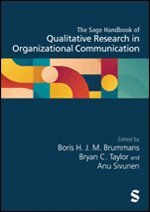
    The Sage Handbook of Qualitative Research in Organizational Communication

    AvBoris H. J. M. Brummans,Bryan C. Taylor

    Inbunden, Engelska, 2024

    2 428 kr

    Skickas . Fri frakt över 249 kr.

    Beskrivning

    The Sage Handbook of Qualitative Research in Organizational Communication is a state-of-the-art resource for scholars, students, and practitioners seeking to deepen their understanding and expertise in this dynamic field.

    Written by a global team of established and emerging experts, this Handbook provides a comprehensive exploration of the field’s foundational traditions of epistemology and theory, as well as its latest methodologies, methods, issues, and debates.

    The volume reflects a diverse range of approaches (e.g., mixed-methods, ethnographic, rhetorical, pragmatist, phenomenological, feminist, critical race, postcolonial, queer, and engaged), and covers a broad spectrum of topics ranging from data collection and analysis, to representation.

    Additionally, this Handbook addresses emerging trends such as digital forensics, post-qualitative research, and the transformative impact of COVID-19 on the conduct of qualitative research in organizational communication.

    As the first volume of its kind in this field, The Sage Handbook of Qualitative Research in Organizational Communication is a cornerstone text for scholars, students, and practitioners interested in understanding the vital role of communication in organizational life.

    Part 1: Approaches to Qualitative Organizational Communication Research 
    Part 2: Data Collection in Qualitative Organizational Communication Research: Methods and Issues
    Part 3: Data Analysis and Representation in Qualitative Organizational Communication Research: Methods and Issues
    Part 4: The Future of Qualitative Organizational Communication Research

    Produktinformation

    • Utgivningsdatum:2024-01-24
    • Mått:174 x 246 x 47 mm
    • Vikt:1 380 g
    • Format:Inbunden
    • Språk:Engelska
    • Antal sidor:744
    • Upplaga:1
    • Förlag:SAGE Publications
    • ISBN:9781529794632

    Utforska kategorier

    • Referensverk och tvärvetenskap inom Samhälle och politik
    • Organisationsteori inom Ekonomi och Ledarskap
    • Affärsförhandlingar inom Ekonomi och Ledarskap

    Mer om författaren

    Boris H. J. M. Brummans is a Professor in the Département de Communication at the Université de Montréal in Canada. His research interests include agency, mindful organizing, organizational communication, organizational ethnography, and process philosophy. He has contributed chapters to several edited books and his articles appear in international peer-reviewed journals such as Communication Monographs, Human Relations, Information, Communication & Society, Management Communication Quarterly, Organization Studies, and Qualitative Inquiry. His edited volume, The Agency of Organizing: Perspectives and Case Studies (Routledge), received the 2018 Outstanding Edited Book Award from the Organizational Communication Division of the National Communication Association and he served as an Associate Editor of Management Communication Quarterly from 2015 to 2019. Currently, he is Chair of the International Communication Association′s (ICA) Organizational Communication Division. Bryan C. Taylor is a Professor in the Department of Communication at the University of Colorado-Boulder in the USA. His research and teaching interests include qualitative research methods, organizational culture, and critical security studies. His qualitative research has been published in journals including Communication Research, Culture and Organization, Journal of Applied Communication Research, Western Journal of Communication, Journal of Contemporary Ethnography, Management Communication Quarterly, and the Romanian Journal Communication and Public Relations. He is the co-author of three editions of Qualitative Communication Research Methods (SAGE), and co-editor of Nuclear Legacies: Communication, Controversy, and the U.S. Nuclear Weapons Production Complex (Lexington Books), as well as The Routledge Handbook of Communication and Security. Anu Sivunen is Professor of Communication at University of Jyväskylä in Finland. Her research focuses on new forms of organizing, such as remote and flexible work arrangements, communication processes and identity issues in global teams, and organizational communication technologies and their affordances. Her research interests also include employees’ work-life boundary management and organizational space. Her qualitative and conceptual work has appeared in international publications from a variety of disciplines, such as Academy of Management Annals, Human Relations, Information Technology and People, International Journal of Communication, Journal of Applied Communication Research, Journal of Computer-Mediated Communication, Journal of the Association of Information Systems, and Small Group Research. This work has earned awards from the National Communication Association, International Communication Association, and Hawaii International Conference on Systems Sciences. Anu has been a Visiting Scholar at University of California, Santa Barbara and at Stanford University in the USA.

    Recensioner i media

    Organizational communication is not only a discipline, but also a community. It has its meeting places, such as the annual conventions of the National and International Communication Associations. It has its rituals, such as business meetings and award ceremonies during these conferences. Unfortunately, however, the field has few outlets to showcase its research. Management Communication Quarterly is the field’s only flagship journal. Moreover, for a long time, The Sage Handbook of Organizational Communication (Putnam & Mumby, 2013), which has gone through several editions, was the only comprehensive volume presenting the discipline’s "state of the art." Recently, this has started to change. In 2017, Craig Scott and Laurie Lewis edited the impressive International Encyclopedia of Organization Communication (Scott & Lewis, 2017). In 2021, Francois Cooren and Peter Stucheli- Herlach edited the Handbook of Management Communication (de Gruyter) (Cooren & Stucheli-Herlach, 2021). And in 2022, Joelle Basque, Nicolas Bencherki, and Timothy Kuhn edited The Routledge Handbook of the Communicative Constitution of Organization (Basque et al., 2022). In addition, Vernon Miller and Marshall Scott Poole are about to publish a new Handbook of Organizational Communication (in press).So, do we need another handbook? The Sage Handbook of Qualitative Research in Organizational Communication shows that the answer to this question is unequivocally yes.Read the full review here: https://academic.oup.com/ct/article-abstract/34/2/106/7634749

    Innehållsförteckning

    • Foreword - James R. BarkerIntroduction: Toward a Methodological Lingua Franca for Qualitative Research in Organizational Communication - Boris H. J. M. Brummans, Bryan C. Taylor, and Anu SivunenPart 1: Approaches to Qualitative Organizational Communication ResearchChapter 1: From Mixed Methods to Mixed Research Approaches for Qualitative Organizational Communication Research - Jody L. S. Jahn and Karen K. MyersChapter 2: Ethnographic Approaches to Qualitative Organizational Communication Research - Angela N. Gist-Mackey and Cristin A. ComptonChapter 3: Rhetorical Approaches to Qualitative Organizational Communication Research - Charles Conrad and George CheneyChapter 4: Pragmatist Approaches to Qualitative Organizational Communication Research - François Cooren, Philippe Lorino, and Daniel RobichaudChapter 5: Phenomenological Approaches to Qualitative Organizational Communication Research - Rebecca J. Meisenbach and Madeline S. PringleChapter 6: Approaches to Qualitative Research on the Communicative Constitution of Organizations - Theresa CastorChapter 7: Feminist Approaches to Qualitative Organizational Communication Research - Patrice M. Buzzanell, Spencer Margulies, Evgeniya Pyatovskaya, and Patricia K. AbijahChapter 8: Critical Race Theory and Intersectional Approaches to Qualitative Organizational Communication Research - Jasmine T. Austin and Tianna L. CobbChapter 9: Postcolonial Qualitative Research in Organizational Communication - Mahuya Pal, Beatriz Nieto-Fernandez, and Silpa SatheeshChapter 10: Queer Approaches to Qualitative Organizational Communication Research - Jamie McDonald and Elizabeth K. EgerChapter 11: Ethnography of Communication Approaches to Qualitative Organizational Communication Research - Trudy Milburn and Sunny Lie OwensChapter 12: Autoethnography and Organizational Communication: Tracing their Convergence and Divergence - Kurt Lindemann and Yea-Wen ChenChapter 13: Engaged Scholarship Approaches to Qualitative Organizational Communication Research - J. Kevin Barge and Anna W. WolfePart 2: Data Collection in Qualitative Organizational Communication Research: Methods and IssuesChapter 14: Research Design in Qualitative Organizational Communication Studies - Bryan C. Taylor and Ryan S. BiselChapter 15: Challenges Faced by Qualitative Researchers in Negotiating Access to Organizational Communication Settings - Keri K. Stephens, Craig R. Scott, and Nancy H. CarlsonChapter 16: Interviews and Focus Groups in Qualitative Organizational Communication Research - Brenda L. BerkelaarChapter 17: Participatory Methods in Qualitative Organizational Communication Research - Rebecca Gill and Joshua B. BarbourChapter 18: Collecting Digital Data in Qualitative Organizational Communication Research - Jennifer L. Gibbs and Salla-Maaria LaaksonenChapter 19: Collecting Visual Data in Qualitative Organizational Communication Research - Elizabeth Wilhoit LarsonPart 3: Data Analysis and Representation in Qualitative Organizational Communication Research: Methods and IssuesChapter 20: Phronetic Iterative Qualitative Data Analysis (PIQDA) in Organizational Communication Research - Sarah J. Tracy, Angela Gist-Mackey, and Marco DehnertChapter 21: Narrative Analysis in Qualitative Organizational Communication Research - Stephanie L. Dailey, Larry Davis Browning, and Jan-Oddvar SørnesChapter 22: Rhetorical Analysis in Qualitative Organizational Communication Research - Chantal Benoit-Barné and Mathieu ChaputChapter 23: Conversation Analysis in Qualitative Organizational Communication Research - Jonathan Clifton and Jakob Rømer BarfodChapter 24: Ventriloquial Analysis in Qualitative Organizational Communication Research - Ellen Nathues, François Cooren, and Mark van VuurenChapter 25: Analysis of Sociomateriality and Affect in Qualitative Organizational Communication Research - Jennifer J. Mease and Scott E. BrantonChapter 26: Critical Discourse Analysis in Qualitative Organizational Communication Research - Debbie S. Dougherty and Blessing OkaforChapter 27: Past, Present, and Future Analysis of Digital Work in Qualitative Organizational Communication Research - Luisa Ruge-Jones, William C. Barley, and Jeffrey W. TreemChapter 28: Analysis of Tensions and Paradoxes in Qualitative Organizational Communication Research - Gail T. Fairhurst and Linda L. PutnamChapter 29: A Process Ontology Perspective on Qualitative Analysis in Organizational Communication Research - Consuelo Vásquez, Viviane Sergi, and Anthony HussenotChapter 30: Positionings: Toward a Relational Understanding of Representation and Writing in Organizational Communication Research - Oana Brindusa Albu, Boukje Cnossen, and Chahrazad AbdallahPart 4: The Future of Qualitative Organizational Communication ResearchChapter 31: Digital Forensics: A Guide to Conducting Qualitative Research on Organizational Communication and Digital Technology - Mikkel Flyverbom, Paul M. Leonardi, and Nitzan NavickChapter 32: Hybridity, Visibility, and Organizing: Globalization and Qualitative Methods in Organizational Communication Research - Shiv Ganesh, Cynthia Stohl, and Samantha JamesChapter 33: Organizing Post-qualitative Research in Organizational Communication - Kate Lockwood HarrisChapter 34: Qualitative Research in Organizational Communication Post-COVID-19 - Kirstie McAllum, Stephanie Fox, Laura Ginoux, Heather Zoller, Andrea Zorn, and Theodore E. ZornAfterword from the Perspective of a Management Scholar - Silvia GherardiAfterword from the Perspective of Two Organizational Communication Scholars - Eric M. Eisenberg and Patricia Geist-Martin