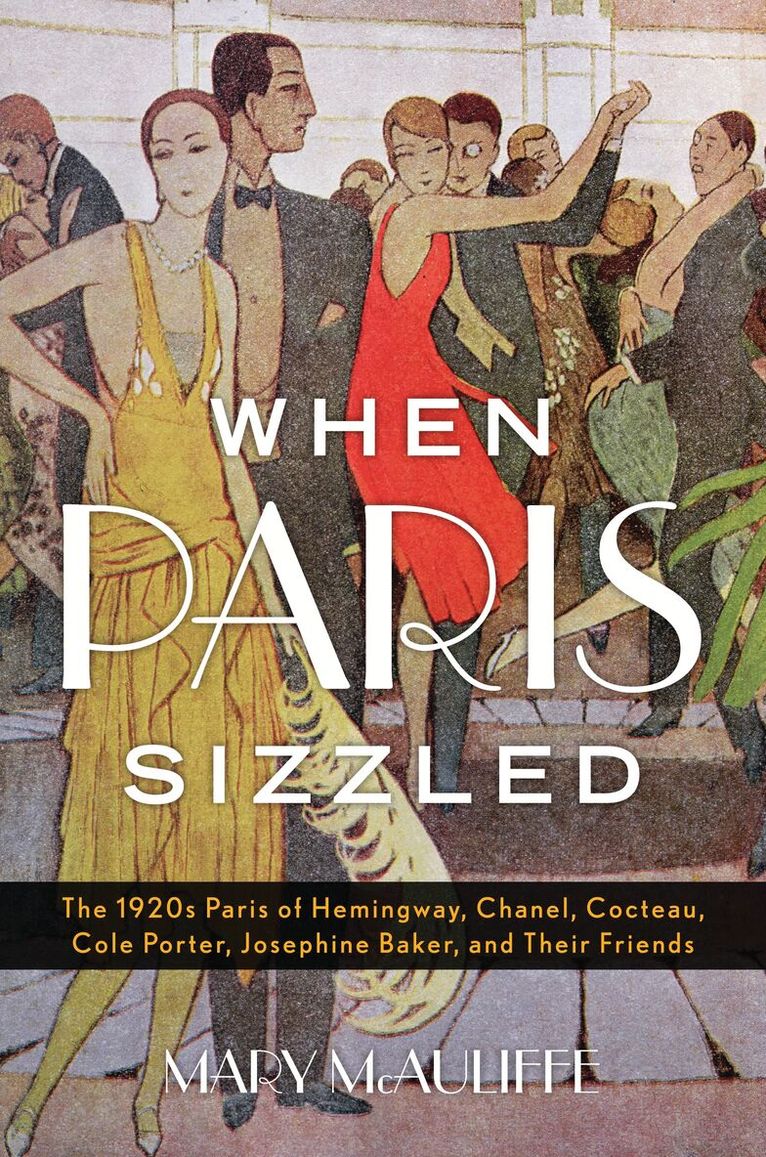
Häftad, Engelska, 2019
When Paris Sizzled
The 1920s Paris of Hemingway, Chanel, Cocteau, Cole Porter, Josephine Baker, and Their Friends
228 kr
Skickas fredag 6/11. Fri frakt över 249 kr.
Fler format och utgåvor
Beskrivning
Produktinformation
- Utgivningsdatum: 2019-02-04
- Mått: 140 x 224 x 23 mm
- Vikt: 517 g
- Format: Häftad
- Språk: Engelska
- Antal sidor: 344
- Förlag: Bloomsbury Publishing Plc
- ISBN: 9781538121801
- Utmärkelser: Winner of Choice Outstanding Academic Title 2017
Utforska kategorier
Mer om författaren
Mary McAuliffe holds a PhD in history from the University of Maryland, has taught at several universities, and has lectured at the Smithsonian Institution. She has traveled extensively in France, and for many years she was a regular contributor to Paris Notes. Her books include Dawn of the Belle Epoque, Twilight of the Belle Epoque, Clash of Crowns, and Paris Discovered. She lives in Manhattan with her husband.
Recensioner i media
A vivid chronicle of 10 roiling years in Paris.Historian McAuliffe . . . takes up where her last book left off, in 1918, to focus on the city's cultural life after World War I. What Americans called the Roaring '20s, the French termed les Années folles, "the Crazy Years," which the author deems an apt epithet for the "what the hell" attitude that pervaded the city's upper class. But there was more to life in Paris than "endless parties and late-night jazz clubs." Organizing the book chronologically, McAuliffe portrays a city bursting with creativity in art, music, dance, fashion, architecture, and literature. Drawing on memoirs, biographies, and the many histories of the period, she follows an abundant and diverse cast of characters, creating brief vignettes about the yearly evolution of their lives and careers. Besides the usual suspects found in any history of the Lost Generation—Hemingway, Fitzgerald, Stein, Picasso, Pound, Man Ray, Kiki of Montparnasse, and Cocteau, to name a few—the author includes politicians (de Gaulle, Clemenceau, Pétain) and innovators in fields other than the arts, such as cosmetics manufacturers Helena Rubinstein and François Coty; architect Charles Jeanneret, who became famous as Le Corbusier; Marie Curie; couturiers Paul Poiret and, of course, Coco Chanel; and automotive giants Renault, Peugeot, and Citroën. André Citroën, writes McAuliffe, was determined to be the French Henry Ford; he "was not interested in creating a plaything for the rich. He wanted to make useful car for the middle class," the equivalent of Ford's Model T. Within a year of production, thousands of Citroëns were on the road. By 1925, Citroën was the fourth-largest auto company in the world, "behind only the Americans—Ford, General Motors, and Chrysler." Fast-paced and richly detailed, the narrative nevertheless reprises many well-known stories. McAuliffe creates an expansive landscape in her examination of a transformative decade.
Betyg & recensioner
0 recensioner
Inga recensioner tillgängliga.