• Fri frakt över 249 kr
  • •
  • Snabba leveranser
  • •
  • Billiga böcker
Kundservice

Du är på sajten för privatpersoner.

Företag, bibliotek eller offentlig verksamhet?

Du handlar på classic.bokus.com, där alla dina funktioner finns intakta.
Till classic.bokus.com
Bokus logotyp. Gå till startsidan.
  • Erbjudanden
  • Nyheter
  • Student
  • Topplistor
  • Barn & ungdom
  • Bokus Play
  • E-böcker
  • Pocketböcker
  • Spel & pussel

10% rabatt på allt med kod NYSTART10 →

Sidfot

Mina sidor

    Hjälp

    • Kundservice
    • Vanliga frågor och svar
    • Frakt och leverans
    • Retur vid ångerrätt
    • Reklamera vara
    • Betalning
    • Köpvillkor
    • Allmänna villkor
    • Information om webbplatsens tillgänglighet

    Om Bokus

    • Om oss
    • Pressrum
    • För studenter
    • För företag
    • För bibliotek och offentlig verksamhet
    • För leverantörer
    • Hållbarhet

    Populärt

    • Aktuella erbjudanden
    • Presentkort
    • Studentlitteratur
    • Nya böcker
    • Topplistor
    • Signerade böcker
    • Engelska böcker

    Inspiration

    • Boktips
    • BookTok
    • Populära bokserier
    • Barnbokskaraktärer
    • Populära författare
    Logotyp för Bokus
    Följ oss på Facebook (extern länk)Följ oss på Instagram (extern länk)Följ oss på YouTube (extern länk)Följ oss på TikTok (extern länk)
    bokus @ CookiesAnpassa cookiesIntegritetspolicyKöpvillkor
    Till Citymail hemsida (extern länk)Till Budbee hemsida (extern länk)Till Postnord hemsida (extern länk)Till Schenker hemsida (extern länk)Till Early Bird hemsida (extern länk)Till Walleys hemsida (extern länk)
    1. Juridik
    2. Särskilda rättsområden
    3. Straffrätt: process och brott
    4. Straffrätt: lagar

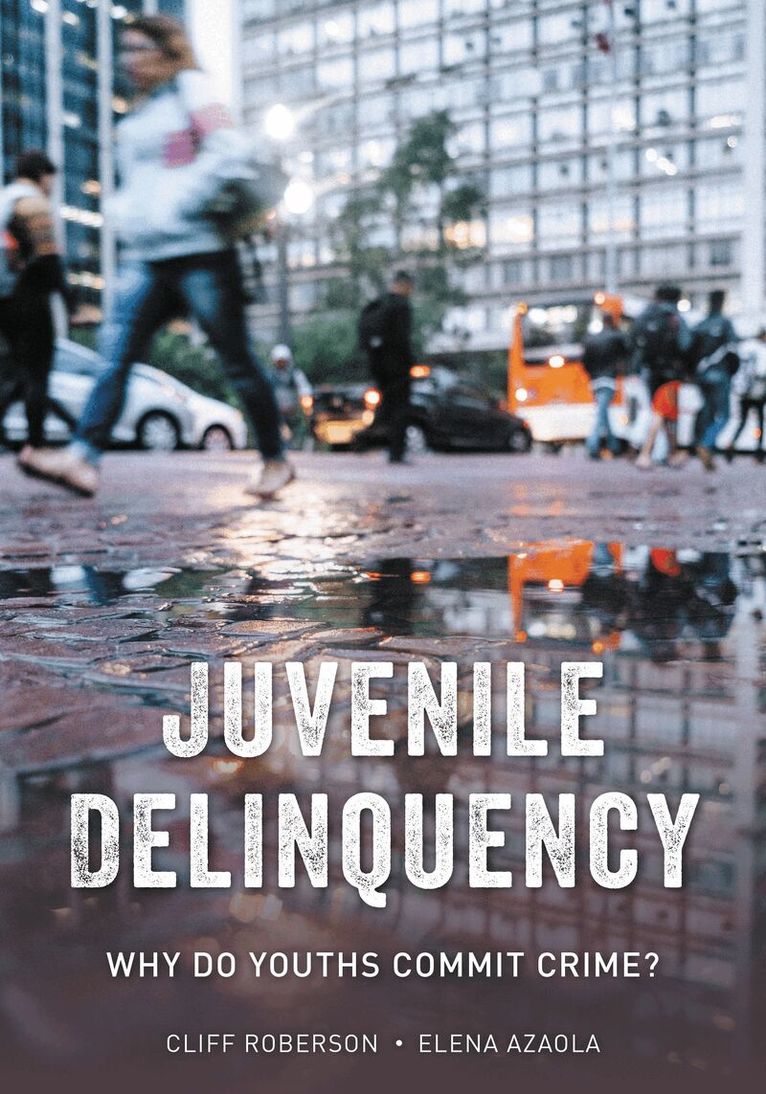
    Juvenile Delinquency

    Why Do Youths Commit Crime?

    AvCliff Roberson,Elena Azaola

    Häftad, Engelska, 2021

    1 028 kr

    Beställningsvara. Skickas inom 10-15 vardagar. Fri frakt över 249 kr.

    Fler format och utgåvor

    E-bok

    1 111 kr

    Inbunden

    1 412 kr

    Beskrivning

    Juvenile Delinquency: Why Do Youths Commit Crime? focuses on why juveniles commit crime. It includes discussions on what constitutes criminal behavior by juveniles, the general theories on delinquency, and discussions that tie the theories with real life situations. The book opens the students’ eyes to the fascinating concepts involving juvenile delinquency, and is designed to provide a complete study of the behavior, beliefs, conditions, and reactions to deviance by young offenders. Throughout Cliff Roberson and Elena Azaola gives students a detailed discussion of and what constitutes juvenile delinquency to allow for better understanding of this phenomenon. In each of the chapters, the authors encourage the student to develop new insights on criminal behavior of juveniles. The book makes the subject come alive by the generous use of “down to earth” examples of the issues involved in the area. While each chapter builds on the previous chapters, the book is written in a manner to reduce the necessity of memorization by students. Each chapter begins with chapter objectives that highlights key points for the student and brief chapter outlines. Each chapter closes with a practicum, chapter summary, and discussion and review questions which enhance student learning. The book closes with a glossary where student may refer to they key terms and words throughout the text.

    Produktinformation

    • Utgivningsdatum:2021-02-08
    • Mått:180 x 256 x 20 mm
    • Vikt:640 g
    • Format:Häftad
    • Språk:Engelska
    • Antal sidor:316
    • Förlag:Bloomsbury Publishing Plc
    • ISBN:9781538131893

    Utforska kategorier

    • Straffrätt: lagar inom Juridik
    • Brottslighet och kriminologi inom Samhälle och politik

    Mer om författaren

    Cliff Roberson is former managing editor in chief of the journal Police Practice & Research, an international journal that is distributed in over 50 countries. In addition, he is an Emeritus Professor at Washburn University and retired Professor of Criminology at California State University, Fresno. Elena Azaola, PhD, is a professor at the Center for Advanced Studies and Research in social anthropology located in Mexico City. She has published more than 150 journal articles and numerous books on human behavior, crime, and human rights. Presently Azaola is working on a United Nations funded research on developing “Standards for Mexican Prisons.”

    Recensioner i media

    Adolescents commit a large proportion of crimes in the US and other nations. To investigate this, Roberson and Azaola furnish a comprehensive treatment of juvenile involvement in delinquent behaviors and how society responds to it. They begin by describing the uneven definitions of adolescence, followed by an overview of types of juvenile misconduct, ways researchers measure misconduct, and factors that influence these types of behavior. In chapters on delinquency theories, the authors provide a thorough overview of various explanations for juvenile misconduct, including those that address rational, biological, psychological, social structural, social process, and institutional factors. Although the book’s title suggests that these explanations are its key focus, the authors also discuss the juvenile justice system, including the major goals of and justification for a separate system for young people and how this involves policing, courts, corrections, and specialized institutions, such as training schools and group homes. In many ways, this is a standard textbook on juvenile delinquency, but one advantage is the authors’ inclusion of examples from Mexico, Canada, and elsewhere. The final chapter illustrates this benefit by furnishing a brief comparative review of the juvenile justice systems in several nations. Recommended. All undergraduates.

    Innehållsförteckning

    • PrefaceAcknowledgements Part I: Juveniles Delinquency OverviewChapter 1: Introduction to the Study of Juvenile DelinquencyChapter objectivesOverview of juvenile delinquencyDefining adolescence and lack of a uniform definitionTypes of Juvenile MisconductMeasuring DelinquencyGoals of the Juvenile Justice SystemFactors that influence juvenile behaviorsOverview of delinquency theoriesCrime and AgeFemale DelinquencyOverview of federal action on juvenile JusticePracticumSummary Discussion and Review QuestionsChapter 2: Issues Involving Juvenile DelinquencyChapter objectivesDo We Need A Separate Court System?Juveniles Involved in Sex TraffickingPrimary Purpose of Juvenile Justice Courts? Juvenile Incarceration FundingPrivately-Operated Juvenile InstitutionsSchool to Prison PipelineJuveniles Who Commit Violent CrimesPathways to DesistanceBullyingCyber DelinquencyPracticumSummary Discussion and Review QuestionsPart II: Delinquency Causation TheoriesChapter 3: Classical and Positivists ConceptsChapter objectivesDelinquency BehaviorsEarly Theories of DelinquencyClassical ConceptsFree WillRational choice Mental Capacity DefensesEarly Positivist ConceptsBiological Explanations of DelinquencyPsychological ConceptsPracticumSummaryDiscussion and Review QuestionsChapter 4: Social Structure ConceptsChapter objectivesCausation TheoriesAnomieSocial Structure ProcessesStrainSubcultural TheoriesInstitutional anomie theorySymbolic Interaction TheoriesEcological TheoriesPracticumSummaryDiscussion and Review QuestionsChapter 5: Social Process and Integrated TheoriesChapter objectivesSocial Control TheoriesSocial Bond TheoriesConflict TheoriesCritical TheoriesSocial Learning TheoriesMulti-Factor Theories of CrimeIntegrated TheoriesControl Balance TheoryDifferential Coercion TheoryPracticumSummaryDiscussion and Review QuestionsPart III Delinquency InfluencesChapter 6: Families & Peers Delinquency InfluencesChapter objectivesFamily Influences Early Childhood Disruptive BehaviorFunctional Family TheoryPeers and DelinquencyPracticumSummaryDiscussion and Review QuestionsChapter 7: Youth GangsChapter objectivesYouth Gang IssuesDefining Youth GangsHistory of Youth GangsGang IndicatorsIndicators of Youth Gang Involvement Dynamics of Youth GangsWhy Youths Join GangsConsequences of Gang MembershipPreventing Gang MembershipPromising Programs for Dealing with Youth GangsNational Youth Gang CenterPracticumSummaryDiscussion and Review Questions Chapter 8: Juveniles and PoliceChapter objectivesPolice and Juvenile offendersPolice DiscretionSchool Resource OfficersPolice and Rule of LawPracticumSummaryDiscussion and Review QuestionsPart IV Juvenile Justice SystemChapter 9: Juvenile JusticeChapter objectivesDevelopment of Juvenile JusticeJuvenile Justice ReformDevelopment of Dependency JurisdictionU.S. Supreme Court and the Rights of JuvenilesPracticumSummaryDiscussion and Review QuestionsChapter 10: Juvenile Court HearingsChapter objectivesOverviewThe Petition Jurisdictional or Intake HearingAdjudicatory hearingRights at Juvenile HearingsAppealing A Juvenile AdjudicationPersons Involved in the HearingsReponses and Plea BargainingPracticumSummaryDiscussion and Review QuestionsChapter 11: Juvenile CorrectionsChapter objectivesJuvenile ProbationConditions of ProbationInterstate Compact on JuvenilesJuvenile Probation OfficersRestorative JusticeRevocation of ProbationPracticumSummaryDiscussion and Review QuestionsChapter 12: Juvenile InstitutionsChapter objectivesOverviewSexual Violence in Juvenile InstitutesResidential TreatmentJuvenile ParoleTypes of InstitutionsAftercareDoes Detention make them worst?Massachusetts ExperiencePracticumSummaryDiscussion and Review QuestionsChapter 13: Transfers to Adult Criminal Court Chapter ObjectiveOverviewStatistics on WaiversWaiver of JurisdictionDouble Jeopardy and the Wavier DecisionRight to Appeal WaiverDirect Filing in Adult Criminal CourtPracticumSummaryDiscussion and Review QuestionsChapter 14: Enhancing Juvenile ProtectionChapter objectivesTermination of Parental RightsProtective OrdersDisclosure of Juvenile InformationExpunction of Juvenile RecordsDual System YouthsJuvenile Competency ProceduresJuvenile Drug CourtsTeen CourtsStatus OffensesPracticumSummaryDiscussion and Review QuestionsChapter 15: Comparative Review of Juvenile Justice and Delinquency Chapter objectivesOverviewUnited Nations Standards on Juvenile JusticeUnited Nations World Youth ReportComparative Study of Youth CrimeAustraliaCanadaChinaFranceGreat BritainIndiaJapanPracticumSummary Discussion and Review QuestionsAuthor Bios