• Fri frakt över 249 kr
  • •
  • Snabba leveranser
  • •
  • Billiga böcker
Kundservice

Du är på sajten för privatpersoner.

Företag, bibliotek eller offentlig verksamhet?

Du handlar på classic.bokus.com, där alla dina funktioner finns intakta.
Till classic.bokus.com
Bokus logotyp. Gå till startsidan.
  • Erbjudanden
  • Nyheter
  • Student
  • Topplistor
  • Barn & ungdom
  • Bokus Play
  • E-böcker
  • Pocketböcker
  • Spel & pussel

10% studentrabatt med kod TERM26

Sidfot

Mina sidor

    Hjälp

    • Kundservice
    • Vanliga frågor och svar
    • Frakt och leverans
    • Retur vid ångerrätt
    • Reklamera vara
    • Betalning
    • Köpvillkor
    • Allmänna villkor
    • Information om webbplatsens tillgänglighet

    Om Bokus

    • Om oss
    • Pressrum
    • För studenter
    • För företag
    • För bibliotek och offentlig verksamhet
    • För leverantörer
    • Hållbarhet

    Populärt

    • Aktuella erbjudanden
    • Presentkort
    • Studentlitteratur
    • Nya böcker
    • Topplistor
    • Signerade böcker
    • Engelska böcker

    Inspiration

    • Boktips
    • BookTok
    • Populära bokserier
    • Barnbokskaraktärer
    • Populära författare
    Logotyp för Bokus
    Följ oss på Facebook (extern länk)Följ oss på Instagram (extern länk)Följ oss på YouTube (extern länk)Följ oss på TikTok (extern länk)
    bokus @ CookiesAnpassa cookiesIntegritetspolicyKöpvillkor
    Till Citymail hemsida (extern länk)Till Budbee hemsida (extern länk)Till Postnord hemsida (extern länk)Till Schenker hemsida (extern länk)Till Early Bird hemsida (extern länk)Till Walleys hemsida (extern länk)
    1. Samhälle och politik
    2. Sociologi och antropologi
    3. Antropologi

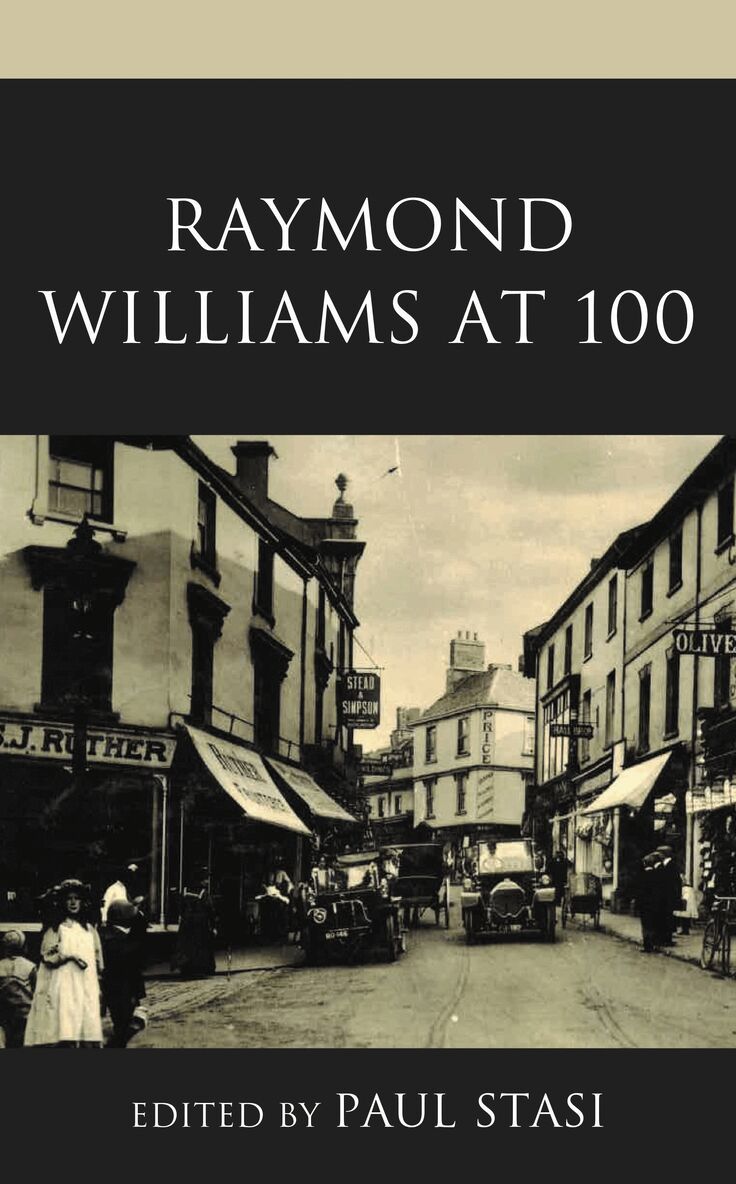
    Raymond Williams at 100

    AvPaul Stasi

    Häftad, Engelska, 2022

    Del i serien Rowman & Littlefield Publishers

    451 kr

    Beställningsvara. Skickas inom 10-15 vardagar. Fri frakt över 249 kr.

    Beskrivning

    Raymond Williams was “by common consent” one of the “two most commanding intellectual figures in the New Left that emerged in Britain at the turn of the sixties,” the other being Edward Thompson. Williams published in 1961 a text entitled “The Future of Marxism.” In that essay, Williams has some remarkable things to say about imperialism, the successes of actually existing socialism, balanced against its failures, and the continued relevance of socialism as the horizon of human liberation. He also makes a characteristic methodological point: “the relation between systems of thought and actual history is both complex and surprising.” The future of Marxism, that is to say, will not depend on dogma, but will instead rest on historical developments, on how well are able to actualize Marx’s ideals in our own unique conjuncture. This volume takes up the challenge of reading and extending Williams’s thought in light of the actual history that has occurred since his passing but with the same ideal of socialism as its guiding horizon. If there is one thread visible throughout all of Williams’s work, it is the felt presence of a living, thinking individual, of a person continually testing ideas in experience in order to see whether they fit the world they are meant to describe. The aim of this volume, timed to coincide with what would have been Williams’s 100th birthday, is to test his ideas in our own experience and to engage Williams’s work in ways that move past the familiar terrain that has grown around it. We now know that “experience” is a dangerous category, that “community” can be hijacked by the right as much as the left, and that “tradition” contains as much conflict as commonality. Those committed to Williams’s work can easily find textual arguments or developments across his career to answer these charges, and they have. What our volume offers is a set of arguments by younger scholars influenced by Williams’s writings that moves past some of these debates, extending Williams’s work into the 21st century, testing and weighing his ideas in light of recent developments and contemporary intellectual culture. In doing so, we treat Williams’s thought as one of those “resources of hope,” which he famously suggested would sustain us.At a time of deepening inequality and austerity and growing rightward reaction, and yet simultaneously, and with seeming dialectical necessity, a renewed investment in socialism, Williams might be exactly the kind of figure we need.

    Produktinformation

    • Utgivningsdatum:2022-08-19
    • Mått:154 x 229 x 14 mm
    • Vikt:340 g
    • Format:Häftad
    • Språk:Engelska
    • Serie:Rowman & Littlefield Publishers
    • Antal sidor:210
    • Förlag:Bloomsbury Publishing Plc
    • ISBN:9781538154311

    Utforska kategorier

    • Antropologi inom Samhälle och politik

    Mer om författaren

    Paul Stasi teaches 20th century Anglophone literature at the University at Albany where he is an associate professor. He is the author of Modernism, Imperialism and the Historical Sense, the co-editor (with Jennifer Greiman) of The Last Western: Deadwood and the End of American Empire and the co-editor (with Josephine Park) of Ezra Pound in the Present: New Essays on Pound’s Contemporaneity.

    Recensioner i media

    Autocratic rule has become more transparent across Western societies, so this collection of essays on the work of Raymond Williams (1921–88) is all the more necessary. The eight fine essays Stasi has gathered outline how Williams’s work is relevant to today’s in late capitalism. The essays draw mostly on the issue of the “affective,” of how art and culture produces “meaning” for individuals. The essays are collected in two sections—"Keywords" and "Knowable Communities"—each with four essays. “Keywords” focuses on Williams’s conceptual vocabulary, and the essays examine such concepts as mediation, “long politics,” and structures of feeling. “Knowable Communities” focuses on the need to examine cultural objects through a democratic understanding of cultural literacy. Each contributor recognizes “late capitalism,” but late capitalism refuses to recognize itself. Williams’s evocation of the “affective” is used as a critical tool in most of the essays—e.g., how the concept of the “affect” might be used as both a political and a pedagogical tool to investigate the experiential. The collection asks the reader to “re-normalize" the normal in late capitalism. There are no answers, just avenues of investigation. Recommended. Upper-division undergraduates through faculty.

    Innehållsförteckning

    • The Meaning of Solidarity: Raymond Williams at 100Paul StasiPart I: Keywords1Mediation MetabolizedAnna Kornbluh2Experience, Culture, Utopia: The Long Politics of Raymond WilliamsMark Allison3Un-learning and Re-learning the Future: Raymond Williams’s Timely UtopiaMathias Nilges4Structures of Feeling: Raymond Williams’s Progressive ProblemshiftThomas A. LaughlinPart II: Knowable Communities5Anti-Imperial Literacy, the Humanities, and Universality in Raymond Williams’s Late Work Daniel Hartley6Inexplicable goodness: Raymond Williams, Charles Dickens and The Ministry of Utmost HappinessPaul Stasi7Structures of Feeling, Late Capitalism and the Making of African Literature in the Global Literary MarketplaceMadhu Krishnan8 Television and Other Popular Media from the 1960s to NowDaniel Worden