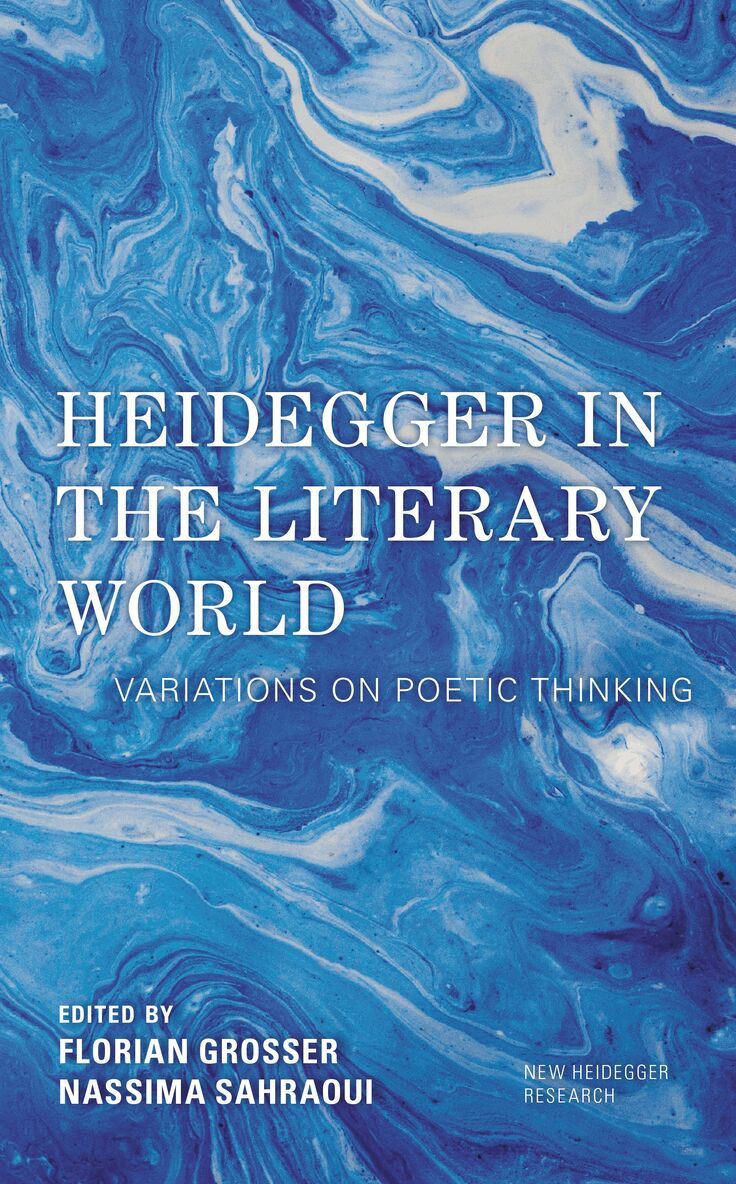
Inbunden, Engelska, 2021
Heidegger in the Literary World
Variations on Poetic Thinking
Av Florian Grosser, Nassima Sahraoui
Del i serien New Heidegger Research
1627 kr
Beställningsvara. Skickas inom 10-15 vardagar. Fri frakt över 249 kr.
Beskrivning
Produktinformation
- Utgivningsdatum: 2021-11-17
- Mått: 162 x 226 x 28 mm
- Vikt: 640 g
- Format: Inbunden
- Språk: Engelska
- Serie: New Heidegger Research
- Antal sidor: 310
- Förlag: Bloomsbury Publishing Plc
- ISBN: 9781538162552
Utforska kategorier
Mer om författaren
Florian Grosser teaches in the College of the University of Chicago. His research interests lie in twentieth century continental philosophy, political and social philosophy, and aesthetics. He is the author of the monographs Revolution denken. Heidegger und das Politische 1919-1969 and Theorien der Revolution.Nassima Sahraoui is a researcher based in Germany. Her areas of research are political theory, history of philosophy, and the intersections between literature and philosophy. She is the author of Dynamis. Eine materialistische Philosophie der Differenz and is preparing another monograph on Forms of Resistance.
Recensioner i media
Heidegger in the Literary World shows us that we might do well in taking Heidegger’s cue and treating literature and poetry with the same care and, indeed, reverence he pays to Trakl, Rilke, and again, most of all, to Hölderlin. The editors invoke Jacques Derrida to define the ethics or politics of reading at work in the volume, but they could equally well have stayed with Heidegger to outline such principles of reading. That is, the aspiration to reach that height of critique which Heidegger called Auseinandersetzung.
Betyg & recensioner
0 recensioner
Inga recensioner tillgängliga.