• Fri frakt över 249 kr
  • •
  • Snabba leveranser
  • •
  • Billiga böcker
Kundservice

Du är på sajten för privatpersoner.

Företag, bibliotek eller offentlig verksamhet?

Du handlar på classic.bokus.com, där alla dina funktioner finns intakta.
Till classic.bokus.com
Bokus logotyp. Gå till startsidan.
  • Erbjudanden
  • Nyheter
  • Student
  • Topplistor
  • Barn & ungdom
  • Bokus Play
  • E-böcker
  • Pocketböcker
  • Spel & pussel

10% rabatt på allt med kod: NYSTART10 →

Sidfot

Mina sidor

    Hjälp

    • Kundservice
    • Vanliga frågor och svar
    • Frakt och leverans
    • Retur vid ångerrätt
    • Reklamera vara
    • Betalning
    • Köpvillkor
    • Allmänna villkor
    • Information om webbplatsens tillgänglighet

    Om Bokus

    • Om oss
    • Pressrum
    • För studenter
    • För företag
    • För bibliotek och offentlig verksamhet
    • För leverantörer
    • Hållbarhet

    Populärt

    • Aktuella erbjudanden
    • Presentkort
    • Studentlitteratur
    • Nya böcker
    • Topplistor
    • Signerade böcker
    • Engelska böcker

    Inspiration

    • Boktips
    • BookTok
    • Populära bokserier
    • Barnbokskaraktärer
    • Populära författare
    Logotyp för Bokus
    Följ oss på Facebook (extern länk)Följ oss på Instagram (extern länk)Följ oss på YouTube (extern länk)Följ oss på TikTok (extern länk)
    bokus @ CookiesAnpassa cookiesIntegritetspolicyKöpvillkor
    Till Citymail hemsida (extern länk)Till Budbee hemsida (extern länk)Till Postnord hemsida (extern länk)Till Schenker hemsida (extern länk)Till Early Bird hemsida (extern länk)Till Walleys hemsida (extern länk)
    1. Filosofi och religion
    2. Filosofi
    3. Filosofiska discipliner
    • Nyhet

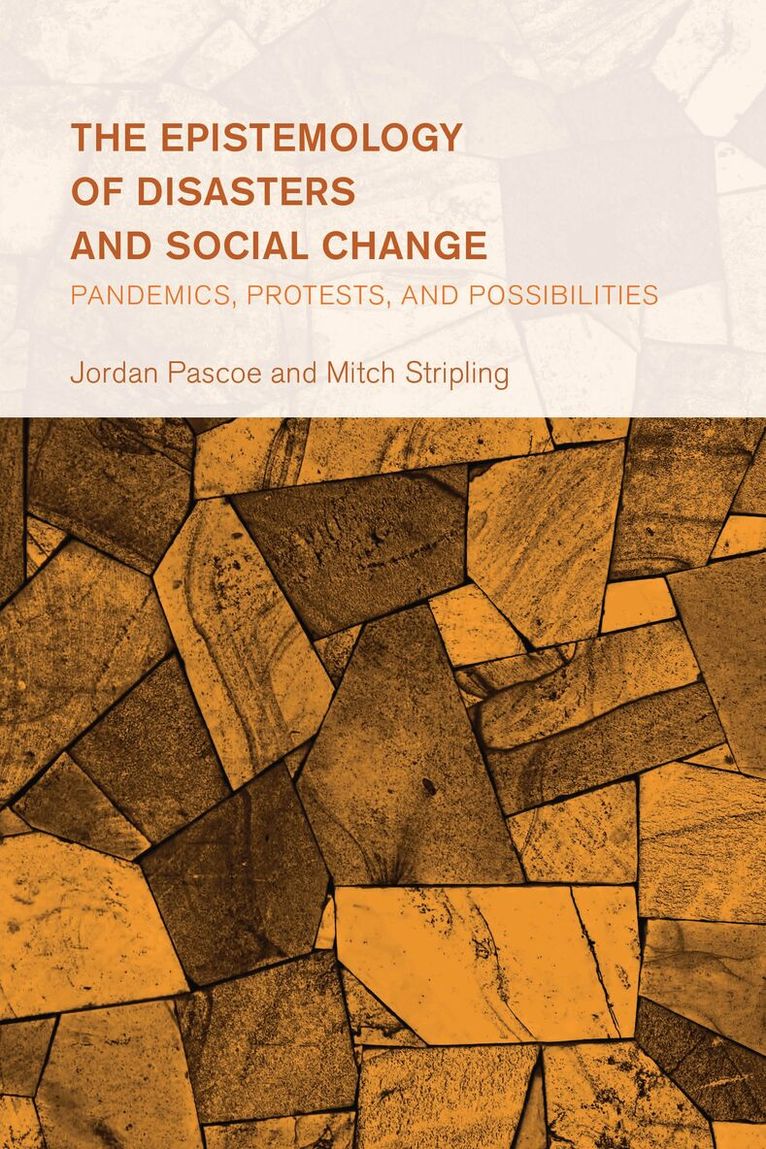
    Epistemology of Disasters and Social Change

    Pandemics, Protests, and Possibilities

    AvJordan Pascoe,Mitch Stripling

    Häftad, Engelska, 2026

    Del i serien Collective Studies in Knowledge and Society

    409 kr

    Beställningsvara. Skickas inom 10-15 vardagar. Fri frakt över 249 kr.

    Fler format och utgåvor

    Inbunden

    1 533 kr

    E-bok

    438 kr

    Beskrivning

    An earthquake in Mexico City spurs the rise of democracy. A plague in South Africa lays the foundations for apartheid. A terrorist attack on New York City triggers massive shifts in global security. A global pandemic sets the stage for the largest civil rights protests in generations.Beyond their physical impact, disasters assault our certainty and shape a narrow space to alter the structure of what we believe. That change can lead us toward disinformation and authoritarianism, or it can lead us toward greater solidarity and human rights. It all depends on the choices we make as we live through crisis; on how, in fact, we choose to know each other.The Epistemology of Disasters and Social Change draws on social epistemology, disaster sociology, psychology and feminist philosophy to investigate how disasters function as cauldrons of social transformation, for good and ill. We wrestle with how disasters change us, moment by moment, and provide new strategies to help these tragic eventsproduce positive social transformation, leading to a brighter future during this century of crisis.

    Produktinformation

    • Utgivningsdatum:2026-07-23
    • Mått:152 x 229 x 22 mm
    • Vikt:586 g
    • Format:Häftad
    • Språk:Engelska
    • Serie:Collective Studies in Knowledge and Society
    • Antal sidor:406
    • Förlag:Bloomsbury Publishing Plc
    • ISBN:9781538171837

    Utforska kategorier

    • Filosofiska discipliner inom Filosofi och religion

    Mer om författaren

    Jordan Pascoe is professor of philosophy at Manhattan College. She is a feminist philosopher who works in moral, social, and political philosophy, feminist epistemology, Kantian philosophy, and philosophy of race. She writes about sex, disasters, domestic and caregiving labor, and intersectionality. Her first book is Kant’s Theory of Labour. Mitch Stripling is the director of the New York City Pandemic Response Institute (PRI). PRI is operated by Columbia University with key partner the City University of New York School of Public Health and Health Policy. He has a long history of leadership roles in emergency management, disaster response and planning, coordination, and response to public health crises, including as national director for Emergency Preparedness and Response at Planned Parenthood (PPFA), and as an assistant commissioner at the NYC Department of Health and Mental Hygiene (NYC DOHMH). Prior to his roles in New York City, Stripling coordinated disaster responses for the Florida Department of Health. He has helped plan and implement the responses to more than twenty federally declared disasters and public health emergencies.

    Recensioner i media

    In this timely book, Jordan Pascoe and Mitch Stripling offer interdisciplinary work at its finest by deftly weaving multiple perspectives together to reveal how existing emergency management systems reinforce structural injustice. Their original framework helps us not only understand the epistemological forces that sustain the destructive power of disasters but also see the spark of social and political transformation disasters contain. The Epistemology of Disasters and Social Change is a must-read for anyone interested in more caring, equitable, and just ways of facing the inevitable crises to come.

    Innehållsförteckning

    • AcknowledgmentsIntroductionPART I: UNDERSTANDING DISASTERSChapter 1: So Much Water, So Little Time: Disaster Natality and How We Destroy ItChapter 2: Nasty, Brutish, and Short: Imagining Disaster in Philosophy, Pop Culture, and Preparedness Chapter 3: What We Don’t Know Will Kill Us: Pandemic Caregiving and Parasitic ResiliencePART II: DISASTERS, SOLIDARITIES, AND SOCIAL CHANGEChapter 4: The Epistemological Watershed and Who It’s Designed to ServeChapter 5: From Warning to Heroics: How Solidarity FormsChapter 6: From the Honeymoon to Disillusionment: The Sources of Collective CreativityChapter 7: Disaster Solidarities and Pandemic ProtestChapter 8: Disaster Backlash: Reactionary Movements and Pandemic SolidarityPART III: DISASTERS, OTHERWISEChapter 9: Imagining Disaster, Otherwise: Science Fiction, Marronage, and the Abolition Imaginaries of the COVID-19 PandemicChapter 10: Into the Paravi: Reimagining Disaster PracticeNotesBibliographyIndexAbout the Authors