• Fri frakt över 249 kr
  • •
  • Snabba leveranser
  • •
  • Billiga böcker
Kundservice

Du är på sajten för privatpersoner.

Företag, bibliotek eller offentlig verksamhet?

Du handlar på classic.bokus.com, där alla dina funktioner finns intakta.
Till classic.bokus.com
Bokus logotyp. Gå till startsidan.
  • Erbjudanden
  • Nyheter
  • Student
  • Topplistor
  • Barn & ungdom
  • Bokus Play
  • E-böcker
  • Pocketböcker
  • Spel & pussel

10% rabatt på allt med kod: NYSTART10 →

Sidfot

Mina sidor

    Hjälp

    • Kundservice
    • Vanliga frågor och svar
    • Frakt och leverans
    • Retur vid ångerrätt
    • Reklamera vara
    • Betalning
    • Köpvillkor
    • Allmänna villkor
    • Information om webbplatsens tillgänglighet

    Om Bokus

    • Om oss
    • Pressrum
    • För studenter
    • För företag
    • För bibliotek och offentlig verksamhet
    • För leverantörer
    • Hållbarhet

    Populärt

    • Aktuella erbjudanden
    • Presentkort
    • Studentlitteratur
    • Nya böcker
    • Topplistor
    • Signerade böcker
    • Engelska böcker

    Inspiration

    • Boktips
    • BookTok
    • Populära bokserier
    • Barnbokskaraktärer
    • Populära författare
    Logotyp för Bokus
    Följ oss på Facebook (extern länk)Följ oss på Instagram (extern länk)Följ oss på YouTube (extern länk)Följ oss på TikTok (extern länk)
    bokus @ CookiesAnpassa cookiesIntegritetspolicyKöpvillkor
    Till Citymail hemsida (extern länk)Till Budbee hemsida (extern länk)Till Postnord hemsida (extern länk)Till Schenker hemsida (extern länk)Till Early Bird hemsida (extern länk)Till Walleys hemsida (extern länk)
    1. Ekonomi och Ledarskap
    2. Företagsekonomi
    3. Organisation och ägarskap

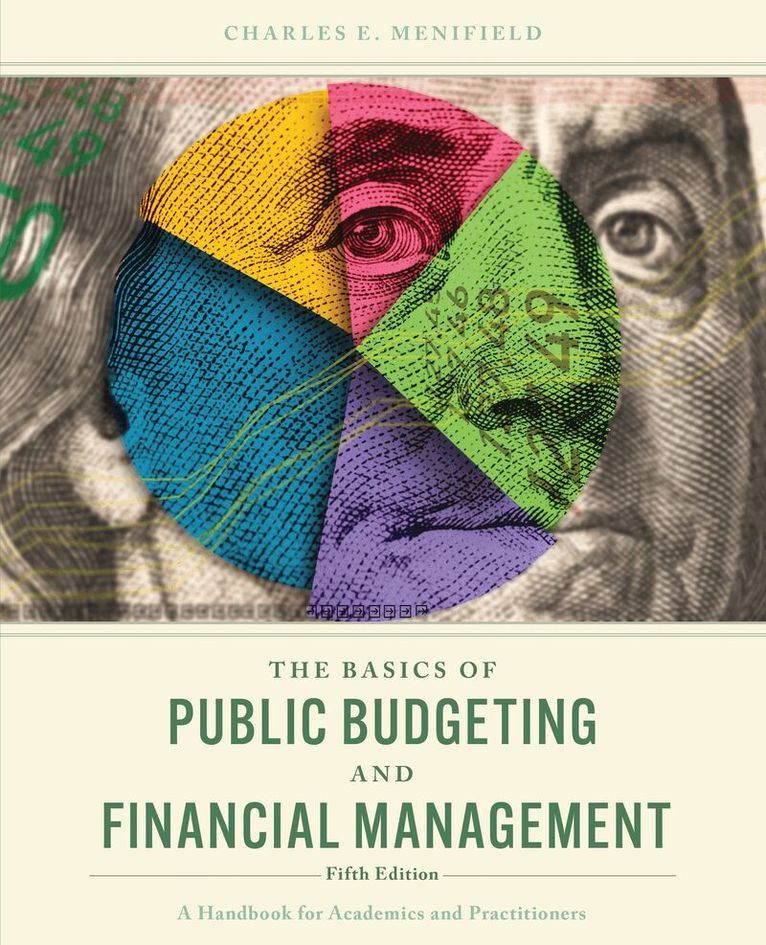
    Basics of Public Budgeting and Financial Management

    A Handbook for Academics and Practitioners

    AvCharles E. Menifield

    Inbunden, Engelska, 2025

    Del i serien Rowman & Littlefield

    1 765 kr

    Beställningsvara. Skickas inom 10-15 vardagar. Fri frakt över 249 kr.

    Fler format och utgåvor

    Häftad

    564 kr

    Häftad

    765 kr

    Beskrivning

    Connecting budgetary theory with practical tools, Charles E. Menifield carefully examines the key areas that every budgeting and financial management student needs to know in order to be a successful budgeteer in a local government, nonprofit, or state-level budget office. From the perspective of a bureaucrat, students examine various concepts and then work through in-class and out-of-class exercises and problems to reinforce those concepts and ideas through practical applications. Menifield provides an overview of the basic budgeting concepts, types, and techniques to orient students, along with discussion of budget cycles and the actors involved in the process. Chapters unfold to present personal services, operating, and capital budgets, as well as the various ways to fund public budgets. Students will gain an understanding of budgeting techniques and analytical models, but also how these methods are useful in answering important policy questions. Other topics include cash management, risk management, procurement, debt management, incentivizing economic development, and cutback management strategies. Menifield concludes with an examination of different data sources, data quality and appropriateness, and the different ways to communicate budget data effectively using charts, graphs, and slides.Each chapter provides the student with a list of important terms, phrases, and exercises that require the students to apply what they have learned in each chapter using only basic office applications. The Fifth Edition of the book provides in-class exercises for each chapter, allowing students not only to compare their responses to their peers in small groups, but also to present those responses to the entire class with the goal of improving their presentation skills. This book blends budgetary theory and practice in a volume that is easy to understand by both undergraduate and graduate students alike.

    Produktinformation

    • Utgivningsdatum:2025-04-30
    • Mått:191 x 235 x 20 mm
    • Vikt:725 g
    • Format:Inbunden
    • Språk:Engelska
    • Serie:Rowman & Littlefield
    • Antal sidor:250
    • Upplaga:5
    • Förlag:Bloomsbury Publishing Plc
    • ISBN:9781538184028

    Utforska kategorier

    • Organisation och ägarskap inom Ekonomi och Ledarskap
    • Ekonomisk politik inom Ekonomi och Ledarskap
    • Projektledning inom Ekonomi och Ledarskap

    Mer om författaren

    Charles E. Menifield is a professor and the former dean of the School of Public Affairs and Administration (SPAA) at Rutgers, The State University of New Jersey–Newark. His research interests lie primarily in the areas of budgeting and financial management, public health and welfare, and policing. Other areas include, health and education finance, and public administration education. Dr. Menifield served on the Executive Council of the Network of Schools of Public Policy, Affairs, and Administration (NASPAA), the Commission on Peer Review and Accreditation, as President of the International Conference on Local Government, and on editorial boards for several top journals. An award-winning teacher and author, he is a former Ronald E. McNair Scholar and in Spring 2016 won the Missouri University Faculty Achievement Award in Diversity. He is a fellow in the National Academy of Public Administration (NAPA).

    Recensioner i media

    This book focuses on the key areas of budgeting and financial management, the knowledge important in order to be a successful in the government and non-profit budget office … It is answering important policy questions.

    Innehållsförteckning

    • List of FiguresList of TablesList of ExhibitsList of BoxesPrefaceAcknowledgmentsNote to the Student1.The Context of Public Sector BudgetsOverviewWhat Is a Budget and What Is Public Budgeting?Functions of a BudgetBudget FormatsTypes of BudgetsReading a BudgetBudget Message, Budget Highlights, Executive SummaryBudget SummarySource of RevenueSource of ExpendituresDepartment/Agency Budget InformationSupplemental Budgeting InformationPublic Versus Private BudgetsOverview of Revenues and ExpendituresGovernmental AccountingGovernment FundsProprietary FundsFiduciary FundsConclusionImportant Terms and PhrasesExercisesAppendix 1A: Budget LetterAppendix 1B: Jefferson City Budget SummaryAppendix 1C: Jefferson City Fire Department2.Preparing a Budget ProposalOverviewBudget CyclesExecutive PreparationLegislative ApprovalBudget ExecutionAudit/Evaluation PhaseEquity AuditsThe Budget CalendarThe Budget GameBudget ActorsChief ExecutiveBudget DirectorLegislator/Council MemberAgency DirectorsAgency Roles ExpandedJustifying and Defending the BudgetPolitical BudgetsTechnical BudgetsKey Components of the Budget ProposalProject TitleDescription and RationaleObjective Justifying the NeedBudget and Budget DescriptionMeasures of SuccessConclusionImportant Terms and PhrasesExercisesAppendix 2A: Budget ProposalAppendix 2B: Original Budget Proposal Request FormAppendix 2C: Evaluation of the Role Playing AssignmentAppendix 2D: Jefferson City Budget, FY 2023-2024Appendix 2E: Washington State Decision Package3.Personnel Services and Operating BudgetsOverviewWriting a Personnel Services BudgetCalculating FICA and MedicarePensionsCalculating the Pension BenefitPosition Classifications and Salary RangesJustifying a New PositionCalculating a Personal Services BudgetPreparing an Operating BudgetConclusionImportant Terms and PhrasesExercisesAppendix 3A: Jefferson City Tourism DepartmentAppendix 3B: Jefferson City Tourism DepartmentAppendix 3C: Pension Payment Worksheet: Long Version4.Preparing a Capital Budget and a Capital Improvement PlanOverviewCapital Budgets versus a Capital Improvement PlanCapital BudgetsWhy Separate a Capital Budget from an Operating Budget?Capital Improvement PlansThe Capital Budgeting ProcessIdentifying and Prioritizing ProjectsNeeds Assessments and the Selection of ProjectsFinancing Capital Improvement ProjectsConclusionImportant Terms and PhrasesExercisesAppendix 4A: City of Alexandria, Virginia Health DepartmentAppendix 4B: Jefferson City Fire Department Capital Budget ProcessAppendix 4C: Jefferson City Project JustificationsAppendix 4D: Preparing a Capital Budget and a Capital Improvement PlanAppendix 4E: Capital Improvement Plan5. Funding State and Local BudgetsOverviewSources of RevenueTaxesProperty TaxesSetting the Property Tax RateTax Assessments and Tax RatesCoefficient of DispersionPrice Related DifferentialTax CollectionIncome TaxesSale and Use TaxesAlcohol, Tobacco, Marijuana, and Motor Fuel TaxesUser Charges and Impact FeesSetting a User Fee RateIntergovernmental TransfersLicenses, Permits, and Franchise FeesGamingOther RevenuesRevenue ManagementConclusionAppendix 5A: Property Tax and Millage RatesAppendix 5B: Coefficient of DispersionAppendix 5C: Price Related DifferentialAppendix 5D: Jefferson City Public School SystemAppendix 5E: Jefferson City RevenueAppendix 5F: Jefferson City Swimming Pool Cost EstimateAppendix 5G: Jefferson City Budget Summary6. Budgeting Techniques and Analytical ModelsOverviewUnderstanding the Methods and Techniques of AnalysisForecasting RevenuesForecasting ModelsSelecting the Best Forecasting ModelTypes of ForecastsStatus Quo ModelExtrapolation ModelJudgmental or Brainstorming ModelDelphi ModelTime Series ModelMultiple Regression ModelEconometric ModelsCost-Benefit Analysis and Cost-Effectiveness AnalysisAlternative 1: Increase Patrol TimeAlternative 2: Add a SubstationAlternative 3: Add a Bycycle/Foot Patrolperson to the AreaAnalyzing the AlternativesFinancial Decision Making ToolsDiscounting to Present Value/Discount RatesRate of ReturnPayback MethodBreakeven AnalysisProductivity AnalysisMultiple Regression AnalysisReading and Understanding ReportsConclusionImportant Terms and PhrasesExercisesAppendix 6A: Present Value CalculationAppendix 6B: Net Present ValueAppendix 6C: Annual Calculations7. Financial ManagementOverviewFinancial ConditionFinancially Solvent or Not?Detecting an Operating DeficitExternal Cash Management PracticesManaging Cash InternallyRisk ManagementFraming Risk ManagementMission IdentificationRisk and Uncertainty AssessmentRisk ControlRisk FinancingProgram AdministrationProcurement and ContractingEquity and ProcurementCutback ManagementCauses of CutbacksCutback StrategiesCreating a Pro-Businesses Environment in your CityFinancial IncentivesQuality of Life IncentivesDebt Management and InvestmentDebt Management PolicyAdditional Budget OptionsConclusionImportant Terms and PhrasesAppendix 7A: Risk Management Assessment PlanAppendix 7B: Life-Cycle CostAppendix 7C: Risk Assessment and QuestionnaireAppendix 7D: City of Lawrence Debt Management and Fiscal General PolicyAppendix 7E: City of LawrenceDebt Management Policy8. Effectively Communicating DataOverviewData Quality, Sources, and AppropriatenessDisplaying DataTablesCharts and FiguresScattergramsLine GraphsPie ChartsBar / Column ChartsMicrosoft PowerPoint PresentationsConclusionImportant Terms and PhrasesExercisesAppendix 8A: Counties in the State of AlexanderAppendix 8B: A Guide to Writing a Research Proposal and Research PaperReferencesAbout the Author