• Fri frakt över 249 kr
  • •
  • Snabba leveranser
  • •
  • Billiga böcker
Kundservice

Du är på sajten för privatpersoner.

Företag, bibliotek eller offentlig verksamhet?

Du handlar på classic.bokus.com, där alla dina funktioner finns intakta.
Till classic.bokus.com
Bokus logotyp. Gå till startsidan.
  • Erbjudanden
  • Nyheter
  • Student
  • Topplistor
  • Barn & ungdom
  • Bokus Play
  • E-böcker
  • Pocketböcker
  • Spel & pussel

10% rabatt på allt med kod: NYSTART10 →

Sidfot

Mina sidor

    Hjälp

    • Kundservice
    • Vanliga frågor och svar
    • Frakt och leverans
    • Retur vid ångerrätt
    • Reklamera vara
    • Betalning
    • Köpvillkor
    • Allmänna villkor
    • Information om webbplatsens tillgänglighet

    Om Bokus

    • Om oss
    • Pressrum
    • För studenter
    • För företag
    • För bibliotek och offentlig verksamhet
    • För leverantörer
    • Hållbarhet

    Populärt

    • Aktuella erbjudanden
    • Presentkort
    • Studentlitteratur
    • Nya böcker
    • Topplistor
    • Signerade böcker
    • Engelska böcker

    Inspiration

    • Boktips
    • BookTok
    • Populära bokserier
    • Barnbokskaraktärer
    • Populära författare
    Logotyp för Bokus
    Följ oss på Facebook (extern länk)Följ oss på Instagram (extern länk)Följ oss på YouTube (extern länk)Följ oss på TikTok (extern länk)
    bokus @ CookiesAnpassa cookiesIntegritetspolicyKöpvillkor
    Till Citymail hemsida (extern länk)Till Budbee hemsida (extern länk)Till Postnord hemsida (extern länk)Till Schenker hemsida (extern länk)Till Early Bird hemsida (extern länk)Till Walleys hemsida (extern länk)
    1. Samhälle och politik
    2. Sociologi och antropologi
    3. Antropologi

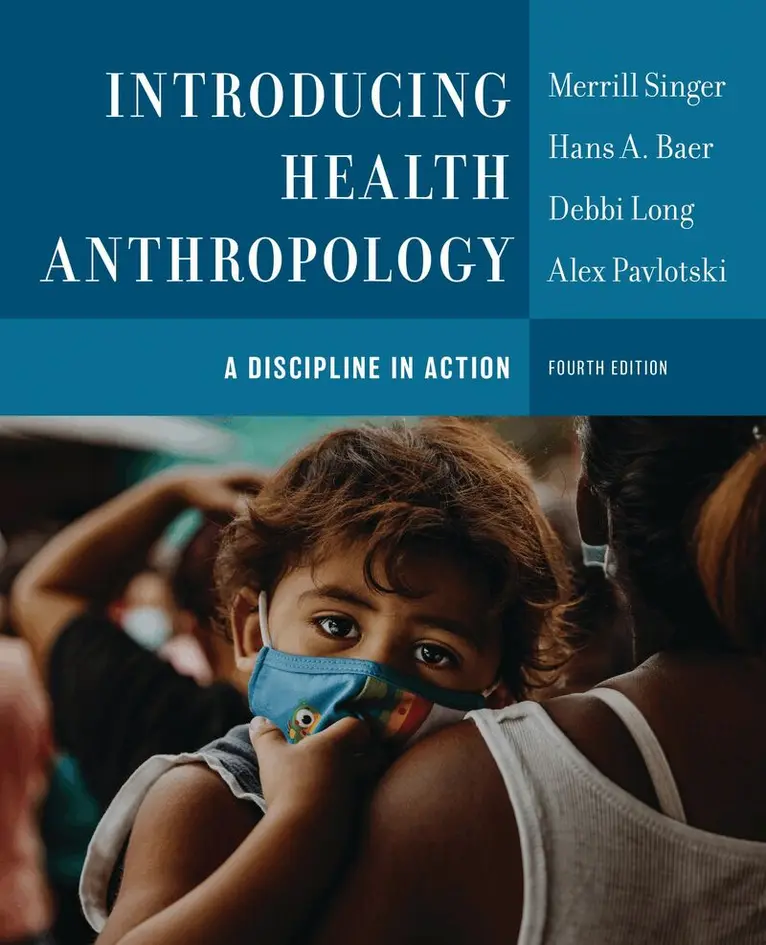
    Introducing Health Anthropology

    A Discipline in Action

    AvMerrill Singer,Hans A. Baer

    Häftad, Engelska, 2025

    Del i serien Rowman & Littlefield

    590 kr

    Beställningsvara. Skickas inom 10-15 vardagar. Fri frakt över 249 kr.

    Fler format och utgåvor

    Inbunden

    1 603 kr

    E-bok

    634 kr

    Beskrivning

    With a new title that reflects the broad scope and primary concerns of the field, Introducing Health Anthropology: A Discipline in Action, Fourth Edition, provides students with a first look at the dynamic discipline of medical and health anthropology. The narrative is guided by four unifying themes. First, health anthropologists are heavily involved in the process of helping to better understand and change the world through their work in applied projects, policy initiatives, and advocacy. Second, the book presents the fundamental importance of culture and social relationships in health and sickness by demonstrating that experienced illness and diagnosed disease involve complex biosocial processes and that resolving them requires attention to a range of factors beyond biology. Third, through an examination of health inequality, the book highlights the need for research and analyses that move beyond cultural or even ecological models of health toward comprehensive and holistic biosocial frameworks. Finally, the authors emphasize that physical and mental health are intimately related to the health of the environment on which humans depend for air, food, and the other resources that make life possible. Introducing Health Anthropology gives students the tools to rethink how to achieve healthier populations, effective and fully accessible healthcare systems, and a sustainable world.New to this Edition:· New Chapter 4, “Human Evolution and Health,” examines the respective roles of genetics and sociocultural factors in health to navigate the welter of public misinformation on genetic determinism, race, and sex and gender minorities· Significantly expanded discussion of reproductive health, sex and gender, and gender equity throughout the book reflects current and controversial issues in the U.S.· Up-to-date examination of the relationship of climate change to health and social wellbeing offers students insights on how our physical world is changing and the causes of those changes· Discussion of the global impact of COVID-19 throughout the text explores the enduring changes wrought by the pandemic on human societies

    Produktinformation

    • Utgivningsdatum:2025-04-01
    • Mått:191 x 235 x 23 mm
    • Vikt:694 g
    • Format:Häftad
    • Språk:Engelska
    • Serie:Rowman & Littlefield
    • Antal sidor:342
    • Upplaga:4
    • Förlag:Bloomsbury Publishing Plc
    • ISBN:9781538187289

    Utforska kategorier

    • Antropologi inom Samhälle och politik
    • Sociala och etiska frågor inom Samhälle och politik

    Mer om författaren

    Merrill Singer is professor emeritus in the Departments of Anthropology and Community Medicine at the University of Connecticut. Dr. Singer has published 290 scholarly articles in peer-reviewed journals and book chapters, and has authored, co-authored or edited thirty-three books. His research and writing have addressed syndemics, HIV/AIDS and STDs in highly vulnerable and disadvantaged populations, illicit drug use and drinking behavior, infectious disease, community and structural violence, and the political ecology of health, including the health consequences of climate change. Dr. Singer has been awarded the Rudolph Virchow Professional Prize, the George Foster Memorial Award for Practicing Anthropology, both the AIDS and Anthropology Research Group’s Distinguished Service Award and its Clark Taylor Professional Paper Prize, the Prize for Distinguished Achievement in the Critical Study of North America, and the Solon T. Kimball Award for Public and Applied Anthropology from the American Anthropological Association.Hans A. Baer is principal honorary research fellow in the School of Social Political Sciences at the University of Melbourne. Hans was a Fulbright Scholar in at Humboldt University in East Berlin in the German Democratic Republic in 1988-1989. He has taught at several US universities, including George Peabody College for Teachers, St. John’s University, the University of Southern Mississippi, the University of Arkansas at Little Rock, the University of California - Berkeley, Arizona State University, and at two Australian universities, namely the Australian National University and the University of Melbourne. Hans has published twenty-seven books and some 240 book chapters and articles on a diversity of research topics, including Mormonism, African American religion, sociopolitical life in East Germany, critical health anthropology, medical pluralism in the United States, United Kingdom, and Australia, the critical anthropology of climate change, Australian climate politics, and the political economy of higher education. His most recent books are Democratic Eco-Socialism as a Real Utopia (2018), Climate Change and Capitalism in Australia: An Eco-Socialist Vision for the Future (2022), The Corporatization and Environmental Sustainability of Australian Universities: A Critical Perspective, and Building the Critical Anthropology of Climate Change: Towards a Socio-Ecological Revolution (with Merrill Singer).Debbi Long is an honorary senior lecturer in the Wollotuka Institute (Indigenous Studies) at the University of Newcastle, Australia. She is a critical health anthropologist and a pioneer of hospital ethnography in Australia. She has undertaken health ethnography in Turkey, Eswatini, and in a variety of public hospital contexts in Australia, including maternity, spinal, intensive care and dialysis units. She has worked as a consultant in clinical organization and management on projects including quality improvement, patient safety, behaviour change, and in industrial relations contexts. Other research includes family violence education and workplace injury compensation analysis. She has taught at undergraduate and postgraduate levels in anthropology departments, international development programs, medical, nursing and allied health programs and in Indigenous studies. including foundation and support programs. Debbi is a qualified Permaculture designer and educator, and recent projects involve a focus on food security, circular economies and sustainable building, heavily informed by traditional Indigenous knowledges.Alex Pavlotski works as a health anthropologist at the Murdoch Children’s Research Institute in Melbourne. He specializes in using visual methods in research, co-design methodologies, ethnography, and anthropological teaching. Alex has worked in teaching and research with LaTrobe University, the University of Auckland, the University of Melbourne, and Monash University.

    Recensioner i media

    “Singer, Baer, Long, and Pavlotski converse with enduring and current concerns, themes, and even labels in the context of novel disciplinary paradigms in this richly detailed and nuanced updated edition, presented with case studies accessible to contemporary scholars and students.”

    Innehållsförteckning

    • PrefaceChapter 1: Introduction to the Anthropology of HealthIntroduction and OverviewEncountering Health AnthropologyThree Case Studies in Applied Health AnthropologyPractical and Theoretical Contributions of Health AnthropologyDefining Health AnthropologyHistory of Health AnthropologyHealth Anthropology TheoriesChapter 2: What Health Anthropologists Do and How They Do ItIntroduction and OverviewThree Settings, Three Case Studies, Three Health AnthropologistsA Case StudyWhat Health Anthropologists StudyConducting Research: A Peculiarly Anthropological ApproachResearch Methods: The Anthropological Approach to Knowledge GenerationHealth Anthropology in UseThe Health Anthropology Crystal BallChapter 3: Understanding Health, Illness, and DiseaseIntroduction and OverviewConceptions of Health and IllnessSufferer ExperienceIllness NarrativesEmbodied Health ExperienceHealer versus Sufferer Conception of DiseaseChapter 4: Human Evolution and HealthIntroduction and OverviewThe Roots of Evolutionary HealthLinkages, Trade-Offs, and Thrifty GenesMigration and the Genetics of HealthThe Out-of-Africa IntrusionLiving in the CloudsEpigeneticsSocioeconomic FactorsThe Genetics of SexualityConclusionChapter 5: Ethnomedicine: The Worlds of Treatment and HealingIntroduction and OverviewApproaching EthnomedicineIndigenous and Folk Medicine SystemsAn Evolutionary Model of Disease Theories and Healing SystemsCase Study: Are the Therapeutic Aspects of Religion Something That Partially Address Refugee Health Problems?Biomedicine as the Predominant Ethnomedicine in Modern SocietiesChapter 6: Plural Medical Systems: Complexity, Complementarity, and ConflictIntroduction and OverviewA Case Study of Medical Pluralism in a Rural Area in a Developing Society: The Altiplano of BoliviaA Case Study of Medical Pluralism in an Urban Setting of a Developing Society: A View from Central JavaA Case Study of Medical Pluralism in a Developed Society: The Australian Dominative Medical SystemTypologies of Plural Medical SystemsNew Directions in the Study of Medical PluralismChapter 7: Health Disparity, Health InequalityIntroduction and OverviewWhat Is Health Disparity?Health Disparity in the United StatesGasping for BreathCauses of Health Disparity: Lifestyle versus Social InequalityBiology of PovertyInsuring DiseaseCulturally Competent CareHealth and Social Disparities Cross-CulturallyAddressing Health DisparitiesPushing Back on Health Disparities“Race” and Health DisparityChapter 8: Health and the Environment: Toward a Healthier WorldIntroduction and OverviewMedical Ecology and Critical Health Anthropology on the EnvironmentHealth and the Environment in the PastHealth and the Environment TodayThe Political Ecology of CancerThe Impact of Private Motor Vehicles on HealthThe Impact of Airplanes on HealthThe Political Ecology of AIDS: Assessing a Contemporary SyndemicChapter 9: The Biopolitics of Life: Biotechnology, Biocapital, and BioethicsIntroduction and OverviewCritical Health Anthropology and BiotechnologyScience, Nature, and CultureReproductive TechnologiesDivisible BodiesBringing the Lab into the Field: Anthropology and the NeurosciencesMolecular Biotechnologies: Tiny Pieces, Giant InfrastructuresThe Story of hGH—Growing up Growth HormoneThe Culture of PCRVisualization TechnologiesWhen Technologies CombineAncestry, Families, and Genetics: Biotechnology and BelongingSummaryChapter 10: Strategies and Visions for a Healthier WorldIntroduction and OverviewGlobal CapitalismDemocratic Eco-Socialism as a Pathway for a Healthier WorldDemocratic Eco-Socialism as a Pathway to Planetary HealthHow to Go from A to BHealth Anthropology as an Action-Oriented EndeavorSource Material for StudentsGlossaryReferencesIndexAbout the Authors