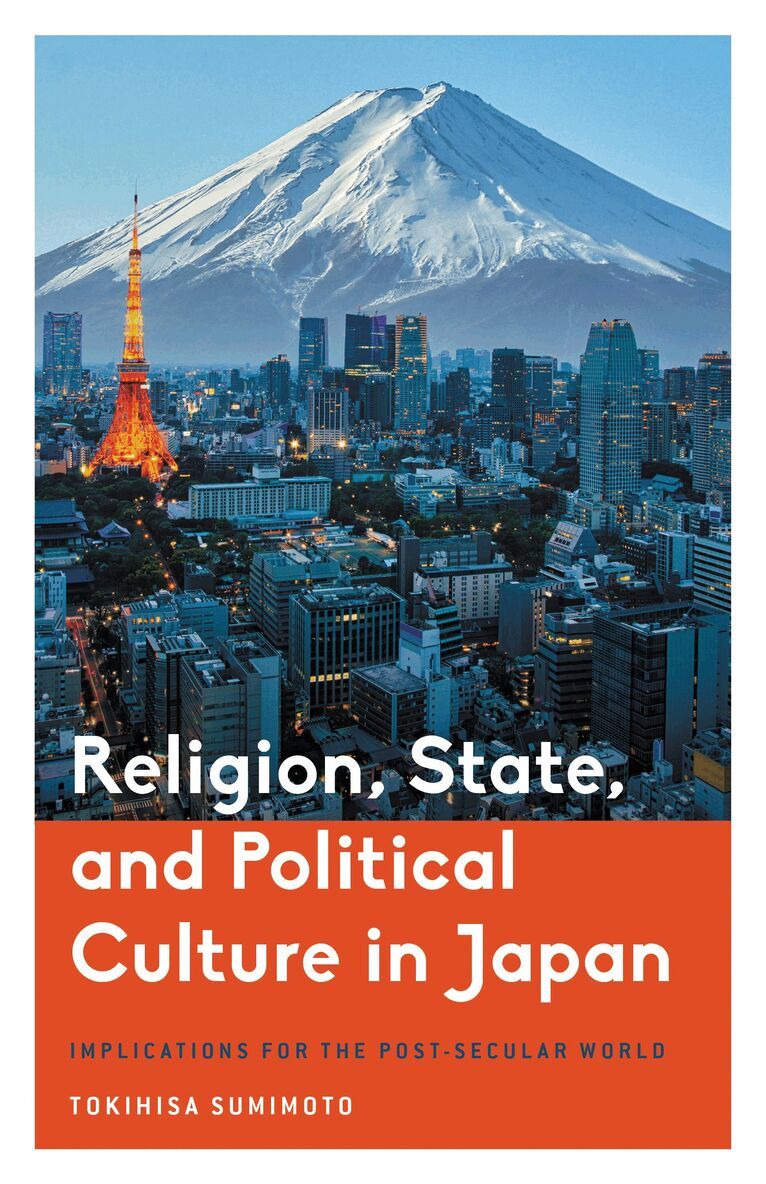
Häftad, Engelska, 2026
Religion, State, and Political Culture in Japan
Implications for the Post-Secular World
Del i serien Critical Perspectives on Religion in International Politics
415 kr
Beställningsvara. Skickas inom 10-15 vardagar. Fri frakt över 249 kr.
Beskrivning
Produktinformation
- Utgivningsdatum: 2026-11-26
- Mått: 146 x 222 x 25 mm
- Vikt: 454 g
- Format: Häftad
- Språk: Engelska
- Serie: Critical Perspectives on Religion in International Politics
- Antal sidor: 182
- Förlag: Bloomsbury Publishing Plc
- ISBN: 9781538187340
Utforska kategorier
Mer om författaren
Tokihisa Sumimoto is the Founding Director of the Tokyo Institute for Global Peace and Humanity. He received his Master of International Affairs degree from Columbia University, New York, and Doctor of Philosophy from Soka University, Tokyo. He has published articles in the International Journal of Peace Studies.
Recensioner i media
This is not only a potent study of historical and current relationships between religious belief and democratic culture in Japan, but also a powerful solvent for blithe assumptions about secularisation, there and in the wider world. In addition, it offers a considered response to how we might achieve more humane forms of global governance.
Betyg & recensioner
0 recensioner
Inga recensioner tillgängliga.