• Fri frakt över 249 kr
  • •
  • Snabba leveranser
  • •
  • Billiga böcker
Kundservice

Du är på sajten för privatpersoner.

Företag, bibliotek eller offentlig verksamhet?

Du handlar på classic.bokus.com, där alla dina funktioner finns intakta.
Till classic.bokus.com
Bokus logotyp. Gå till startsidan.
  • Erbjudanden
  • Nyheter
  • Student
  • Topplistor
  • Barn & ungdom
  • Bokus Play
  • E-böcker
  • Pocketböcker
  • Spel & pussel

10% rabatt på allt med kod NYSTART10 →

Sidfot

Mina sidor

    Hjälp

    • Kundservice
    • Vanliga frågor och svar
    • Frakt och leverans
    • Retur vid ångerrätt
    • Reklamera vara
    • Betalning
    • Köpvillkor
    • Allmänna villkor
    • Information om webbplatsens tillgänglighet

    Om Bokus

    • Om oss
    • Pressrum
    • För studenter
    • För företag
    • För bibliotek och offentlig verksamhet
    • För leverantörer
    • Hållbarhet

    Populärt

    • Aktuella erbjudanden
    • Presentkort
    • Studentlitteratur
    • Nya böcker
    • Topplistor
    • Signerade böcker
    • Engelska böcker

    Inspiration

    • Boktips
    • BookTok
    • Populära bokserier
    • Barnbokskaraktärer
    • Populära författare
    Logotyp för Bokus
    Följ oss på Facebook (extern länk)Följ oss på Instagram (extern länk)Följ oss på YouTube (extern länk)Följ oss på TikTok (extern länk)
    bokus @ CookiesAnpassa cookiesIntegritetspolicyKöpvillkor
    Till Citymail hemsida (extern länk)Till Budbee hemsida (extern länk)Till Postnord hemsida (extern länk)Till Schenker hemsida (extern länk)Till Early Bird hemsida (extern länk)Till Walleys hemsida (extern länk)
    1. Samhälle och politik
    2. Samhälle och kultur
    3. Sociala grupper och identitet

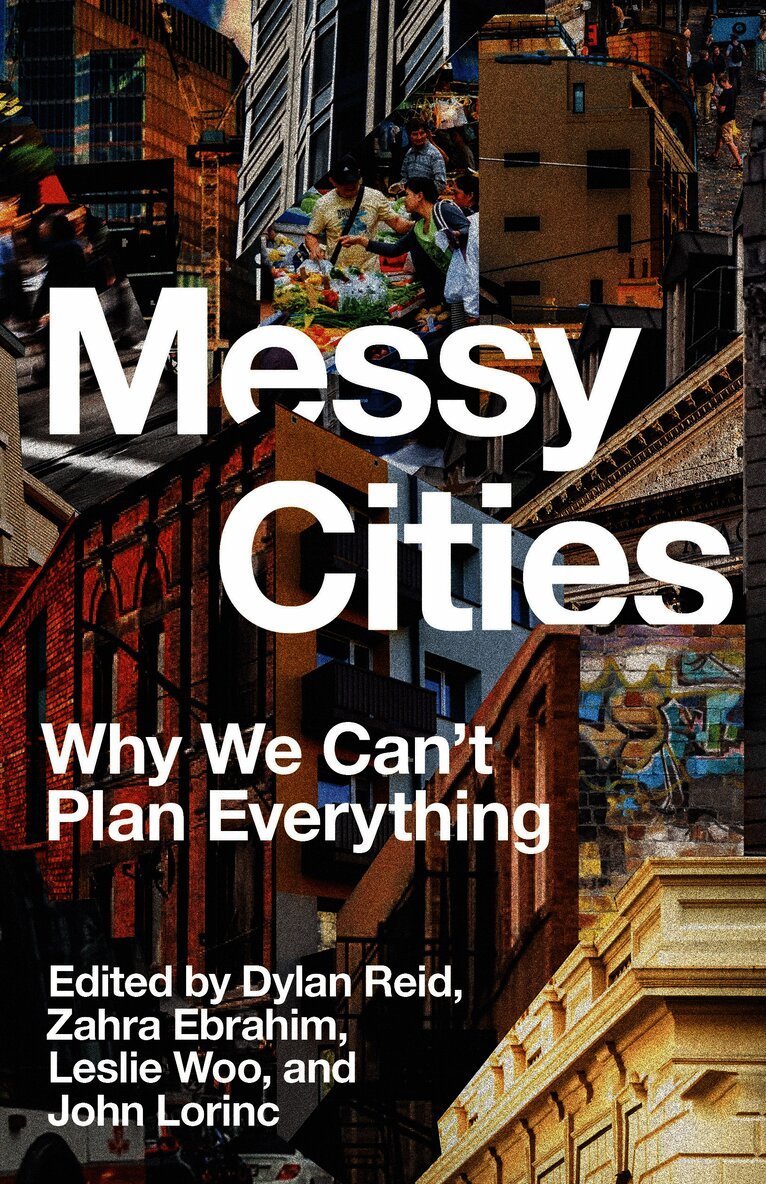
    Messy Cities

    Why We Can't Plan Everything

    AvZahra Ebrahim,John Lorinc

    Häftad, Engelska, 2025

    177 kr

    Beställningsvara. Skickas inom 5-8 vardagar. Fri frakt över 249 kr.

    Beskrivning

    Can messiness make our cities more liveable, lively, and inclusive?Crowded streets, sidewalk vendors, jumbled architecture, constant clamour, graffitied walls, parks gone wild: are these signs of a poorly managed city or indicators of urban vitality?Messy Cities: Why We Can’t Plan Everything argues that spontaneity and urban workarounds are not liabilities but essential elements in all thriving cities.Forty-three essays by a range of writers from around the world illuminate the role of messy urbanism in enabling creativity, enterprise, and grassroots initiatives to flourish within dense modern cities.With pieces on guerrilla beaches, desire lines, urban interruptions, and the inner lives of unlovely buildings written by experts from all walks of life, Messy Cities makes the case for embracing disorder while not shying away from confronting its challenges.

    Produktinformation

    • Utgivningsdatum:2025-07-17
    • Mått:139 x 215 x 19 mm
    • Vikt:458 g
    • Format:Häftad
    • Språk:Engelska
    • Antal sidor:336
    • Förlag:Coach House Books
    • ISBN:9781552455036

    Utforska kategorier

    • Sociala grupper och identitet inom Samhälle och politik
    • Geografi inom Naturvetenskap och teknik
    • Regional planering inom Naturvetenskap och teknik

    Mer om författaren

    Zahra Ebrahim is an urbanist, educator, and strategist. Her award-winning work focuses on building bridges between institutions and their public, working with communities to co-design towards better social outcomes and leading some of Canada’s most ambitious participatory infrastructure and policy programs. She currently co-leads Monumental, a national organization focused on projects that advance fair, just, and culturally competent citybuilding, with previous experience leading organizations across multiple sectors. She is currently an Adjunct Professor at the Daniels School of Architecture and Urbanist-in-Residence at the University of Toronto’s School of Cities. She currently lives in Toronto with her partner, and their whippet, Zada.John Lorinc is a journalist and editor. He reports on urban affairs, politics, business, technology, and local history for a range of media, including The Globe and Mail, Toronto Star, Corporate Knights and Spacing, where he is senior editor. John is the author of five books, including No Jews Live Here: A Memoir (Coach House Books, 2024), and has co-edited eight anthologies for Coach House, including The Ward (2015), Any Other Way (2017), and Messy Cities (2025). John is the recipient of the 2019/2020 Atkinson Fellowship in Public Policy and was the winner of the Writers' Trust Balsillie Prize for Public Policy, for Dream States: Smart Cities, Technology and the Pursuit of Urban Utopias (2022). He lives in Toronto.Dylan Reid is a co-founder and now the executive editor of Spacing magazine, an award-winning print quarterly about Toronto urbanism and public space that recently celebrated its 20th anniversary. He is the author of the Toronto Public Etiquette Guide and co-editor of other books about Toronto. He was co-chair of the city government’s Toronto Pedestrian Committee and later co-founder of the advocacy group Walk Toronto. He is also a fellow at the Centre for Renaissance and Reformation Studies at the University of Toronto, and author of several scholarly articles about the history of cities in Renaissance France.Leslie Woo is a dynamic tri-sector athlete known for her expertise in uniting public, private, and not-for-profit leaders to co-create innovative urban policy solutions. With over 30 years of experience as an urban planner, architect, and community activator, she has been central to shaping urban development in Canada’s largest metropolis. Leslie serves on the boards of Waterfront Toronto and the Yee Hong Centre for Geriatric Care and is a trustee of the Urban Land Institute. A Senior Fellow at the University of Toronto’s Munk School of Global Affairs and Public Policy, Leslie champions women city builders on her blog.

    Recensioner i media

    One of Canadian Architect's 'Best books for Canadian architects: 2025'One of Bloomberg Cities Network's 'Summer Reads for Urban Innovators'"Messy Cities highlights the richness and clues in community-led design, and how the scrappiness of cities and urban diversity are what make these areas strong, vibrant, and livable." – Brittany Andrew-Amofah, Perspectives Journal"This book ... focuses mostly on personal, organic, on-the-ground descriptions of the ways neighbourhoods work in Toronto: How one created a “gorgeous landlocked oasis” out of a vacant lot at the start of the COVID‐19 pandemic. The veggie grannies of West Chinatown. The banquet halls, primarily serving the South Asian community but not exclusively, that have become important cultural conduits even though they’re usually bland buildings in the middle of suburban industrial areas." – Frances Bula, Literary Review of Canada"Messy Cities doubles as a love letter to Toronto’s growing immigrant neighborhoods, and an archive of the everyday strategies by which communities make an often hostile city work for them." – Sabina Sethi Unni, Places Journal"[S]tudents of urbanism looking for an alternative to the straight and narrow path will find much to consider." – Publishers Weekly "Cities will always grapple with disorder and the best ways to manage it. But one core message embedded in this collection of 43 essays is that it can be helpful for residents and local leaders alike to consider when that “mess,” whether a glut of street vendors or a complicated traffic intersection, is actually an asset." – Bloomberg Cities Network, '5 Summer Reads for Urban Innovators'"This anthology of (mostly) brief essays celebrates what’s now known as “messy urbanism” – the serendipitous, unplanned ways people shape urban environments, from graffiti to street vending. Appropriately polyphonic, its diverse contributors include urban planners, artists, physicians and geographers." – Emily Donalson, Globe and Mail"With examples from Toronto and around the world (Mexico City, Cape Town, Los Angeles, Tokyo and points beyond), it’s a book that takes an intentionally scattered – one could say messy –approach to considering the value and the complications of spontaneous and unplanned city building." – Edward Keenan, The Toronto Star

    Innehållsförteckning

    • Contents & ContributorsIntroduction – Dylan ReidDixie Road – Fadi MasoudThese Walls, These Roads – Ameer IdreisDesigning out Disorder – Cara ChellewFrom Loud to Lively – Leslie WooMexico City's Jumbled Apartment Buildings – Daniel GordonFlexible Streets – Dylan ReidSatisfying Our Thirst for Agency – Colin EllardThe Collective Effervence of Messy Parks – Jake Tobin GarrettIndustrial Land's Secret Sauce – Karen ChappleA Food Map of Toronto – Karon LuiA Beach Like No Other – Shari KasmanSports and Spaces – Perry KingLeave the Leaves – Lorraine JohnsonInterruptions – Zahra EbrahimThe Readable City – Shawn Micallef Beyond the Lawn: Meadow or Mess? – Nina-Marie ListerPlanning for an Unplanned City – Jason ThorneA Farewell to El Gran Burritov – John Kamp and James RojasBanquet Halls and Belonging – Sneha MandhanTokyo: The Quintessentially Messy City? – Andre SorensenThe Ballet of the Parking Lot – Brendan Stewart and Daniel RotsztainWe Can Live With That – Leslie WooTower Communities Are What We Make Them – Ajeev BhatiaThe Case Against Controlling Infrastructure – Andrés BorthagarayAn Argument Worth Having – Chiyi TamEverything is Everything But The Details Matter – Alexandra Lambropoulos and Sami Ferwati Hidden Struggles – Eileen De VillaCities for Women and Girls – Elsa Marie D'SilvaNon-humans (Heard and Unheard) – Suzanne Kite and Robbie WingCape Town's Rastafarians – Kofi HopeConjay's First Walk Home – Tura Cousins Wilson and Shane LaptisteAnother Fine Mess on Regionalism – Sabine MathesonThe Palimpset of Heritage Streetscapes – Tatum Taylor Chaubal Protecting a Queer Beach – Wesley ReibelingPublic Health in the Post-COVID Era – Andrew BoozaryWhy Can't We Sell Stuff Anyplace? – John LorincThe Messy Culture of Graffiti – Dylan ReidAn Indigenous Take on the 15 Minute City – Carolynne CrawleyThinking Twice about Consultation – Lorne CappeWhat is safety?  – Kimahli PowellConclusion – Dylan Reid, Leslie Woo, Zahra Ebrahim, and John Lorinc