• Fri frakt över 249 kr
  • •
  • Snabba leveranser
  • •
  • Billiga böcker
Kundservice

Du är på sajten för privatpersoner.

Företag, bibliotek eller offentlig verksamhet?

Du handlar på classic.bokus.com, där alla dina funktioner finns intakta.
Till classic.bokus.com
Bokus logotyp. Gå till startsidan.
  • Erbjudanden
  • Nyheter
  • Student
  • Topplistor
  • Barn & ungdom
  • Bokus Play
  • E-böcker
  • Pocketböcker
  • Spel & pussel

10% rabatt på allt med kod: NYSTART10 →

Sidfot

Mina sidor

    Hjälp

    • Kundservice
    • Vanliga frågor och svar
    • Frakt och leverans
    • Retur vid ångerrätt
    • Reklamera vara
    • Betalning
    • Köpvillkor
    • Allmänna villkor
    • Information om webbplatsens tillgänglighet

    Om Bokus

    • Om oss
    • Pressrum
    • För studenter
    • För företag
    • För bibliotek och offentlig verksamhet
    • För leverantörer
    • Hållbarhet

    Populärt

    • Aktuella erbjudanden
    • Presentkort
    • Studentlitteratur
    • Nya böcker
    • Topplistor
    • Signerade böcker
    • Engelska böcker

    Inspiration

    • Boktips
    • BookTok
    • Populära bokserier
    • Barnbokskaraktärer
    • Populära författare
    Logotyp för Bokus
    Följ oss på Facebook (extern länk)Följ oss på Instagram (extern länk)Följ oss på YouTube (extern länk)Följ oss på TikTok (extern länk)
    bokus @ CookiesAnpassa cookiesIntegritetspolicyKöpvillkor
    Till Citymail hemsida (extern länk)Till Budbee hemsida (extern länk)Till Postnord hemsida (extern länk)Till Schenker hemsida (extern länk)Till Early Bird hemsida (extern länk)Till Walleys hemsida (extern länk)
    1. Ekonomi och Ledarskap
    2. Ledarskapsböcker
    3. Projektledning

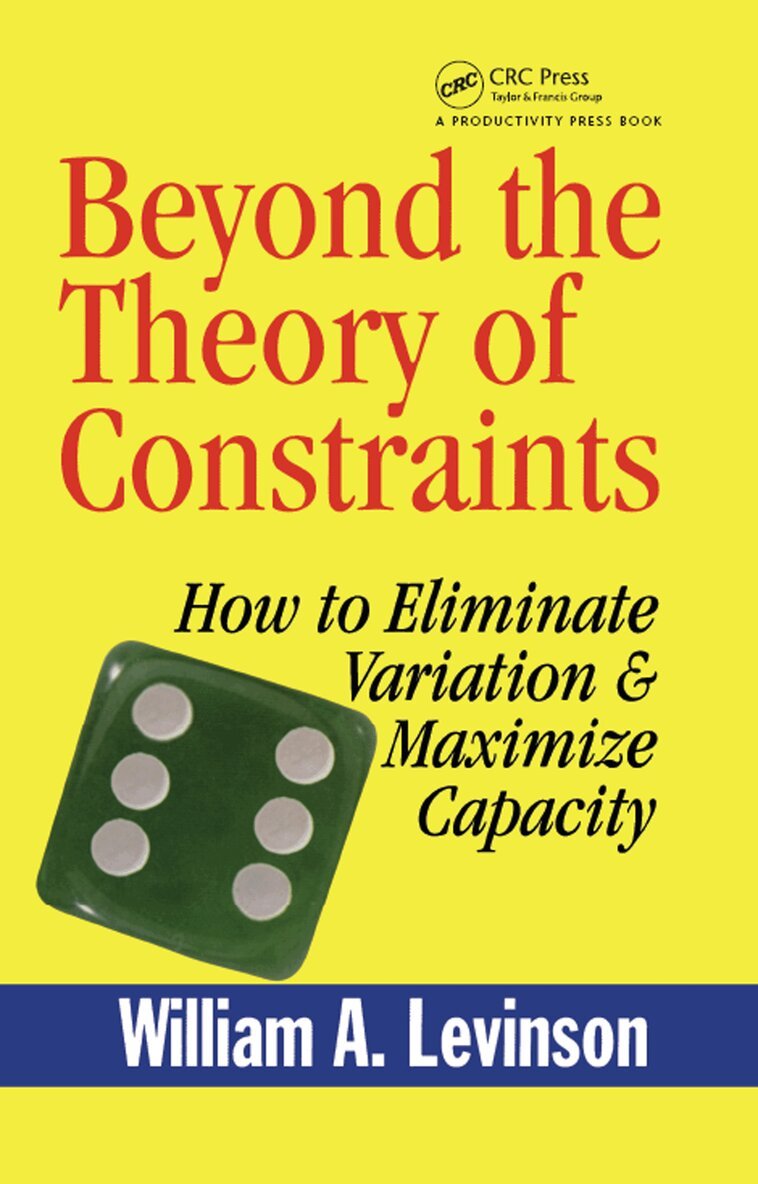
    Beyond the Theory of Constraints

    How to Eliminate Variation & Maximize Capacity

    AvWilliam A. Levinson

    Inbunden, Engelska, 2007

    737 kr

    Beställningsvara. Skickas inom 10-15 vardagar. Fri frakt över 249 kr.

    Fler format och utgåvor

    E-bok

    639 kr

    E-bok

    639 kr

    Beskrivning

    The basic principle of the Theory of Constraints (TOC) is the impossibility of running a balanced factory at 100 percent capacity. Variation in processing and material transfer times is the root cause of longer cycle times and higher inventories, which can hinder the ability to run a factory at full capacity.In Beyond the Theory of Constraints, William Levinson challenges this basic principle by stating that variation in processing and material transfer times comes from special or assignable causes that can be eliminated through traditional quality management techniques. Even random or common-cause variation can be suppressed through lean manufacturing methods. This compelling book: Gives a complete overview of the Theory of Constraints and its impact on engineering and managerial economicsIllustrates the effect of variation in processing and material transfer times, and shows why this variation prevents achievement of 100 percent utilizationDescribes methods for reducing variation in processing and material transfer timesDiscusses methods for increasing productivity and reducing cycle times - these are useful for elevating the constraint (increasing its capacity) and reduce variationThis book will teach business executives, managers, and technical professionals, including quality and manufacturing engineers, how to identify and remove variations and maximize capacity to achieve bottom-line results.

    Produktinformation

    • Utgivningsdatum:2007-07-23
    • Mått:152 x 229 x 16 mm
    • Vikt:362 g
    • Format:Inbunden
    • Språk:Engelska
    • Antal sidor:168
    • Förlag:Taylor & Francis Inc
    • ISBN:9781563273704

    Utforska kategorier

    • Projektledning inom Ekonomi och Ledarskap
    • Ledarskap och motivation inom Ekonomi och Ledarskap
    • Maskinteknik och material inom Naturvetenskap och teknik

    Mer om författaren

    William A Levinson

    Innehållsförteckning

    • Preface. The Theory of Constraints. Production Control: Pull versus Pig-Swallowing. Variation. Variation Reduction. Productivity Improvement. Appendix. Endnotes. Bibliography. Index. About the Author.