• Fri frakt över 249 kr
  • •
  • Snabba leveranser
  • •
  • Billiga böcker
Kundservice

Du är på sajten för privatpersoner.

Företag, bibliotek eller offentlig verksamhet?

Du handlar på classic.bokus.com, där alla dina funktioner finns intakta.
Till classic.bokus.com
Bokus logotyp. Gå till startsidan.
  • Erbjudanden
  • Nyheter
  • Student
  • Topplistor
  • Barn & ungdom
  • Bokus Play
  • E-böcker
  • Pocketböcker
  • Spel & pussel

Må bättre, för mindre! Upp till 50% rabatt på hälsoböcker

Sidfot

Mina sidor

    Hjälp

    • Kundservice
    • Vanliga frågor och svar
    • Frakt och leverans
    • Retur vid ångerrätt
    • Reklamera vara
    • Betalning
    • Köpvillkor
    • Allmänna villkor
    • Information om webbplatsens tillgänglighet

    Om Bokus

    • Om oss
    • Pressrum
    • För studenter
    • För företag
    • För bibliotek och offentlig verksamhet
    • För leverantörer
    • Hållbarhet

    Populärt

    • Aktuella erbjudanden
    • Presentkort
    • Studentlitteratur
    • Nya böcker
    • Topplistor
    • Signerade böcker
    • Engelska böcker

    Inspiration

    • Boktips
    • BookTok
    • Populära bokserier
    • Barnbokskaraktärer
    • Populära författare
    Logotyp för Bokus
    Följ oss på Facebook (extern länk)Följ oss på Instagram (extern länk)Följ oss på YouTube (extern länk)Följ oss på TikTok (extern länk)
    bokus @ CookiesAnpassa cookiesIntegritetspolicyKöpvillkor
    Till Citymail hemsida (extern länk)Till Budbee hemsida (extern länk)Till Postnord hemsida (extern länk)Till Schenker hemsida (extern länk)Till Early Bird hemsida (extern länk)Till Walleys hemsida (extern länk)
    1. Historia och arkeologi
    2. Historia
    3. Europas historia

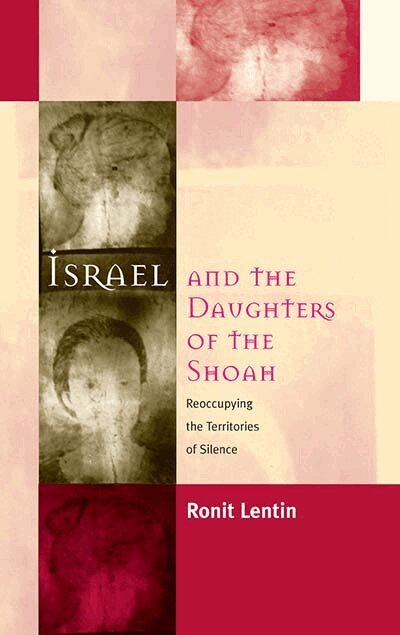
    Israel and the Daughters of the Shoah

    Reoccupying the Territories of Silence

    AvRonit Lentin

    Häftad, Engelska, 2000

    511 kr

    Beställningsvara. Skickas inom 5-8 vardagar. Fri frakt över 249 kr.

    Fler format och utgåvor

    Inbunden

    1 861 kr

    E-bok

    326 kr

    Beskrivning

    The murder of a third of Europe's Jews by the Nazis is unquestionably the worst catastrophe in the history of contemporary Judaism and a formative event in the history of Zionism and the State of Israel. Understandably, therefore, the Shoah, written about, analyzed, and given various political interpretations, has shaped public discourse in the history of the State of Israel. The key element of Shoah in the Israeli context is victimhood and as such it has become a source of shame, shrouded in silence and subordinated to the dominant discourse which, resulting from the construction of a "new Hebrew" active subjectivity, taught the postwar generation of Israelis to reject diaspora Jewry and its alleged passivity in the face of catastrophe.This book is the culmination of years of preoccupation with the meaning of the Shoah for the author, an Israeli woman with a "split subjectivity: - that of a daughter of a family of Shoah survivors, and that of a daughter of the first Israeli-born generation; the culmination of her need to break the silence about the Shoah in a society which constructed itself as the Israeli antithesis to diaspora Jewry, and to excavate a "truth" from underneath the mountain of Zionist nation-building myths. These myths, the author argues, not only had deep implication for the formation of her generation but also a profound impact on the Israeli-Palestinian conflict. Moreover, they are shot through with images of the "masculine" Israeli, constrasted with those of the weak, passive, non-virile Jewish "Other" of the diaspora. This book offers the first gendered analysis of Israeli society and the Shoah. The author employs personal narratives of nine Israeli daughters of Shoah survivors, writers and film makers, and a feminist re-reading of official and unofficial Israeli and Zionist discourses to explore the ways in which the relationship between Israel and the Shoah has been gendered in that the Shoah was "feminized" while Israel was "masculinized." This new perspective has considerable implications for the analysis of Israeli society; a gendered analysis of Israeli construction of nation reveals how the Shoah and Shoah discourse are exploited to justify Israel's, i.e. the "new Hebrew's," self-perceived right of occupation. Israel thus not only negated the Jewish diaspora, but also stigmatized and feminized Shoah victims and survivors, all the while employing Shoah discourses as an excuse for occupation, both in the past and in the present.

    Produktinformation

    • Utgivningsdatum:2000-11-16
    • Mått:152 x 229 x 15 mm
    • Vikt:318 g
    • Format:Häftad
    • Språk:Engelska
    • Antal sidor:288
    • Förlag:Berghahn Books, Incorporated
    • ISBN:9781571817754

    Utforska kategorier

    • Europas historia inom Historia och arkeologi
    • Andra världskriget inom Historia och arkeologi
    • Religion: allmänt inom Filosofi och religion

    Mer om författaren

    Israeli-born Ronit Lentin is a novelist and co-ordinator of the M.Phil. in Ethnic and Racial Studies, Department of Sociology, Trinity College, Dublin. She has published extensively on gender and Shoah commemoration, Israeli and Palestinian women, peace activism, citizenship, and minority Irish women, racism and antisemitism in Irish society, and feminist research methodologies.

    Recensioner i media

    "... [an] intriguing and compelling argument ... an impressive, scholarly and ambitious project of renaming, reoccupying, rewriting the socially constructed silences surrounding the Shoah experience ... [written in a] lucid, poetic, and accessible style."  · Women's Studies Review"I found this book utterly compelling. It is a moving testmony that stands on the cusp of what could be a very different Israeli society in the future."  · Nashim, A Journal of Jewish Women's Studies and Gender Issues"Offering a new and insightful perspective… an impressive, scholarly, and highly recommended contribution to Israeli and Judaic studies."  · The Midwest Book Review"An important book ... that raises several political questions worthy of discussion ... Although the study was written from a sociological point of view, it also includes a wide and well documented discussion of the historiography on the Shoah and its changing role within Israel during the last few decades."  · Gesher: Jewish Studies Journal"This book is the work of a brilliant and courageous scholar who dares to ask her own questions. Its narrative vision, born of ontological urgency is the product of a mature writer at home in her craft."  · Ruth Linden

    Innehållsförteckning

    • AcknowledgementsPrologue: If I forget thee…Chapter 1. Introduction: the territories of silenceChapter 2. ‘Writing is the closing of circles’Chapter 3. Breaking the conspiracy of silenceChapter 4. Israel’s New Hebrews ‘memorise’ the Jewish ShoahChapter 5. Israel’s ‘second-generation’Chapter 6. The feminisation of stigma in the relationship between Israelis and Shoah survivorsChapter 7. Counter-narratives: re-occupying the territories of silenceEpilogue: Journeys end(s)BibliographyIndex