• Fri frakt över 249 kr
  • •
  • Snabba leveranser
  • •
  • Billiga böcker
Kundservice

Du är på sajten för privatpersoner.

Företag, bibliotek eller offentlig verksamhet?

Du handlar på classic.bokus.com, där alla dina funktioner finns intakta.
Till classic.bokus.com
Bokus logotyp. Gå till startsidan.
  • Erbjudanden
  • Nyheter
  • Student
  • Topplistor
  • Barn & ungdom
  • Bokus Play
  • E-böcker
  • Pocketböcker
  • Spel & pussel

10% rabatt på allt med kod: NYSTART10 →

Sidfot

Mina sidor

    Hjälp

    • Kundservice
    • Vanliga frågor och svar
    • Frakt och leverans
    • Retur vid ångerrätt
    • Reklamera vara
    • Betalning
    • Köpvillkor
    • Allmänna villkor
    • Information om webbplatsens tillgänglighet

    Om Bokus

    • Om oss
    • Pressrum
    • För studenter
    • För företag
    • För bibliotek och offentlig verksamhet
    • För leverantörer
    • Hållbarhet

    Populärt

    • Aktuella erbjudanden
    • Presentkort
    • Studentlitteratur
    • Nya böcker
    • Topplistor
    • Signerade böcker
    • Engelska böcker

    Inspiration

    • Boktips
    • BookTok
    • Populära bokserier
    • Barnbokskaraktärer
    • Populära författare
    Logotyp för Bokus
    Följ oss på Facebook (extern länk)Följ oss på Instagram (extern länk)Följ oss på YouTube (extern länk)Följ oss på TikTok (extern länk)
    bokus @ CookiesAnpassa cookiesIntegritetspolicyKöpvillkor
    Till Citymail hemsida (extern länk)Till Budbee hemsida (extern länk)Till Postnord hemsida (extern länk)Till Schenker hemsida (extern länk)Till Early Bird hemsida (extern länk)Till Walleys hemsida (extern länk)
    1. Filosofi och religion
    2. Religion och tro
    3. Religion: allmänt

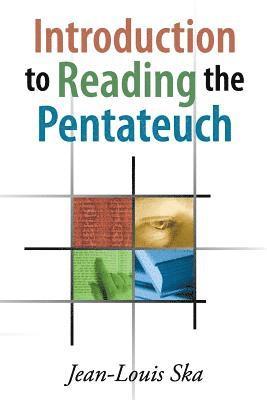
    Introduction to Reading the Pentateuch

    AvJean-Louis Ska

    Häftad, Engelska, 2006

    678 kr

    Beställningsvara. Skickas inom 3-6 vardagar. Fri frakt över 249 kr.

    Beskrivning

    When Jean Louis Ska’s Introduzione alla lettura del Pentateuco was first published in Italy, it was quickly hailed as the most attractive and usable introduction to the Pentateuch to appear in modern times. Because of its strengths, it was soon translated into French. The English translation published by Eisenbrauns has been completely reviewed and updated (including the bibliography) by Ska. Among the book’s many strengths are its close attention to the ways in which modern cultural history has affected Pentateuchal interpretation, attention to providing the kinds of examples that are helpful to students, presentation of a good balance between the history of interpretation and the data of the text, and the clarity of Ska’s writing. For both students and scholars, many consider this book the best contemporary introduction to the Pentateuch.

    Produktinformation

    • Utgivningsdatum:2006-06-30
    • Mått:152 x 229 x 21 mm
    • Vikt:454 g
    • Format:Häftad
    • Språk:Engelska
    • Antal sidor:304
    • Förlag:Pennsylvania State University Press
    • ISBN:9781575061221

    Utforska kategorier

    • Religion: allmänt inom Filosofi och religion
    • Kristendom inom Filosofi och religion

    Innehållsförteckning

    • 1. Basic Questions about the PentateuchA. The Origin of the Word Pentateuch and Its UsageB. Tetrateuch, Pentateuch, Hexateuch, or Enneateuch?C. Moses, the Pentateuch, and the Canon of the Hebrew Bible2. The Five Books of the Pentateuch: Content and StructureA. The Division into Five BooksB. The Structure of the Book of GenesisC. The Structure of the Book of ExodusD. The Structure of the Book of LeviticusE. The Structure of the Book of NumbersF. The Structure of the Book of Deuteronomy3. Literary Problems of the Pentateuch I: The Legislative TextsA. The Laws with Regard to SlavesB. The Laws regarding Loans: Exod 22:24, Deut 23:20–21, Lev 25:35–36C. The Laws concerning the Enemy’s Donkey or the Love of One’s Enemies: Exod 23:4–5, Deut 22:1–4, Lev 19:17–18D. The Decalogue4. Literary Problems of the Pentateuch II: The Narrative TextsA. Different Versions of the Same EventB. Doublets within a Single Narrative5. Literary Problems of the Pentateuch III: Some Redactional InterventionsA. Two Examples of Redactional “Insertions”B. The “Resumptive Repetition”C. Some “Linguistic Markers” of Redactional WorkD. Important “Divine Discourses” of Redactional OriginE. Moses’ Intercessions: Exod 32:7–14, Num 14:11b–23aF. Conclusion6. Exegesis of the Pentateuch: A History of Research from Ancient Times to 1970A. Antiquity and the Middle AgesB. Humanism and the Beginning of Modern ExegesisC. The Classic Documentary HypothesisD. Gunkel, Noth, von Rad, and Form CriticismE. Other Schools of Research7. Recent Developments in the Study of the PentateuchA. Criticisms of the Documentary HypothesisB. The Problem of the Various SourcesC. The “Synchronic” Study of the Pentateuch8. Basic Characteristics of Ancient LiteratureA. The Law of Antiquity or PrecedenceB. The Law of Conservation: Nothing Is EliminatedC. The Law of Continuity and UpdatingD. The Law of Economy: Only What Is Necessary Should Be WrittenE. Extrabiblical Parallels9. Reference Points for Reading the PentateuchA. The Pentateuch and the Reconstruction of Israel after the ExileB. Anchor Points for Interpretation: Three Codes Three Theologies, and the Final RedactionC. Did a Preexilic Source on Israel’s Origins Exist?D. The Preexilic Materials of the Pentateuch10. The Pentateuch and Postexilic IsraelA. Persian Imperial AuthorizationB. The Theory of Citizens Connected with the Temple (Bürger-Tempel-Gemeinde)ConclusionPostscriptBibliographyIndexesIndex of AuthorsIndex of Scripture

    Betyg & recensioner

    4/5