• Fri frakt över 249 kr
  • •
  • Snabba leveranser
  • •
  • Billiga böcker
Kundservice

Du är på sajten för privatpersoner.

Företag, bibliotek eller offentlig verksamhet?

Du handlar på classic.bokus.com, där alla dina funktioner finns intakta.
Till classic.bokus.com
Bokus logotyp. Gå till startsidan.
  • Erbjudanden
  • Nyheter
  • Student
  • Topplistor
  • Barn & ungdom
  • Bokus Play
  • E-böcker
  • Pocketböcker
  • Spel & pussel

10% studentrabatt med kod TERM26

Sidfot

Mina sidor

    Hjälp

    • Kundservice
    • Vanliga frågor och svar
    • Frakt och leverans
    • Retur vid ångerrätt
    • Reklamera vara
    • Betalning
    • Köpvillkor
    • Allmänna villkor
    • Information om webbplatsens tillgänglighet

    Om Bokus

    • Om oss
    • Pressrum
    • För studenter
    • För företag
    • För bibliotek och offentlig verksamhet
    • För leverantörer
    • Hållbarhet

    Populärt

    • Aktuella erbjudanden
    • Presentkort
    • Studentlitteratur
    • Nya böcker
    • Topplistor
    • Signerade böcker
    • Engelska böcker

    Inspiration

    • Boktips
    • BookTok
    • Populära bokserier
    • Barnbokskaraktärer
    • Populära författare
    Logotyp för Bokus
    Följ oss på Facebook (extern länk)Följ oss på Instagram (extern länk)Följ oss på YouTube (extern länk)Följ oss på TikTok (extern länk)
    bokus @ CookiesAnpassa cookiesIntegritetspolicyKöpvillkor
    Till Citymail hemsida (extern länk)Till Budbee hemsida (extern länk)Till Postnord hemsida (extern länk)Till Schenker hemsida (extern länk)Till Early Bird hemsida (extern länk)Till Walleys hemsida (extern länk)
    1. Historia och arkeologi
    2. Arkeologi
    3. Arkeologiska perioder och områden

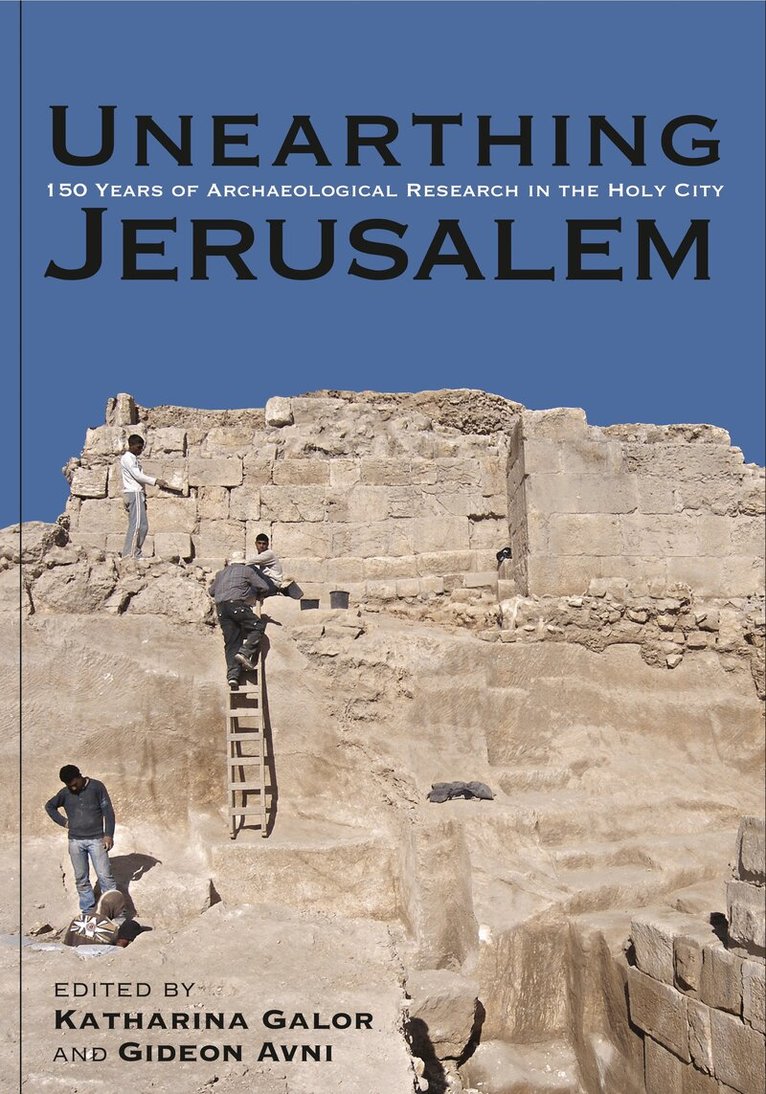
    Unearthing Jerusalem

    150 Years of Archaeological Research in the Holy City

    AvKatharina Galor,Gideon Avni

    Inbunden, Engelska, 2011

    968 kr

    Beställningsvara. Skickas inom 5-8 vardagar. Fri frakt över 249 kr.

    Beskrivning

    On a cold winter morning in January of 1851, a small group of people approached the monumental façade of an ancient rock-cut burial cave located north of the Old City of Jerusalem. The team, consisting of two Europeans and a number of local workers, was led by Louis-Félicien Caignart de Saulcy—descendant of a noble Flemish family who later was to become a distinguished member of the French parliament. As an amateur archaeologist and a devout Catholic, de Saulcy was attracted to the Holy Land and Jerusalem in particular and was obsessed by his desire to uncover some tangible evidence for the city’s glorious past. However, unlike numerous other European pilgrims, researchers and adventurers before him, de Saulcy was determined to expose the evidence by physically excavating ancient sites. His first object of investigation constitutes one of the most attractive and mysterious monumental burial caves within the vicinity of the Old City, from then onward to be referred to as the “Tomb of the Kings” (Kubur al-Muluk). By conducting an archaeological investigation, de Saulcy tried to prove that this complex represented no less than the monumental sepulcher of the biblical Davidic Dynasty. His brief exploration of the burial complex in 1851 led to the discovery of several ancient artifacts, including sizeable marble fragments of one or several sarcophagi. It would take him another 13 years to raise the funds for a more comprehensive investigation of the site. On November 17, 1863, de Saulcy returned to Jerusalem with a larger team to initiate what would later be referred to as the first archaeological excavation to be conducted in the city.—(from the “Preface”)In 2006, some two dozen contemporary archaeologists and historians met at Brown University, in Providence RI, to present papers and illustrations marking the 150th anniversary of modern archaeological exploration of the Holy City. The papers from that conference are published here, presented in 5 major sections: (1) The History of Research, (2) From Early Humans to the Iron Age, (3) The Roman Period, (4) The Byzantine Period, and (5) The Early Islamic and Medieval Periods. The volume is heavily illustrated with materials from historical archives as well as from contemporary excavations. It provides a helpful and informative introduction to the history of the various national and religious organizations that have sponsored excavations in the Holy Land and Jerusalem in particular, as well as a summary of the current status of excavations in Jerusalem.

    Produktinformation

    • Utgivningsdatum:2011-06-30
    • Mått:178 x 254 x 42 mm
    • Vikt:1 315 g
    • Format:Inbunden
    • Språk:Engelska
    • Antal sidor:512
    • Förlag:Pennsylvania State University Press
    • ISBN:9781575062235

    Utforska kategorier

    • Arkeologiska perioder och områden inom Historia och arkeologi
    • Mellanösterns historia inom Historia och arkeologi

    Innehållsförteckning

    • Unearthing Jerusalem: 150 Years of Archaeological Research Gideon Avni and Katharina GalorWhere Three Roads Meet: Jewish, Christian, and Muslim Pilgrimage to Jerusalem Frank E. PetersPart 1: The History of ResearchBritish Archaeological Work in Jerusalem between 1865 and 1967: An Assessment Shimon GibsonThe German Protestant Institute of Archaeology (Deutsches Evangelisches Institut für Altertumswissenschaft des Heiligen Landes) Ulrich HübnerThe American Archaeological Presence in Jerusalem: Through the Gates of the Albright Institute Joan R. BranhamThe École Biblique et Archéologique Française: A Catholic, French, and Archaeological Institution Dominique TrimburThe Archaeology of Jerusalem and the Franciscans of the Studium Biblicum Michele Piccirillo?†The Israel Exploration Society (IES) Ronny ReichThe Departments of Antiquities and the Israel Antiquities Authority (1918–2006): The Jerusalem Experience Jon SeligmanPart 2: From Early Humans to the Iron AgePrehistory of the Jerusalem Area Ofer Bar-YosefThe Archaeology of Early Jerusalem Aren M. MaeirJerusalem in the Iron Age: Archaeology and Text; Reality and Myth Israel FinkelsteinPart 3: The Roman PeriodThe Location of the Second Temple and the Layout of its Courts, Gates and Chambers: A New Proposal Joseph PatrichHas the Adiabene Royal Family “Palace” Been Found in the City of David? Doron Ben-Ami and Yana TchekhanovetsThe Pool of Siloam in Jerusalem of the Late Second Temple Period and Its Surroundings Ronny Reich and Eli ShukronA Domestic Quarter from the Second Temple Period on the Lower Slopes of the Central Valley (Tyropoeon) Zvi GreenhutCoins from Excavations in the Domestic Quarter of the City of David, Jerusalem Donald T. ArielOn the “New City” of Second Temple Period Jerusalem: The Archaeological Evidence Hillel GevaAelia Capitolina: A Review of Some Current Debates about Hadrianic Jerusalem Jodi MagnessPart 4: The Byzantine PeriodThe Urban Layout of Byzantine-Period Jerusalem Oren GutfeldEpigraphic Finds Reveal New Chapters in the History of the Church of the Holy Sepulchre in the 6th Century Leah Di SegniThe Hinterland of Jerusalem during the Byzantine Period Jon SeligmanPart 5: The Early Islamic and Medieval PeriodsFrom Hagia Polis to Al-Quds: The Byzantine–Islamic Transition in Jerusalem Gideon AvniJerusalem and the Beginnings of the Islamic City Donald WhitcombEarly Islamic and Medieval City Walls of Jerusalem in Light of New Discoveries Shlomit Weksler-BdolahAyyubid Jerusalem: New Architectural and Archaeological Discoveries Mahmoud HawariMamluk and Ottoman Jerusalem Robert Schick