• Fri frakt över 249 kr
  • •
  • Snabba leveranser
  • •
  • Billiga böcker
Kundservice

Du är på sajten för privatpersoner.

Företag, bibliotek eller offentlig verksamhet?

Du handlar på classic.bokus.com, där alla dina funktioner finns intakta.
Till classic.bokus.com
Bokus logotyp. Gå till startsidan.
  • Erbjudanden
  • Nyheter
  • Student
  • Topplistor
  • Barn & ungdom
  • Bokus Play
  • E-böcker
  • Pocketböcker
  • Spel & pussel

10% rabatt på allt med kod NYSTART10 →

Sidfot

Mina sidor

    Hjälp

    • Kundservice
    • Vanliga frågor och svar
    • Frakt och leverans
    • Retur vid ångerrätt
    • Reklamera vara
    • Betalning
    • Köpvillkor
    • Allmänna villkor
    • Information om webbplatsens tillgänglighet

    Om Bokus

    • Om oss
    • Pressrum
    • För studenter
    • För företag
    • För bibliotek och offentlig verksamhet
    • För leverantörer
    • Hållbarhet

    Populärt

    • Aktuella erbjudanden
    • Presentkort
    • Studentlitteratur
    • Nya böcker
    • Topplistor
    • Signerade böcker
    • Engelska böcker

    Inspiration

    • Boktips
    • BookTok
    • Populära bokserier
    • Barnbokskaraktärer
    • Populära författare
    Logotyp för Bokus
    Följ oss på Facebook (extern länk)Följ oss på Instagram (extern länk)Följ oss på YouTube (extern länk)Följ oss på TikTok (extern länk)
    bokus @ CookiesAnpassa cookiesIntegritetspolicyKöpvillkor
    Till Citymail hemsida (extern länk)Till Budbee hemsida (extern länk)Till Postnord hemsida (extern länk)Till Schenker hemsida (extern länk)Till Early Bird hemsida (extern länk)Till Walleys hemsida (extern länk)
    1. Psykologi och pedagogik
    2. Pedagogik
    3. Specialundervisning

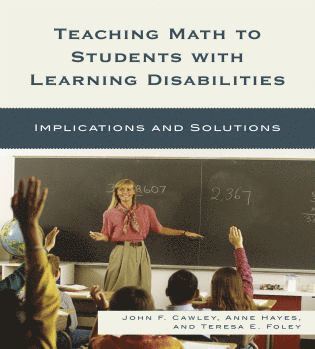
    Teaching Math to Students with Learning Disabilities

    Implications and Solutions

    AvJohn F Cawley,Anne Hayes

    Häftad, Engelska, 2008

    817 kr

    Beställningsvara. Skickas inom 10-15 vardagar. Fri frakt över 249 kr.

    Fler format och utgåvor

    Inbunden

    1 762 kr

    Beskrivning

    This book includes two main sections: a discussion of problem solving and a section on computation with whole numbers. A primary theme of the text is that problem solving sets the stage for meaning and conceptual development with respect to numbers. The section on problem solving includes numerous problem-solving activities that have a dual purpose: the enhancement of language comprehension and cognitive development, and the enrichment of experiences in arithmetic problem solving. The section on computation stresses the use of both traditional and alternative arithmetic algorithms. The latter are introduced so as to provide the teacher with a means to enhance performance in the area of whole number arithmetic in such a way that the difficulties of the student are circumvented.Providing a range of arithmetic activities useful in both the general education and special education settings, the book addresses needs of students in both general education and special education.

    Produktinformation

    • Utgivningsdatum:2008-08-15
    • Mått:212 x 282 x 9 mm
    • Vikt:420 g
    • Format:Häftad
    • Språk:Engelska
    • Antal sidor:174
    • Förlag:Bloomsbury Publishing Plc
    • ISBN:9781578868254

    Utforska kategorier

    • Specialundervisning inom Psykologi och pedagogik
    • Pedagogisk metodik inom Psykologi och pedagogik

    Mer om författaren

    John F. Cawley emeritus professor, Department of Educational Psychology, University of Connecticut and emeritus professor, Department of Learning and Instruction, State University of New York at Buffalo.Anne Hayes dean emeritus, University of HartfordTeresa E. Foley Instructor of Mathematics, Asnuntuck Community College, Enfield, Connecticut

    Innehållsförteckning

    • Chapter 1 Problem Solving Precedes ComputationChapter 2 Developing Word Problems for Diagnostic FeedbackChapter 3 Connections to Other SubjectsChapter 4 Arithmetic ComputationChapter 5 Knowing About and Being Able To DoChapter 6 Communicating MathematicsChapter 7 Teaching the Operations Using Whole NumbersChapter 8 Hand-Held CalculatorsChapter 9 Concluding Comments