• Fri frakt över 249 kr
  • •
  • Snabba leveranser
  • •
  • Billiga böcker
Kundservice

Du är på sajten för privatpersoner.

Företag, bibliotek eller offentlig verksamhet?

Du handlar på classic.bokus.com, där alla dina funktioner finns intakta.
Till classic.bokus.com
Bokus logotyp. Gå till startsidan.
  • Erbjudanden
  • Nyheter
  • Student
  • Topplistor
  • Barn & ungdom
  • Bokus Play
  • E-böcker
  • Pocketböcker
  • Spel & pussel

10% rabatt på allt med kod NYSTART10 →

Sidfot

Mina sidor

    Hjälp

    • Kundservice
    • Vanliga frågor och svar
    • Frakt och leverans
    • Retur vid ångerrätt
    • Reklamera vara
    • Betalning
    • Köpvillkor
    • Allmänna villkor
    • Information om webbplatsens tillgänglighet

    Om Bokus

    • Om oss
    • Pressrum
    • För studenter
    • För företag
    • För bibliotek och offentlig verksamhet
    • För leverantörer
    • Hållbarhet

    Populärt

    • Aktuella erbjudanden
    • Presentkort
    • Studentlitteratur
    • Nya böcker
    • Topplistor
    • Signerade böcker
    • Engelska böcker

    Inspiration

    • Boktips
    • BookTok
    • Populära bokserier
    • Barnbokskaraktärer
    • Populära författare
    Logotyp för Bokus
    Följ oss på Facebook (extern länk)Följ oss på Instagram (extern länk)Följ oss på YouTube (extern länk)Följ oss på TikTok (extern länk)
    bokus @ CookiesAnpassa cookiesIntegritetspolicyKöpvillkor
    Till Citymail hemsida (extern länk)Till Budbee hemsida (extern länk)Till Postnord hemsida (extern länk)Till Schenker hemsida (extern länk)Till Early Bird hemsida (extern länk)Till Walleys hemsida (extern länk)
    1. Psykologi och pedagogik
    2. Pedagogik
    3. Pedagogisk teori och filosofi

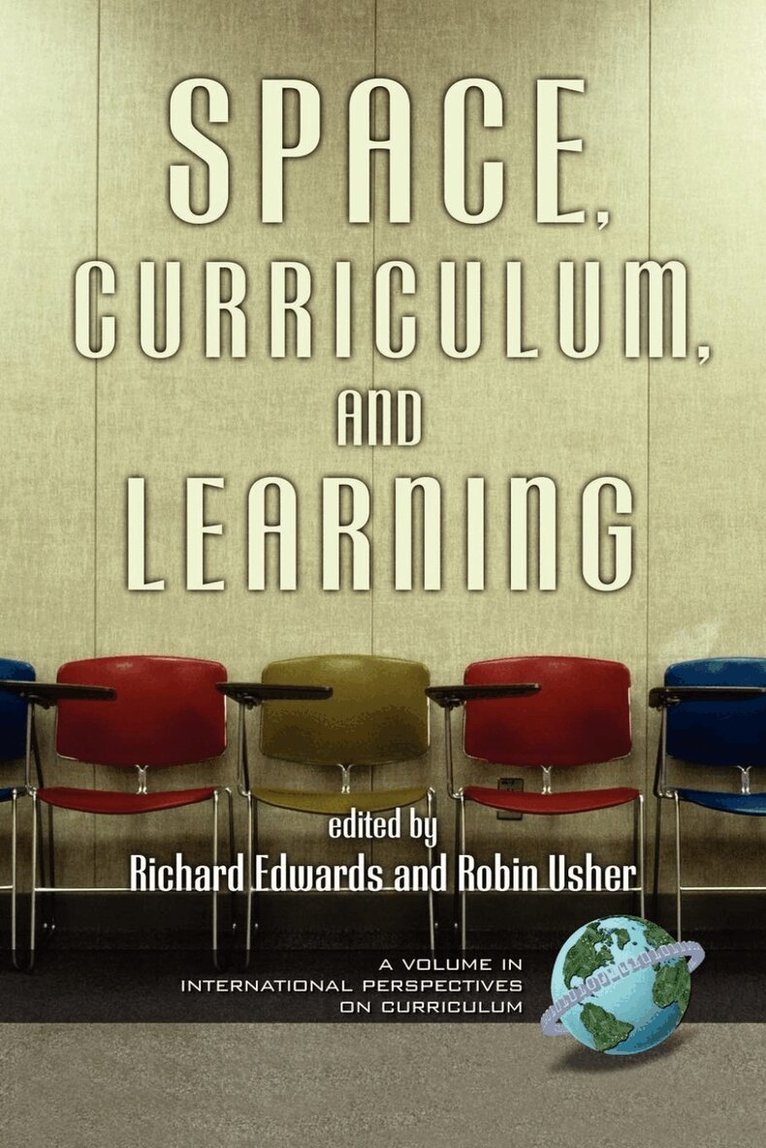
    Space, Curriculum, and Learning

    AvRichard Edwards,Robin Usher

    Häftad, Engelska, 2000

    Del i serien International Perspectives on Curriculum

    704 kr

    Beställningsvara. Skickas inom 5-8 vardagar. Fri frakt över 249 kr.

    Beskrivning

    In recent years there has been increasing interest in issues of space and spatiality in the social sciences and humanities generally, if less so in the study of education. This relative lack of interest is surprising given the importance of space and time in the organization of teaching, learning and research. For instance, the timetable and project timeline are central to the organization of learning and knowledge production whether in schools, colleges or universities. Classrooms, workshops and laboratories have different spatial layouts, which support certain forms of interaction and communication. When we add to this, the increasing distances across which knowledge, understanding and competence are being distributed through the use of information and communications technologies, the fact that issues of space have not been taken up seems more than an oversight. This relative lack of interest in space becomes even more surprising when one considers the extensive use of spatial metaphors in the discussion of education and pedagogy. For instance, the notions of open, distance and distributed learning and student-centredness, border crossing, and communities of practice all have a spatial dimension to them. Notions of a spiral curriculum act as a spatial imaginary. Indeed some metaphors, such as flexibility seem to be suggestive of the possibility that all constraints of space and time can be conquered in the provision of learning opportunities throughout life. This collection of chapters from researchers around the world attempts to address these issues, to examine the significance of space for curriculum, learning and identity.

    Produktinformation

    • Utgivningsdatum:2000-09-05
    • Mått:152 x 229 x 13 mm
    • Vikt:347 g
    • Format:Häftad
    • Språk:Engelska
    • Serie:International Perspectives on Curriculum
    • Antal sidor:232
    • Förlag:Emerald Publishing Inc
    • ISBN:9781593110925

    Utforska kategorier

    • Pedagogisk teori och filosofi inom Psykologi och pedagogik

    Innehållsförteckning

    • Foreword.Chapter 1. Putting Space Back on the Map of Learning; Richard Edwards and Robin Usher.Chapter 2. Remembering Apartheid: Political Discourse in School Space; Jenni Karlsson.Chapter 3. Territoriality, Inter-disciplinarity and School Space; Carrie Paechter.Chapter 4. Spatiality and Teacher Workplace Cultures: The Department as Nexus; Jane McGregor.Chapter 5. Learning, Participation and Identification Through School Grounds Development; Greg Mannion.Chapter 6. The Hidden Geometry of Curriculum; Brent Davis and Dennis Sumara.Chapter 7. Undergraduate Curricula as Networks and Trajectories; Jan Nespor.Chapter 8. Journeys Out of Place: Nursing Students and Spatiality; Peter Gray.Chapter 9. A Geography of Power, Identity, and Difference in Adult Education Curriculum Practice; Arthur L. Wilson and Ronald M. Cervero.Chapter 10. Picturing Places in the Assemblage of Flexibility in Further Education; Julia Clarke.Chapter 11. Diminishing Spaces for Learning: The Supervision of Research Degree Students in Australian Universities; Pam Green.Chapter 12. Virtual Research Practices and Phenomenologies of the Internet; Robyn Barnacle.Chapter 13. Geographies of Resistance in Critical Pedagogic Practices; Michael Peters.Chapter 14. Abstracted Space: The World, The Net and The Contemporary University; Robin Usher.