• Fri frakt över 249 kr
  • •
  • Snabba leveranser
  • •
  • Billiga böcker
Kundservice

Du är på sajten för privatpersoner.

Företag, bibliotek eller offentlig verksamhet?

Du handlar på classic.bokus.com, där alla dina funktioner finns intakta.
Till classic.bokus.com
Bokus logotyp. Gå till startsidan.
  • Erbjudanden
  • Nyheter
  • Student
  • Topplistor
  • Barn & ungdom
  • Bokus Play
  • E-böcker
  • Pocketböcker
  • Spel & pussel

10% rabatt på allt med kod NYSTART10 →

Sidfot

Mina sidor

    Hjälp

    • Kundservice
    • Vanliga frågor och svar
    • Frakt och leverans
    • Retur vid ångerrätt
    • Reklamera vara
    • Betalning
    • Köpvillkor
    • Allmänna villkor
    • Information om webbplatsens tillgänglighet

    Om Bokus

    • Om oss
    • Pressrum
    • För studenter
    • För företag
    • För bibliotek och offentlig verksamhet
    • För leverantörer
    • Hållbarhet

    Populärt

    • Aktuella erbjudanden
    • Presentkort
    • Studentlitteratur
    • Nya böcker
    • Topplistor
    • Signerade böcker
    • Engelska böcker

    Inspiration

    • Boktips
    • BookTok
    • Populära bokserier
    • Barnbokskaraktärer
    • Populära författare
    Logotyp för Bokus
    Följ oss på Facebook (extern länk)Följ oss på Instagram (extern länk)Följ oss på YouTube (extern länk)Följ oss på TikTok (extern länk)
    bokus @ CookiesAnpassa cookiesIntegritetspolicyKöpvillkor
    Till Citymail hemsida (extern länk)Till Budbee hemsida (extern länk)Till Postnord hemsida (extern länk)Till Schenker hemsida (extern länk)Till Early Bird hemsida (extern länk)Till Walleys hemsida (extern länk)
    1. Psykologi och pedagogik
    2. Psykologi
    3. Psykologisk metod

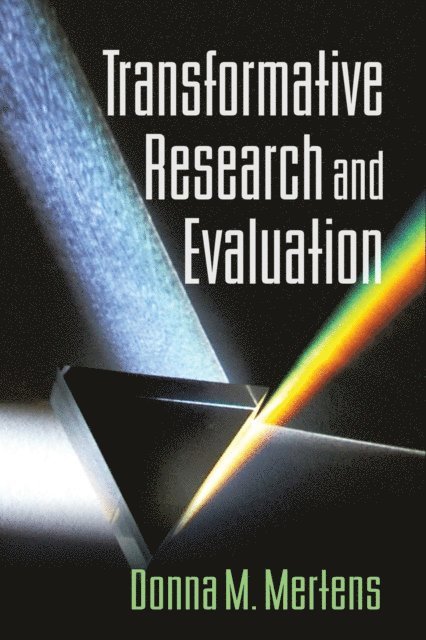
    Transformative Research and Evaluation

    AvDonna M. Mertens

    Häftad, Engelska, 2008

    745 kr

    Beställningsvara. Skickas inom 5-8 vardagar. Fri frakt över 249 kr.

    Fler format och utgåvor

    E-bok

    852 kr

    Inbunden

    Tillf. slut

    Beskrivning

    From distinguished scholar Donna M. Mertens, this book provides a framework for making methodological decisions and conducting research and evaluations that promote social justice. The transformative paradigm has emerged from—and guides—a broad range of social and behavioral science research projects with communities that have been pushed to the margins, such as ethnic, racial, and sexual minority group members and children and adults with disabilities. Mertens shows how to formulate research questions based on community needs, develop researcher–community partnerships grounded in trust and respect, and skillfully apply quantitative, qualitative, and mixed-methods data collection strategies. Practical aspects of analyzing and reporting results are addressed, and numerous sample studies are presented. Student- and Instructors-Friendly Features Include:*Commentary on the sample studies that explains what makes them transformative.*Explanations of key concepts related to oppression, social justice, and the role of research and evaluation.*Questions for Thought to stimulate critical self-reflection and discussion.*Advance chapter organizers and chapter summaries.

    Produktinformation

    • Utgivningsdatum:2008-12-01
    • Mått:152 x 229 x 28 mm
    • Vikt:580 g
    • Format:Häftad
    • Språk:Engelska
    • Antal sidor:402
    • Förlag:Guilford Publications
    • ISBN:9781593853020

    Utforska kategorier

    • Psykologisk metod inom Psykologi och pedagogik

    Mer om författaren

    Donna M. Mertens, PhD, is Professor Emeritus in the Department of Educational Foundations and Research at Gallaudet University. She continues to pursue an active professional life, consulting about evaluations across the globe and, of course, writing about methodological issues and social justice. A past president of the American Evaluation Association (AEA), Dr. Mertens has received AEA’s highest honors for service to the organization and the field, as well as for her contributions to evaluation theory. In 2025, she received the inaugural TEI Social Betterment Award from The Evaluators’ Institute. She is the author of several books and is widely published in major professional journals.

    Recensioner i media

    "I've been searching for the right text for my master's-level course entitled Research in Community Settings. I've just finished reading this book, and I think it is terrific! It is just right for a course in which students will be engaging in community-university partnerships as well as learning to think critically about research."--Robb Travers, PhD, Department of Psychology, Wilfrid Laurier University, Waterloo, Ontario, Canada"As the world becomes more interconnected and diverse, our research methods need to keep up with changes. Mertens writes beautifully about conducting research in the service of social justice, using a transformative lens and focusing clearly on each step in the process. This book illustrates why Mertens is so highly regarded for her writing that links research methods theory with practice. I highly recommend this book for researchers and graduate students across the social and human sciences."--John W. Creswell, Department of Educational Psychology, University of Nebraska-Lincoln"Mertens focuses on using research and evaluation to transform people’s lives and communities. Including historically excluded and marginalized people in the processes of generating and using knowledge is transformative not only for research participants, but also for the researchers and evaluators who engage with them. The genius of Mertens's comprehensive approach resides in the way she makes transformative inquiry accessible and inclusive yet intellectually robust and methodologically rigorous. She invites us into the transformative process, changing the ways we both think about and conduct research and evaluation. This book is for anyone open to seriously engaging the transformative power of inclusive inquiry."--Michael Q. Patton, Director, Utilization-Focused Evaluation, St. Paul, Minnesot"Mertens gets to the heart of how to ground research and evaluation projects in a social justice framework, in line with multiple disciplinary perspectives that embrace a transformative paradigm. This book will challenge students--including those who have not previously questioned their basic societal beliefs and assumptions--to explore diversity and oppression issues in new ways. I appreciated the inclusion of truly diverse groups, including ethnocultural minority groups and others, in the discussions of the various research and evaluation projects. The international examples and perspectives were very refreshing, too."--Gary W. Harper, Department of Psychology, DePaul University "With the increase in awareness of diversity, a book like this one is long overdue. This is the first book I have read that comprehensively discusses how to approach evaluation using strategies that are culturally appropriate and inclusive of diverse communities. Mertens provides a holistic and inclusive way of thinking about research methodology. She does a wonderful job of explaining the transformative paradigm in lay language."--Katrina L. Bledsoe, Associate Project Director, Walter R. McDonald & Associates, Washington, DC"This important book assembles the complex array of procedures, perspectives, and priorities associated with transformative research and evaluation. It blends the many voices and illustrations available in the literature to assist the reader in identifying what is possible in this important new paradigm. Significant cross-cultural and international examples of studies that truly warrant the label of 'transformative' are incorporated."--Melvin E. Hall, Department of Educational Psychology, Northern Arizona University- This is the first book that specifically addresses research methodology for the transformative perspective....Although the book prioritizes an educational focus, it has relevance beyond education and scholars from management disciplines can add a practical and penetrating reading to their research toolbox....The audience encompasses novice researchers and evaluators, advanced undergraduate and beginning graduate students, more experienced teachers and evaluators....This book reminds us all that social research is embedded within a system of values and the myth of objective and value-free research should be discharged. It demonstrates how to blend science and action in an attempt to solve specific problems and promote social change. --Organizational Research Methods, 11/1/2008

    Innehållsförteckning

    • IntroductionThe Intersection of Applied Social Research and Program EvaluationParadigmsRationale for the Transformative ParadigmBreadth of Transformative Paradigm Applicability1. Resilience, Resistance, and Complexities That Challenge In This ChapterHuman Rights AgendaThe Transformative Paradigm as a Metaphysical UmbrellaNeed for Transformative Research and EvaluationExamples of Transformative Research and EvaluationExamples of Shifting ParadigmsNeed for the Transformative Paradigm and Scholarly LiteratureNeed for the Transformative Paradigm and Public PolicyComplexities That ChallengeEthical ImpetusStriving for Improved ValiditySummary2. The Transformative Paradigm: Basic Beliefs and Commensurate Theories In This ChapterParadigms and Basic Belief SystemsThe Transformative Paradigm and Its Basic Belief SystemsTheories Commensurate with the Transformative ParadigmPolitics and PowerSummary3. Self, Partnerships, and RelationshipsIn This ChapterHuman Relations as Factors Contributing to Research Validity and RigorKnowing YourselfKnowing Yourself in Relation to the CommunityCultural CompetenceStrategies for Developing Relationships/PartnershipsTypes of Partnerships/RelationshipsChallenges in Relationships/PartnershipsRecognizing the Complexity of Culturally Competent WorkPurposes of PartnershipsExamples of Points of Interaction in the Research ProcessBuilding CapacitySummary4. Developing the Focus of Research/Evaluation StudiesIn This ChapterPurposes for the Gathering of Information at This Stage of the InquirySources That Support the Need for Research and EvaluationTheoretical FrameworksMaking Use of SourcesSummary5. A Transformative Research and Evaluation Model In This ChapterCyclical Models: Indigenous PeoplesCyclical Model: PARCyclical Models: Immigrant CommunitiesShort-Term Research and EvaluationTypes of Transformative Research and EvaluationTransformative Intervention ApproachesSummary6. Quantitative, Qualitative, and Mixed Methods In This ChapterMixed- and Multiple-Methods ApproachesCase StudiesEthnographyPhenomenology Participatory Action ResearchAppreciative InquiryExperimental and Quasi-Experimental DesignsSurvey Design and Correlational and Causal-Comparative StudiesGender Analysis: A Mixed-Methods Approach with Potential Transfer to OtherGroups That Experience DiscriminationRigor in the Process of Research and EvaluationSummary7. Participants: Identification, Sampling, Consent, and ReciprocityIn This ChapterSocial Justice: Dimensions of Diversity and Cultural CompetenceRationale for Sampling StrategiesRecruitment of ParticipantsProtection of Human Participants and Ethical Review BoardsSummary8. Data-Collection Methods, Instruments, and StrategiesIn This ChapterReliability and Validity/Dependability and CredibilityLanguage as a Critical IssuePlanning Data-Collection StrategiesSpecific Data-Collection StrategiesSummary9. Data Analysis and InterpretationIn This ChapterTransformative Theories as Guides to Data Analysis and InterpretationInvolving the Community in Analysis and In