E-bok, Engelska, 2011
Why We Should Call Ourselves Christians
311 kr
Läs direkt i Bokus Reader – eller ladda ned till din enhet
Beskrivning
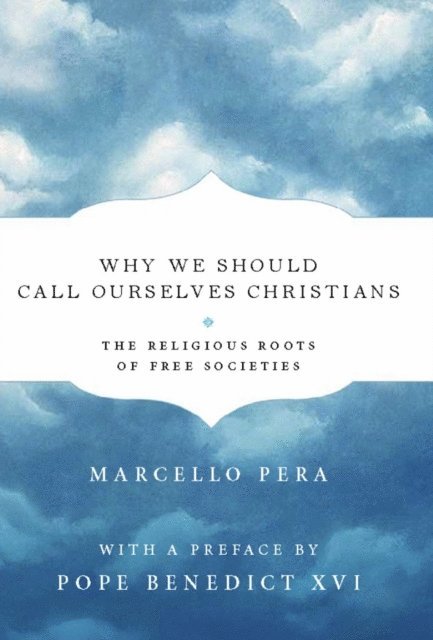
The intellectual and political elite of the West is nowadays taking for granted that religion, in particular Christianity, is a cultural vestige, a primitive form of knowledge, a consolation for the poor minded, an obstacle to coexistence. In all influential environments, the widespread watchword is “We are all secular” or “We are all post-religious.” As a consequence, we are told that states must be independent of religious creed, politics must take a neutral stance regarding religious values, and societies must hold together without any reference to religious bonds. Liberalism, which in some form or another is the prevailing view in the West, is considered to be “free-standing,” and the Western, liberal, open society is taken to be “self-sufficient.”
Not only is anti-Christian secularism wrong, it is also risky. It''s wrong because the very ideas on which liberal societies are based and in terms of which they can be justified—the concept of the dignity of the human person, the moral priority of the individual, the view that man is a “crooked timber” inclined to prevarication, the limited confidence in the power of the state to render him virtuous—are typical Christian or, more precisely, Judeo-Christian ideas. Take them away and the open society will collapse. Anti-Christian secularism is risky because it jeopardizes the identity of the West, leaves it with no self-conscience, and deprives people of their sense of belonging. The Founding Fathers of America, as well as major intellectual European figures such as Locke, Kant, and Tocqueville, knew how much our civilization depends on Christianity. Today, American and European culture is shaking the pillars of that civilization.
Written from a secular and liberal, but not anti-Christian, point of view, this book explains why the Christian culture is still the best antidote to the crisis and decline of the West. Pera proposes that we should call ourselves Christians if we want to maintain our liberal freedoms, to embark on such projects as the political unification of Europe as well as the special relationship between Europe and America, and to avoid the relativistic trend that affects our public ethics. “The challenges of our particular historical moment”, as Pope Benedict XVI calls them in the Preface to the book, can be faced only if we stress the historical and conceptual link between Christianity and free society.
Not only is anti-Christian secularism wrong, it is also risky. It''s wrong because the very ideas on which liberal societies are based and in terms of which they can be justified—the concept of the dignity of the human person, the moral priority of the individual, the view that man is a “crooked timber” inclined to prevarication, the limited confidence in the power of the state to render him virtuous—are typical Christian or, more precisely, Judeo-Christian ideas. Take them away and the open society will collapse. Anti-Christian secularism is risky because it jeopardizes the identity of the West, leaves it with no self-conscience, and deprives people of their sense of belonging. The Founding Fathers of America, as well as major intellectual European figures such as Locke, Kant, and Tocqueville, knew how much our civilization depends on Christianity. Today, American and European culture is shaking the pillars of that civilization.
Written from a secular and liberal, but not anti-Christian, point of view, this book explains why the Christian culture is still the best antidote to the crisis and decline of the West. Pera proposes that we should call ourselves Christians if we want to maintain our liberal freedoms, to embark on such projects as the political unification of Europe as well as the special relationship between Europe and America, and to avoid the relativistic trend that affects our public ethics. “The challenges of our particular historical moment”, as Pope Benedict XVI calls them in the Preface to the book, can be faced only if we stress the historical and conceptual link between Christianity and free society.
Produktinformation
- Utgivningsdatum: 2011-10-18
- Språk: Engelska
- Filformat: EPUB
- Kopieringsskydd: LCP
- ISBN: 9781594035654
- Förlag: Encounter Books
Utforska kategorier
Betyg & recensioner
0 recensioner
Inga recensioner tillgängliga.