• Fri frakt över 249 kr
  • •
  • Snabba leveranser
  • •
  • Billiga böcker
Kundservice

Du är på sajten för privatpersoner.

Företag, bibliotek eller offentlig verksamhet?

Du handlar på classic.bokus.com, där alla dina funktioner finns intakta.
Till classic.bokus.com
Bokus logotyp. Gå till startsidan.
  • Erbjudanden
  • Student
  • Topplistor
  • Barn & ungdom
  • Bokus Play
  • E-böcker
  • Ljudböcker
  • Pocketböcker
  • Spel och pussel

Pocketfynda! Hundratals böcker för 49 kr/st →

Sidfot

Mina sidor

    Hjälp

    • Kundservice
    • Vanliga frågor och svar
    • Frakt och leverans
    • Retur vid ångerrätt
    • Reklamera vara
    • Betalning
    • Köpvillkor
    • Allmänna villkor
    • Information om webbplatsens tillgänglighet

    Om Bokus

    • Om oss
    • Pressrum
    • För studenter
    • För företag
    • För bibliotek och offentlig verksamhet
    • För leverantörer
    • Hållbarhet

    Populärt

    • Aktuella erbjudanden
    • Presentkort
    • Studentlitteratur
    • Nya böcker
    • Topplistor
    • Signerade böcker
    • Engelska böcker

    Inspiration

    • Boktips
    • BookTok
    • Barnbokskaraktärer
    • Populära författare
    Logotyp för Bokus
    Följ oss på Facebook (extern länk)Följ oss på Instagram (extern länk)Följ oss på YouTube (extern länk)Följ oss på TikTok (extern länk)
    bokus @ CookiesAnpassa cookiesIntegritetspolicyKöpvillkor
    Till Citymail hemsida (extern länk)Till Budbee hemsida (extern länk)Till Postnord hemsida (extern länk)Till Schenker hemsida (extern länk)Till Early Bird hemsida (extern länk)Till Walleys hemsida (extern länk)
    1. Historia och arkeologi
    2. Historia
    3. Forntidens historia

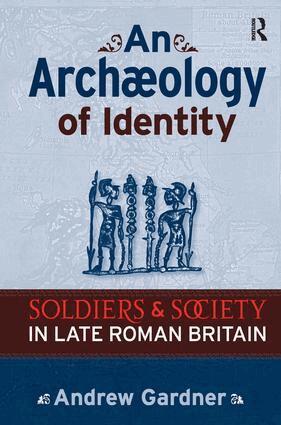
    Archaeology of Identity

    Soldiers and Society in Late Roman Britain

    AvAndrew Gardner

    Inbunden, Engelska, 2007

    Del i serien UCL Institute of Archaeology Publications

    2 482 kr

    Beställningsvara. Skickas inom 10-15 vardagar. Fri frakt över 249 kr.

    Fler format och utgåvor

    E-bok

    901 kr

    E-bok

    898 kr

    Häftad

    755 kr

    Beskrivning

    What happened to Roman soldiers in Britain during the decline of the empire in the 4th and 5th centuries? Did they withdraw, defect, or go native? More than a question of military history, this is the starting point for Andrew Gardner’s incisive exploration of social identity in Roman Britain, in the Roman Empire, and in ancient society. Drawing on the sociological theories of Anthony Giddens and others, Gardner shapes an approach that focuses on the central role of practice in the creation and maintenance of identities—nationalist, gendered, class, and ethnic. This theory is then tested against the material remains of Roman soldiers in Britain to show how patterning of stratigraphy, architecture, and artifacts supports his theoretical construct. The result is a retelling of the story of late Roman Britain sharply at odds with the traditional text-driven histories and a theory of human action that offers much to current debates across the social sciences.

    Produktinformation

    • Utgivningsdatum:2007-11-15
    • Mått:156 x 234 x undefined mm
    • Vikt:460 g
    • Format:Inbunden
    • Språk:Engelska
    • Serie:UCL Institute of Archaeology Publications
    • Antal sidor:312
    • Förlag:Left Coast Press Inc
    • ISBN:9781598742268

    Utforska kategorier

    • Forntidens historia inom Historia och arkeologi
    • Europas historia inom Historia och arkeologi
    • Forntida militärhistoria inom Historia och arkeologi

    Mer om författaren

    Dr. Andrew Gardner is currently Lecturer in Roman Archaeology at Cardiff University. His previous publications include the edited volume Agency Uncovered: archaeological perspectives on social agency, power and being human (UCL Press), and his research interests include the social dynamics of Roman imperialism and the role of material culture in the expression of identity. From September 2005 he will be Lecturer in the Archaeology of the Roman Empire at University College London.

    Recensioner i media

    "Identity in Roman Britain was not simple and it was not set in stone. One notable example was that of the Roman soldier during the decline of the Empire in the fourth and fifth centuries. As lines of authority collapsed and he became less and less relevant, the Roman solider had a number of available options, including withdrawing, defecting to another armed force, or going native. Gardner (archaeology of the Roman Empire, University College, London) makes good use of the theories of Giddens and others to examine how people create and maintain their identities in terms of nationality, gender, class and ethnicity. He then compares these theories to practice as expressed by portable and architectural material culture and texts. The result is quite different than we expected about the fates of these complex identities and serves as a model for more comparisons of identity with artifacts." --Book News, Inc.

    Innehållsförteckning

    • Introduction: the Roman empire in the 21st century; Points of departure: The practice of identity; Identity of doing: artefacts and contexts; Identities of dwelling: structures and spaces; Worlds within worlds: the wider empire; Points of return: social stories; Epilogue: Whose Roman Britain?