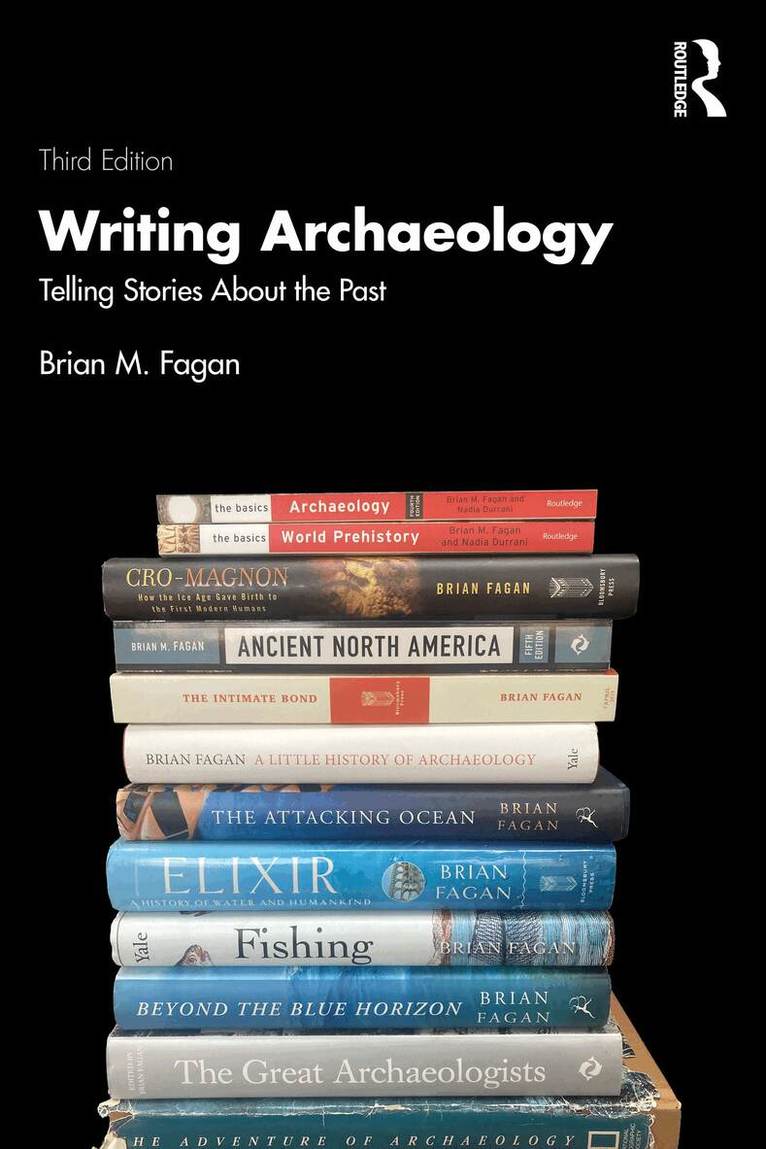
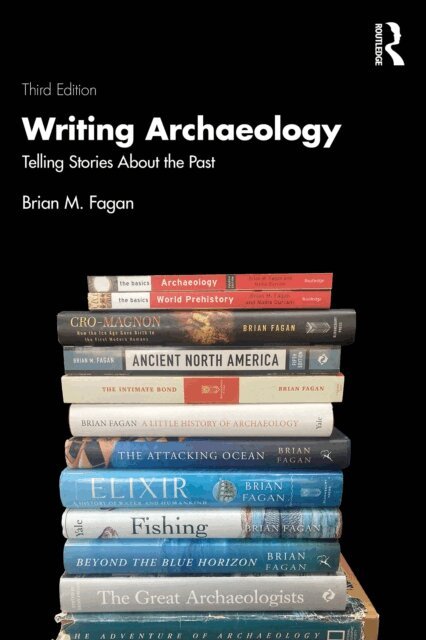
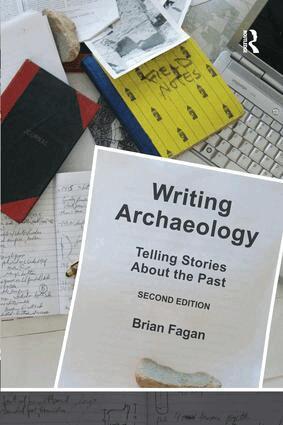
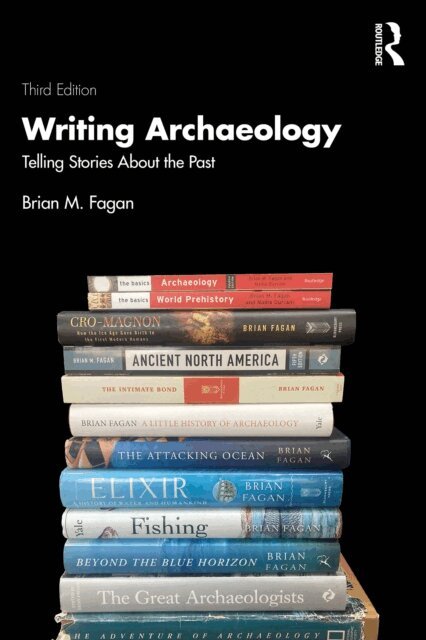
Writing Archaeology
Telling Stories About the Past
1 366 kr
Tillfälligt slut
Du är på sajten för privatpersoner.
1 366 kr
Tillfälligt slut
Brian Fagan is professor emeritus in the Department of Anthropology at the University of California, Santa Barbara. After studying archaeology at Pembroke College, Cambridge, he spent seven years doing archaeology and museum work in Central and East Africa, before coming to the United States in 1966. His original specialty was the African Iron Age, an esoteric subject if ever there was one, and he became involved in the founding of multidisciplinary African history. He came to the University of California, Santa Barbara, in 1967, and simultaneously changed intellectual directions, becoming a generalist who wrote about archaeology for general audiences. Since then, he has suffered through the writing of many books, including a series of widely used texts such as In the Beginning and People of the Earth. His numerous trade books include The Rape of the Nile, The Adventure of Archaeology, The Little Ice Age, Fish on Friday, and Elixir: A Human History of Water. His other interests include bicycling, cruising under sail, kayaking, good food, and cats. He and his family are (at last count) the proud owners of two cats, a horse, several mosquito fish and seven rabbits.
"The short version of this review is simply this: Writing Archaeology should be required reading for archaeologists. Whether crafting a book, an article, a chapter or anything else that is meant to inform either colleagues or the public about archaeology, writers will find this book useful and audiences of the resultant improved products will be thankful that Brian Fagan's advice was taken seriously."-Barbara Little, Historical Archaeology "I'm in the middle of reading Brian Fagan's Writing Archaeology: Telling Stories About the Past. I just had to pause, however, to tell you that this is the most useful book that I have read in the past decade, bar none. Thanks for publishing it. (And please thank Brian Fagan for writing it.)"-Eric H. Cline, Chair, Department of Classical and Semitic Languages and Literature, The George Washington University "I found this book to be chock-full of useable and pertinent information about both the craft and business of writing. This is not a book about academic writing, it is a book meant to guide archaeologists who want to write for more general audiences. In many important ways, this is a book about writing as public archaeology. ..Throughout are countless nuggets of information and advice, all of which are presented in an amiable, self-deprecating, but authoritative style. In short, there is a lot of information here, and it is a good read besides. ..this book is must-read for anyone who hopes to write about archaeology to general audiences, but it should also be read by those who write mainly for other archaeologists. We often bemoan how boring some of our writing is, and this book could point the way to correcting that as well. Anyone who writes about archaeology should read-and more importantly, use-this book."-Carol McDavid, African American Archaeological Review "...Fagan is both a top University of California academic and the most prolific author of popular archaeology in the United States. He is living proof that academic rigour is not the excuse some seem to think it is for bad, boring, lifeless writing... This little book can be recommended unreservedly to all who aspire to be writers of archaeology--but especially to those who aspire to reach beyond the professional ghetto."...--Current Archaeology "With valuable personal experiences and insights, Brian Fagan takes you through the process of writing a book, from coming up with an initial idea, to 'putting pen to paper' (fingers to keyboard), to dealing with publishing houses and getting your book to the shops. Along the way the book takes the reader through the journey of storytelling, using sources, compiling and presenting data, presenting arguments, organising material, book structure, using illustrations and references, producing drafts and proofs, taking on criticisms and revising work, copyediting, contracts and agents, book signings and book tours, and much more besides."-Oxbow Newsletter

Du är på sajten för privatpersoner.
1 366 kr
Tillfälligt slut
Brian Fagan is professor emeritus in the Department of Anthropology at the University of California, Santa Barbara. After studying archaeology at Pembroke College, Cambridge, he spent seven years doing archaeology and museum work in Central and East Africa, before coming to the United States in 1966. His original specialty was the African Iron Age, an esoteric subject if ever there was one, and he became involved in the founding of multidisciplinary African history. He came to the University of California, Santa Barbara, in 1967, and simultaneously changed intellectual directions, becoming a generalist who wrote about archaeology for general audiences. Since then, he has suffered through the writing of many books, including a series of widely used texts such as In the Beginning and People of the Earth. His numerous trade books include The Rape of the Nile, The Adventure of Archaeology, The Little Ice Age, Fish on Friday, and Elixir: A Human History of Water. His other interests include bicycling, cruising under sail, kayaking, good food, and cats. He and his family are (at last count) the proud owners of two cats, a horse, several mosquito fish and seven rabbits.
"The short version of this review is simply this: Writing Archaeology should be required reading for archaeologists. Whether crafting a book, an article, a chapter or anything else that is meant to inform either colleagues or the public about archaeology, writers will find this book useful and audiences of the resultant improved products will be thankful that Brian Fagan's advice was taken seriously."-Barbara Little, Historical Archaeology "I'm in the middle of reading Brian Fagan's Writing Archaeology: Telling Stories About the Past. I just had to pause, however, to tell you that this is the most useful book that I have read in the past decade, bar none. Thanks for publishing it. (And please thank Brian Fagan for writing it.)"-Eric H. Cline, Chair, Department of Classical and Semitic Languages and Literature, The George Washington University "I found this book to be chock-full of useable and pertinent information about both the craft and business of writing. This is not a book about academic writing, it is a book meant to guide archaeologists who want to write for more general audiences. In many important ways, this is a book about writing as public archaeology. ..Throughout are countless nuggets of information and advice, all of which are presented in an amiable, self-deprecating, but authoritative style. In short, there is a lot of information here, and it is a good read besides. ..this book is must-read for anyone who hopes to write about archaeology to general audiences, but it should also be read by those who write mainly for other archaeologists. We often bemoan how boring some of our writing is, and this book could point the way to correcting that as well. Anyone who writes about archaeology should read-and more importantly, use-this book."-Carol McDavid, African American Archaeological Review "...Fagan is both a top University of California academic and the most prolific author of popular archaeology in the United States. He is living proof that academic rigour is not the excuse some seem to think it is for bad, boring, lifeless writing... This little book can be recommended unreservedly to all who aspire to be writers of archaeology--but especially to those who aspire to reach beyond the professional ghetto."...--Current Archaeology "With valuable personal experiences and insights, Brian Fagan takes you through the process of writing a book, from coming up with an initial idea, to 'putting pen to paper' (fingers to keyboard), to dealing with publishing houses and getting your book to the shops. Along the way the book takes the reader through the journey of storytelling, using sources, compiling and presenting data, presenting arguments, organising material, book structure, using illustrations and references, producing drafts and proofs, taking on criticisms and revising work, copyediting, contracts and agents, book signings and book tours, and much more besides."-Oxbow Newsletter
Du är på sajten för privatpersoner.
1 366 kr
Tillfälligt slut
Brian Fagan is professor emeritus in the Department of Anthropology at the University of California, Santa Barbara. After studying archaeology at Pembroke College, Cambridge, he spent seven years doing archaeology and museum work in Central and East Africa, before coming to the United States in 1966. His original specialty was the African Iron Age, an esoteric subject if ever there was one, and he became involved in the founding of multidisciplinary African history. He came to the University of California, Santa Barbara, in 1967, and simultaneously changed intellectual directions, becoming a generalist who wrote about archaeology for general audiences. Since then, he has suffered through the writing of many books, including a series of widely used texts such as In the Beginning and People of the Earth. His numerous trade books include The Rape of the Nile, The Adventure of Archaeology, The Little Ice Age, Fish on Friday, and Elixir: A Human History of Water. His other interests include bicycling, cruising under sail, kayaking, good food, and cats. He and his family are (at last count) the proud owners of two cats, a horse, several mosquito fish and seven rabbits.
"The short version of this review is simply this: Writing Archaeology should be required reading for archaeologists. Whether crafting a book, an article, a chapter or anything else that is meant to inform either colleagues or the public about archaeology, writers will find this book useful and audiences of the resultant improved products will be thankful that Brian Fagan's advice was taken seriously."-Barbara Little, Historical Archaeology "I'm in the middle of reading Brian Fagan's Writing Archaeology: Telling Stories About the Past. I just had to pause, however, to tell you that this is the most useful book that I have read in the past decade, bar none. Thanks for publishing it. (And please thank Brian Fagan for writing it.)"-Eric H. Cline, Chair, Department of Classical and Semitic Languages and Literature, The George Washington University "I found this book to be chock-full of useable and pertinent information about both the craft and business of writing. This is not a book about academic writing, it is a book meant to guide archaeologists who want to write for more general audiences. In many important ways, this is a book about writing as public archaeology. ..Throughout are countless nuggets of information and advice, all of which are presented in an amiable, self-deprecating, but authoritative style. In short, there is a lot of information here, and it is a good read besides. ..this book is must-read for anyone who hopes to write about archaeology to general audiences, but it should also be read by those who write mainly for other archaeologists. We often bemoan how boring some of our writing is, and this book could point the way to correcting that as well. Anyone who writes about archaeology should read-and more importantly, use-this book."-Carol McDavid, African American Archaeological Review "...Fagan is both a top University of California academic and the most prolific author of popular archaeology in the United States. He is living proof that academic rigour is not the excuse some seem to think it is for bad, boring, lifeless writing... This little book can be recommended unreservedly to all who aspire to be writers of archaeology--but especially to those who aspire to reach beyond the professional ghetto."...--Current Archaeology "With valuable personal experiences and insights, Brian Fagan takes you through the process of writing a book, from coming up with an initial idea, to 'putting pen to paper' (fingers to keyboard), to dealing with publishing houses and getting your book to the shops. Along the way the book takes the reader through the journey of storytelling, using sources, compiling and presenting data, presenting arguments, organising material, book structure, using illustrations and references, producing drafts and proofs, taking on criticisms and revising work, copyediting, contracts and agents, book signings and book tours, and much more besides."-Oxbow Newsletter