• Fri frakt över 249 kr
  • •
  • Snabba leveranser
  • •
  • Billiga böcker
Kundservice

Du är på sajten för privatpersoner.

Företag, bibliotek eller offentlig verksamhet?

Du handlar på classic.bokus.com, där alla dina funktioner finns intakta.
Till classic.bokus.com
Bokus logotyp. Gå till startsidan.
  • Erbjudanden
  • Nyheter
  • Student
  • Topplistor
  • Barn & ungdom
  • Bokus Play
  • E-böcker
  • Pocketböcker
  • Spel & pussel

10% rabatt på allt med kod: NYSTART10 →

Sidfot

Mina sidor

    Hjälp

    • Kundservice
    • Vanliga frågor och svar
    • Frakt och leverans
    • Retur vid ångerrätt
    • Reklamera vara
    • Betalning
    • Köpvillkor
    • Allmänna villkor
    • Information om webbplatsens tillgänglighet

    Om Bokus

    • Om oss
    • Pressrum
    • För studenter
    • För företag
    • För bibliotek och offentlig verksamhet
    • För leverantörer
    • Hållbarhet

    Populärt

    • Aktuella erbjudanden
    • Presentkort
    • Studentlitteratur
    • Nya böcker
    • Topplistor
    • Signerade böcker
    • Engelska böcker

    Inspiration

    • Boktips
    • BookTok
    • Populära bokserier
    • Barnbokskaraktärer
    • Populära författare
    Logotyp för Bokus
    Följ oss på Facebook (extern länk)Följ oss på Instagram (extern länk)Följ oss på YouTube (extern länk)Följ oss på TikTok (extern länk)
    bokus @ CookiesAnpassa cookiesIntegritetspolicyKöpvillkor
    Till Citymail hemsida (extern länk)Till Budbee hemsida (extern länk)Till Postnord hemsida (extern länk)Till Schenker hemsida (extern länk)Till Early Bird hemsida (extern länk)Till Walleys hemsida (extern länk)
    1. Samhälle och politik
    2. Samhälle och kultur
    3. Kultur och medier
    4. Referensverk och tvärvetenskap

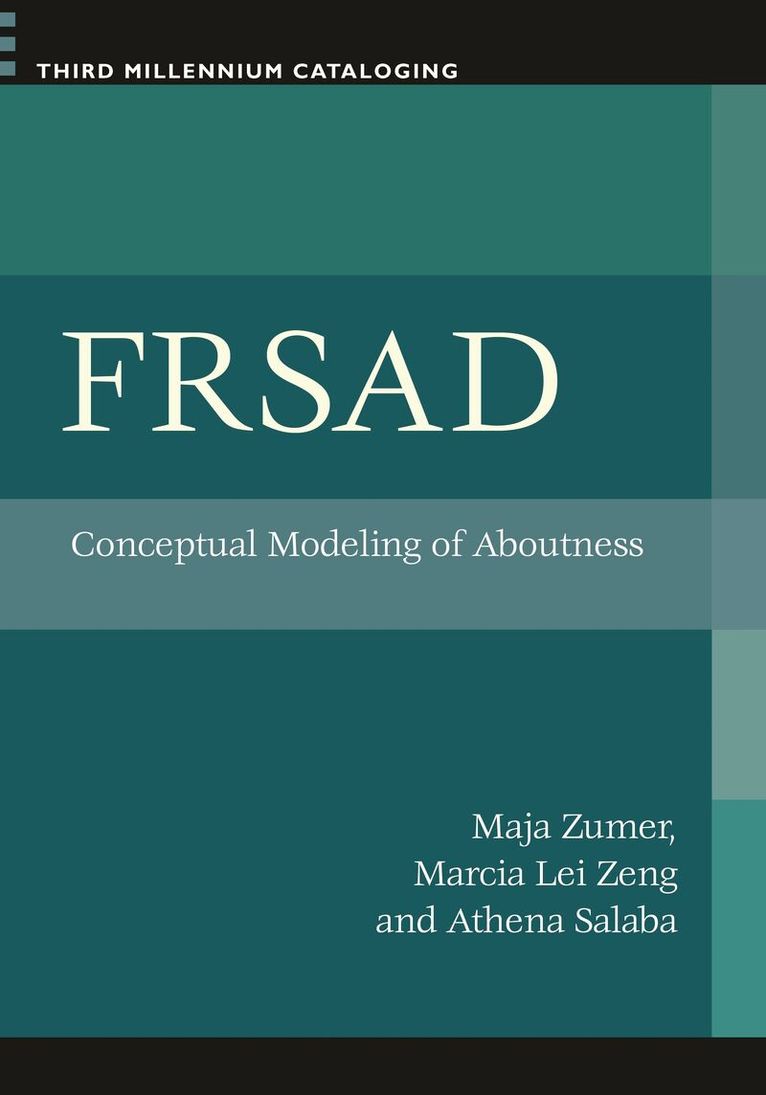
    FRSAD

    Conceptual Modeling of Aboutness

    AvMarcia Lei Zeng,Athena Salaba

    Häftad, Engelska, 2012

    Del i serien Third Millennium Cataloging

    563 kr

    Beställningsvara. Skickas inom 10-15 vardagar. Fri frakt över 249 kr.

    Fler format och utgåvor

    E-bok

    595 kr

    Beskrivning

    The first comprehensive exploration of the development and use of the International Federation of Library Associations and Institutions' (IFLA) newly released model for subject authority data, covering everything from the rationale for creating the model to practical steps for implementing it.FRSAD: Conceptual Modeling of Aboutness explores the full dimensions of the IFLA's Functional Requirements for Subject Authority Data model, showing how putting the model to work can ease information sharing across systems, domains, and environments.Written by three leading members of the IFLA working group that developed the model, FRSAD moves from the theoretical foundations of knowledge organization to a complete conceptual overview of the model, to specific working guidelines for its implementation. The book is filled with insights into the factors driving the model's development, as well as numerous illustrative examples of its practical applications in real-world settings. It also focuses on the benefits of using the model when developing knowledge organization systems (KOS) within the library domain and beyond.

    Produktinformation

    • Utgivningsdatum:2012-09-11
    • Mått:170 x 252 x 12 mm
    • Vikt:260 g
    • Format:Häftad
    • Språk:Engelska
    • Serie:Third Millennium Cataloging
    • Antal sidor:132
    • Förlag:Bloomsbury Publishing Plc
    • ISBN:9781598847949

    Utforska kategorier

    • Referensverk och tvärvetenskap inom Samhälle och politik
    • Politik och statsskick inom Samhälle och politik

    Mer om författaren

    Maja Zumer is professor in the Department of Library and Information Science and Book Studies at the University of Ljubljana, Slovenia.Marcia Lei Zeng is professor in the School of Library and Information Science, Kent State University, Kent, OH.Athena Salaba is associate professor at the School of Library and Information Science, Kent State University, Kent, OH.

    Recensioner i media

    The book provides a thorough overview of the theoretical foundations of knowledge organization as well as working guidelines for its implementation. . . . Primarily geared for catalogers in academic institutions, the work also teaches how to make decisions that impact the catalog and, more generally, how to search a catalog. It also provides information on using the FRSAD model when developing knowledge organization systems both in the library and beyond.

    Innehållsförteckning

    • ContentsChapter 1: Introduction References Chapter 2: Aboutness Aboutness: Overview Aboutness and Ofness Form, Genre, and Isness The Common Needs that Structured Vocabularies Serve References Chapter 3: Users and Use of Subject Authority Data Who Are the Users of Subject Authority Data? User Studies and Their Use of Subject Authority Data Use of Subject Authority Data by Vocabulary Creators Use of Subject Authority Data at the Creation and Maintenance of Data: Metadata Creators Use of Subject Authority Data when Searching for Data: End Users and Public Services Information Professionals Use of Subject Authority Data by Computer Applications FRSAD User TasksThe FIND Task The IDENTIFY Task The SELECT Task The EXPLORE Task References Chapter 4: Modeling Approaches of Aboutness Functional Requirements for Bibliographic Records (FRBR) Discussion Functional Requirements for Authority Records (FRAD) Discussion Examples of Other Modeling Approaches Ranganathan's Facets Information Coding Classification by Dahlberg Buizza and Guerrini FAST References Chapter 5: The FRSAD Model User Tasks OutlineEntitiesThema NomenRelationships Basic Relationships between Entities Thema-to-Thema Relationships Nomen-to-Nomen Relationships Attributes Thema Attributes Nomen Attributes References Chapter 6: Formal Presentations of the FRSAD Model Recapitulation of FRSAD FRSAD in RDF References Chapter 7: Examples of Subject Authority Data Explained with the FRSAD ModelExamples of Display Records from Knowledge Organization Systems Example: A Thema and Its Nomens in a Simple Controlled List from the PBCore instantiationColorsExample: A Chemical Substance and Its Nomen—A Display Record from the USP Dictionary of U.S. Adopted Names and International Drug Names (USAN) Example: A Place as a Thema—A Display Record from the Getty Thesaurus of Geographic Names (TGN)Example: Taxonomy with Notations—An Extracted Section from the GAMS Problem Taxonomy Example: A Thesaurus Editing Tool View of a Record from the ASIS&T ThesaurusExample: A Multilingual Thesaurus Record from the Thesaurus Ethics in the Life SciencesExample: A Display Record (Expanded Concept View) from MeSHExplanations of FRSAD's Major Components with ExamplesExisting Models of Thema TypesThema-to-Thema Relationships Presented in Subject Authority Data in Individual Vocabularies Thema-to-Thema Relationships Crosswalked through Nomens in Multiple Knowledge Organization SystemsSame Thema Represented by Nomens from Different SchemesReferences Chapter 8: Use of FRSAD for Knowledge Organization Structure Development and InteroperabilityFRSAD for Knowledge Organization Structure Development Implications of FRSAD for Various Knowledge Organization Structures FRSAD for Authority Data in General FRSAD for Meeting Multilingual and Multiple Community Needs FRSAD Model for Vocabulary Mapping Approach 1: Nomen-hosting System Approach 2: Thema-centered System The FRSAD Conceptual Model and Its Implementation in Data Models for Subject Authority Data SKOS and the Thema-Nomen Relationship Model SKOS eXtension for Labels (SKOS-XL) and Relationships of Nomens References Chapter 9: Concluding RemarksReference Index