Marcia Lei Zeng - Böcker
Visar alla böcker från författaren Marcia Lei Zeng. Handla med fri frakt och snabb leverans.
8 produkter
8 produkter
1 363 kr
Skickas inom 3-6 vardagar
Intelligent Computing for Cultural Heritage
Global Achievements and China's Innovations
Inbunden, Engelska, 2024
2 100 kr
Skickas inom 10-15 vardagar
This book offers a global perspective on the latest advancements and trends in digital humanities and intelligent computing of cultural heritage, covering both academic research and case studies within cultural institutions.This edited volume brings together views and practices from different regions, including Asia, Europe, Africa, North America, and Australia. It offers innovative approaches and case studies related to humanities data and digital methods, with a focus on digital humanities research and pedagogy and cultural heritage organisation and preservation, in particular the development of digital knowledge repositories and methods for digital intelligence in cultural heritage. Each case study highlights unique cultural characteristics and academic histories, resulting in diverse development priorities and thematic directions. However, this diversity can also lead to imbalances and isolation within the field. To gain a better understanding of the complex trends in the development of the digital humanities, this book offers valuable insights from case studies and research practices, showcasing global contributions from scholars and institutions.This title will appeal to scholars and students of digital humanities and information science, particularly those studying heritage management and intelligent computing. Professionals working at the intersection of technology and cultural heritage will also find this book of great interest.The Open Access version of this book, available at http://www.taylorfrancis.com, has been made available under a Creative Commons Attribution-Non Commercial-No Derivatives (CC-BY-NC-ND) 4.0 license.
Intelligent Computing for Cultural Heritage
Global Achievements and China's Innovations
Häftad, Engelska, 2025
535 kr
Skickas inom 10-15 vardagar
This book offers a global perspective on the latest advancements and trends in digital humanities and intelligent computing of cultural heritage, covering both academic research and case studies within cultural institutions.This edited volume brings together views and practices from different regions, including Asia, Europe, Africa, North America, and Australia. It offers innovative approaches and case studies related to humanities data and digital methods, with a focus on digital humanities research and pedagogy and cultural heritage organisation and preservation, in particular the development of digital knowledge repositories and methods for digital intelligence in cultural heritage. Each case study highlights unique cultural characteristics and academic histories, resulting in diverse development priorities and thematic directions. However, this diversity can also lead to imbalances and isolation within the field. To gain a better understanding of the complex trends in the development of the digital humanities, this book offers valuable insights from case studies and research practices, showcasing global contributions from scholars and institutions.This title will appeal to scholars and students of digital humanities and information science, particularly those studying heritage management and intelligent computing. Professionals working at the intersection of technology and cultural heritage will also find this book of great interest.The Open Access version of this book, available at http://www.taylorfrancis.com, has been made available under a Creative Commons Attribution-Non Commercial-No Derivatives (CC-BY-NC-ND) 4.0 license.
AI and Smart Data for Cultural Heritage
Global Achievements and China’s Innovations
Inbunden, Engelska, 2026
2 969 kr
Kommande
This volume explores the transformation of Digital Humanities (DH) research by AI and smart data, offering global perspectives on innovative methodologies and practices in cultural heritage, with contributions from Asia, Europe, North America and South America.Moving from big data to smart data and into the AI era, DH researchers continue to develop new concepts, methodologies and practices. Smart data, which provides insights from trusted, contextualised, cognitive, predictive and consumable data at any scale, will continue to hold significant value in our field with AI providing additional support. Addressing both approach and practice, this volume presents the latest advancements and trends in AI and smart data for cultural heritage in DH. It also makes a valuable contribution to critical theories, methods and practices for leveraging these technologies in cultural heritage.This book will be an essential reference for DH researchers, cultural heritage professionals and AI practitioners working at the intersection of technology and humanities scholarship.
1 261 kr
Skickas inom 3-6 vardagar
541 kr
Skickas inom 10-15 vardagar
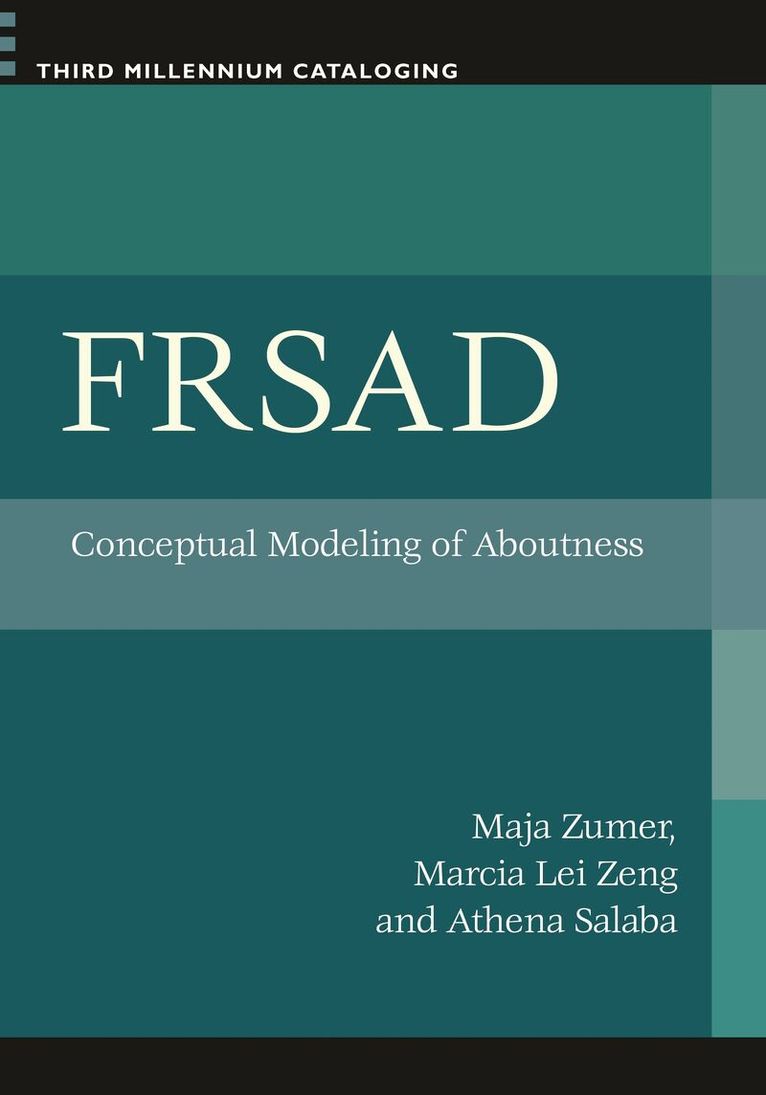
The first comprehensive exploration of the development and use of the International Federation of Library Associations and Institutions' (IFLA) newly released model for subject authority data, covering everything from the rationale for creating the model to practical steps for implementing it.FRSAD: Conceptual Modeling of Aboutness explores the full dimensions of the IFLA's Functional Requirements for Subject Authority Data model, showing how putting the model to work can ease information sharing across systems, domains, and environments.Written by three leading members of the IFLA working group that developed the model, FRSAD moves from the theoretical foundations of knowledge organization to a complete conceptual overview of the model, to specific working guidelines for its implementation. The book is filled with insights into the factors driving the model's development, as well as numerous illustrative examples of its practical applications in real-world settings. It also focuses on the benefits of using the model when developing knowledge organization systems (KOS) within the library domain and beyond.
1 203 kr
Skickas inom 5-8 vardagar
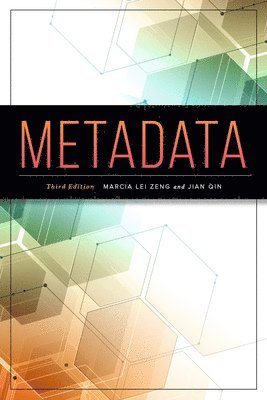
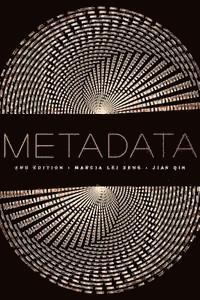
The third edition of this landmark textbook has been thoroughly updated to incorporate the many developments and changes in metadata and related domains. Authors Marcia Lei Zeng and Jian Qin provide a solid grounding in the variety and interrelationships among different metadata types, offering a comprehensive look at the metadata schemas that exist in the world of library and information science and beyond. Readers will gain knowledge and an understanding of key topics such as:metadata building blocks, from modeling to defining properties, from designing application profiles to implementing value vocabularies, and from specification generating to schema encoding, illustrated with new examplesbest practices for metadata as linked data, the new functionality brought by implementing the linked data principles, and the importance of knowledge organization systemsresource metadata services, quality measurement, and interoperability approachesresearch data management concepts like the FAIR principles, metadata publishing on the web and the recommendations by the W3C in 2017, related Open Science metadata standards such as Data Catalog Vocabulary (DCAT) version 2, and metadata-enabled reproducibility and replicability of research datastandards used in libraries, archives, museums, and other information institutions, plus existing metadata standards’ new versions, such as the EAD 3, LIDO 1.1, MODS 3.7, DC Terms 2020 release coordinating its ISO 15396-2:2019, and Schema.org’s update in responding to the pandemicnewer, trending forces that are impacting the metadata domain, including entity management, semantic enrichment for the existing metadata, mashup culture such as enhanced Wikimedia contents, knowledge graphs and related processes, semantic annotations and analysis for unstructured data, and supporting digital humanities (DH) through smart data.Featuring new developments driven by semantic technologies and digital data and information, with an accompanying website and supplementary learning materials, this remains the definitive primer on metadata for students, instructors, faculty, and professionals at all levels of experience.
Functional Requirements for Subject Authority Data (FRSAD)
A Conceptual Model
Inbunden, Engelska, 2011
1 175 kr
Skickas inom 5-8 vardagar
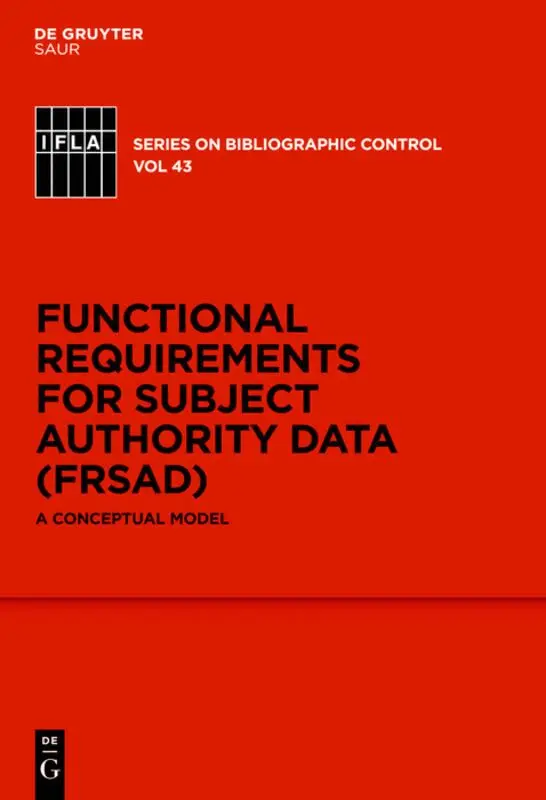
The purpose of authority control is to ensure consistency in representing a value - a name of a person, a place name, or a term or code representing a subject - in the elements used as access points in information retrieval. The primary purpose of this study is to produce a framework that will provide a clearly stated and commonly shared understanding of what the subject authority data/record/file aims to provide information about, and the expectation of what such data should achieve in terms of answering user needs.