• Fri frakt över 249 kr
  • •
  • Snabba leveranser
  • •
  • Billiga böcker
Kundservice

Du är på sajten för privatpersoner.

Företag, bibliotek eller offentlig verksamhet?

Du handlar på classic.bokus.com, där alla dina funktioner finns intakta.
Till classic.bokus.com
Bokus logotyp. Gå till startsidan.
  • Erbjudanden
  • Nyheter
  • Student
  • Topplistor
  • Barn & ungdom
  • Bokus Play
  • E-böcker
  • Pocketböcker
  • Spel & pussel

10% rabatt på allt med kod: NYSTART10 →

Sidfot

Mina sidor

    Hjälp

    • Kundservice
    • Vanliga frågor och svar
    • Frakt och leverans
    • Retur vid ångerrätt
    • Reklamera vara
    • Betalning
    • Köpvillkor
    • Allmänna villkor
    • Information om webbplatsens tillgänglighet

    Om Bokus

    • Om oss
    • Pressrum
    • För studenter
    • För företag
    • För bibliotek och offentlig verksamhet
    • För leverantörer
    • Hållbarhet

    Populärt

    • Aktuella erbjudanden
    • Presentkort
    • Studentlitteratur
    • Nya böcker
    • Topplistor
    • Signerade böcker
    • Engelska böcker

    Inspiration

    • Boktips
    • BookTok
    • Populära bokserier
    • Barnbokskaraktärer
    • Populära författare
    Logotyp för Bokus
    Följ oss på Facebook (extern länk)Följ oss på Instagram (extern länk)Följ oss på YouTube (extern länk)Följ oss på TikTok (extern länk)
    bokus @ CookiesAnpassa cookiesIntegritetspolicyKöpvillkor
    Till Citymail hemsida (extern länk)Till Budbee hemsida (extern länk)Till Postnord hemsida (extern länk)Till Schenker hemsida (extern länk)Till Early Bird hemsida (extern länk)Till Walleys hemsida (extern länk)
    1. Juridik
    2. Särskilda rättsområden
    3. Miljö-, transport- och planeringsrätt
    4. Miljörätt

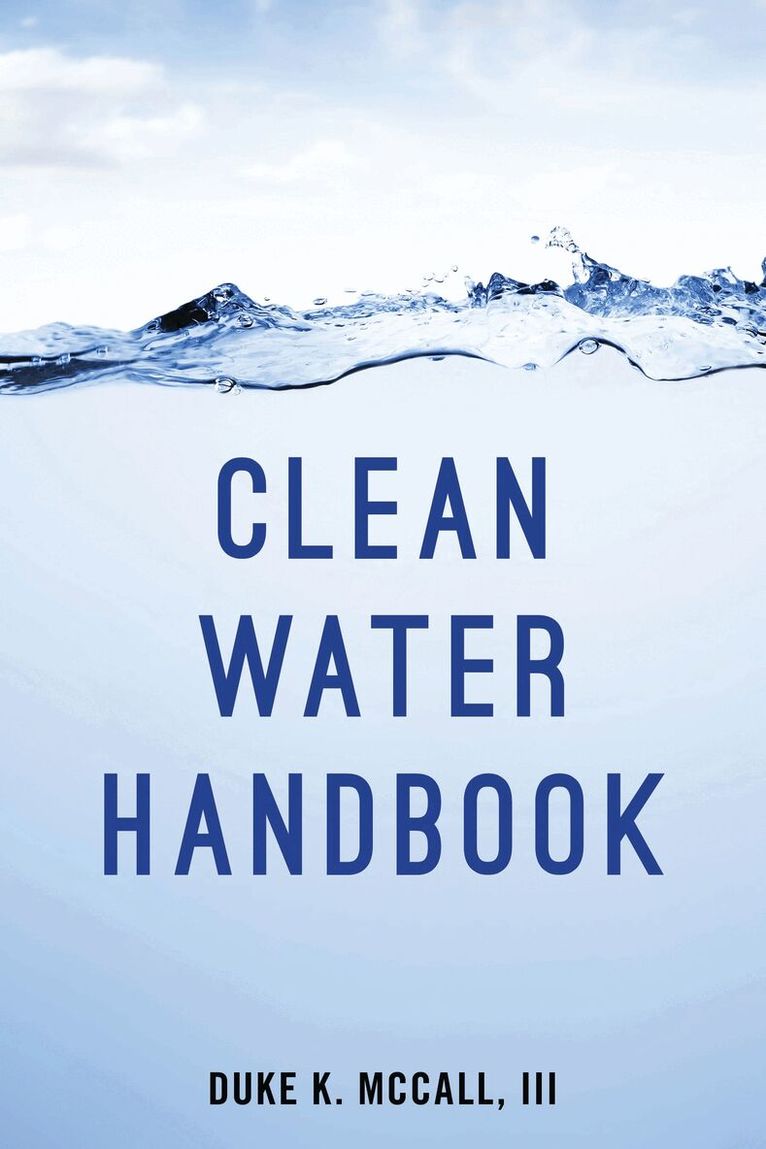
    Clean Water Handbook

    AvDuke K. McCall III

    Häftad, Engelska, 2017

    1 411 kr

    Beställningsvara. Skickas inom 10-15 vardagar. Fri frakt över 249 kr.

    Fler format och utgåvor

    E-bok

    1 527 kr

    Beskrivning

    First Update Since 2003! Completely updated to capture all new revisions and new aspects of the law, the new Clean Water Handbook provides environmental professionals with a comprehensive roadmap to the requirements, legal interpretations, and critical issues of water pollution control law. Written from a legal perspective but intended as a practical resource, the Handbook contains both the legal text of the Clean Water Act and the expert interpretation environmental professionals need to understand what their companies' responsibilities are and how they can fulfill them.Each chapter of this edition focuses on one major component of the Clean Water Act. These chapters provide readers with detailed examinations of the history and requirements of the various water programs. Readers can examine these chapters collectively for a fundamental understanding of the Clean Water Act, or they can use them as reference points as they evaluate the effectiveness of their own compliance programs.This book focuses on the federal Clean Water Act, but it also includes essential information for anyone responsible for complying with a state water pollution control program.

    Produktinformation

    • Utgivningsdatum:2017-03-08
    • Mått:175 x 254 x 21 mm
    • Vikt:703 g
    • Format:Häftad
    • Språk:Engelska
    • Antal sidor:352
    • Upplaga:4
    • Förlag:Bloomsbury Publishing Plc
    • ISBN:9781598888188

    Utforska kategorier

    • Miljörätt inom Juridik

    Mer om författaren

    Duke McCall is a partner at Morgan Lewis. His practice focuses on environmental law and complex litigation. He represents clients in contribution actions, enforcement proceedings, citizen suits, toxic tort litigation, and regulatory matters, including actions brought under the Comprehensive Environmental Response, Compensation, and Liability Act (Superfund), the Clean Water Act, the Clean Air Act, the Resource Conservation and Recovery Act, and analogous state laws.

    Recensioner i media

    This is the fourth edition of The Clean Water Handbook and the first complete update since the third edition in 2003. This dense book begins by outlining the history, goals and policies, elements, and discharge prohibition of the Clean Water Act (CWA). Clearly aimed at environmental professionals, the book details the National Pollutant Discharge Elimination System permit program, Storm-Water Discharges, Dredge Permits, Enforcement, and other topics. An appendix contains the text of the CWA; a section on resources, notes, and an appendix round out the work. Statutory changes, regulatory enactments, and court decisions have amended this act, originally passed in 1972, so this guide is a valuable resource for those tasked with enforcing compliance.

    Innehållsförteckning

    • CHAPTER 1 INTRODUCTION1.1 Overview1.2 Brief History of the CWA1.3 Clean Water Act Goals and Policies1.4 Elements of the CWA1.5 The Discharge Prohibition1.5.1 Addition1.5.2 Pollutant1.5.3 Point Source1.5.4 Navigable Waters (‘‘Waters of the United States’’)1.6 Overview of this HandbookCHAPTER 2 THE NPDES PERMIT PROGRAM2.1 What Is an NPDES Permit2.2 What Discharges Require an NPDES Permit2.3 State and Federal Roles2.4 The Permit Process2.4.1 The Permit Application2.4.2 The Draft Permit and Comment Period2.4.3 Appealing the Final Permit Decision2.5 NPDES Permit Conditions2.6 Monitoring Requirements2.7 Reporting RequirementsCHAPTER 3 EFFLUENT LIMITATIONS3.1 Introduction3.2 Forms of Permit Limitations3.3 Technology-Based Limitations3.3.1 BPT3.3.2 BAT3.3.3 BCT3.3.4 NSPS3.3.5 Variances3.4 Water Quality–Based Limitations3.4.1 Water Quality Standards3.4.2 Translating Standards into Chemical-Specific Permit Limitations3.4.2.1 Total Maximum Daily Loads3.4.2.2 Pollutant Trading3.4.2.3 Watershed Permits3.5 Toxicity-Based Limitations3.6 Biological Criteria3.7 Nutrient CriteriaCHAPTER 4 WHOLE EFFLUENT TOXICITY CONTROL4.1 Background4.2 When are WET Limitations Required?4.3 WET-Based Permit Limitations4.3.1 Types of Limitations4.3.2 Elements of WET Testing4.3.2.1 Test Organism4.3.2.2 Dilution Water4.3.2.3 Testing Frequency4.3.2.4 Flow-through v. Static and Renewal Tests4.3.2.5 Effluent Concentrations4.3.2.6 On-Site v. Off-Site Testing4.3.2.7 Grab v. Composite Sampling4.3.2.8 Acute-to-Chronic Ratio4.3.3 WET Permit Requirements4.3.4 Toxicity Identification and Reduction EvaluationsCHAPTER 5 STORM-WATER DISCHARGES5.1 The Storm-Water Program5.2 The Storm-Water Permit Process5.2.1 General Permits5.2.2 Individual Stormwater Permits5.2.3 Storm-Water Management Plans and Pollution Prevention PlansCHAPTER 6 OTHER TYPES OF DISCHARGES6.1 Combined Sewer Overflows and Sanitary Sewer Overflows6.2 Thermal Discharges6.3 Ocean DischargesCHAPTER 7 THE PRETREATMENT PROGRAM7.1 Introduction7.2 Pretreatment Standards7.2.1 National General Prohibitions7.2.2 National Specific Prohibitions7.3 National Categorical Standards7.4 Local Limits7.5 Pretreatment Program EnforcementCHAPTER 8 NONPOINT-SOURCE DISCHARGES8.1 Introduction8.2 The Section 319 Program8.3 Coastal Zone Management Program8.4 National Estuary ProgramCHAPTER 9 DREDGE AND FILL PERMITS9.1 Introduction9.2 Waters Within the Scope of the Program9.3 Covered Activities9.4 Individual Permits9.5 The Mitigation Policy9.6 Nationwide Permits9.7 Potential Liabilities under the Section 404 ProgramCHAPTER 10 PREVENTING, REPORTING, AND RESPONDING TO SPILLS10.1 Spill Prevention10.1.1 SPCC Plans10.1.2 Facility Response Plans10.2 Spill Notification10.3 Spill Response and LiabilityCHAPTER 11 ENFORCEMENT11.1 Introduction11.1.1 Federal and State Roles11.2 Enforcement Theories11.3 Defenses11.3.1 Upset11.3.2 Bypass11.3.3 Permit-as-a-Shield11.4 Enforcement Options11.5 Administrative Order11.6 Civil Judicial Enforcement11.7 Criminal Enforcement11.8 Citizen SuitsRESEARCH SOURCESNOTES