• Fri frakt över 249 kr
  • •
  • Snabba leveranser
  • •
  • Billiga böcker
Kundservice

Du är på sajten för privatpersoner.

Företag, bibliotek eller offentlig verksamhet?

Du handlar på classic.bokus.com, där alla dina funktioner finns intakta.
Till classic.bokus.com
Bokus logotyp. Gå till startsidan.
  • Erbjudanden
  • Nyheter
  • Student
  • Topplistor
  • Barn & ungdom
  • Bokus Play
  • E-böcker
  • Pocketböcker
  • Spel & pussel

10% rabatt på allt med kod: NYSTART10 →

Sidfot

Mina sidor

    Hjälp

    • Kundservice
    • Vanliga frågor och svar
    • Frakt och leverans
    • Retur vid ångerrätt
    • Reklamera vara
    • Betalning
    • Köpvillkor
    • Allmänna villkor
    • Information om webbplatsens tillgänglighet

    Om Bokus

    • Om oss
    • Pressrum
    • För studenter
    • För företag
    • För bibliotek och offentlig verksamhet
    • För leverantörer
    • Hållbarhet

    Populärt

    • Aktuella erbjudanden
    • Presentkort
    • Studentlitteratur
    • Nya böcker
    • Topplistor
    • Signerade böcker
    • Engelska böcker

    Inspiration

    • Boktips
    • BookTok
    • Populära bokserier
    • Barnbokskaraktärer
    • Populära författare
    Logotyp för Bokus
    Följ oss på Facebook (extern länk)Följ oss på Instagram (extern länk)Följ oss på YouTube (extern länk)Följ oss på TikTok (extern länk)
    bokus @ CookiesAnpassa cookiesIntegritetspolicyKöpvillkor
    Till Citymail hemsida (extern länk)Till Budbee hemsida (extern länk)Till Postnord hemsida (extern länk)Till Schenker hemsida (extern länk)Till Early Bird hemsida (extern länk)Till Walleys hemsida (extern länk)
    1. Naturvetenskap och teknik
    2. Geovetenskap
    3. Miljövetenskap och miljöpolitik

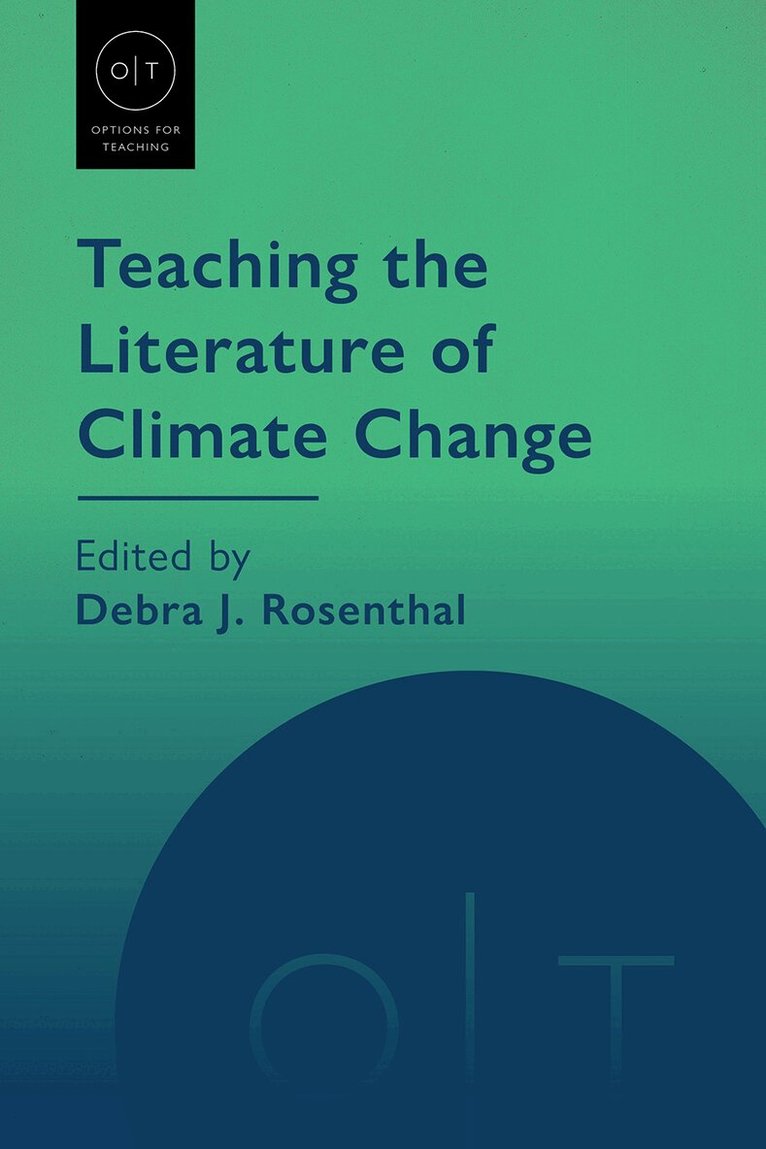
    Teaching the Literature of Climate Change

    AvDebra J. Rosenthal

    Inbunden, Engelska, 2024

    Del i serien Options for Teaching

    1 267 kr

    Beställningsvara. Skickas inom 5-8 vardagar. Fri frakt över 249 kr.

    Beskrivning

    Essays on teaching the global climate crisis through cli-fi.Over the past several decades, writers such as Paolo Bacigalupi, Octavia E. Butler, Kathy Jetil-Kijiner, and Margaret Atwood have explored climate change through literature, reflecting current anxieties about humans' impact on the planet. Emphasizing the importance of interdisciplinarity, this volume embraces literature as a means to cultivate students' understanding of the ongoing climate crisis, ethics in times of disaster, and the intrinsic intersectionality of environmental issues.Contributors discuss speculative climate futures, the Anthropocene, postcolonialism, climate anxiety, and the usefulness of storytelling in engaging with catastrophe. The essays offer approaches to teaching interdisciplinary and cross-listed courses, including strategies for team-teaching across disciplines and for building connections between humanities majors and STEM majors. The volume concludes with essays that explore ways to address grief and to contemplate a hopeful future in the face of apocalyptic predictions.This volume contains discussions of Margaret Atwood's Oryx and Crake and Year of the Flood, Paulo Bacigalupi's "Pocketful of Dharma," Chantal Bilodeau's Sila, Octavia E. Butler's Parable of the Sower, Michel Faber's Under the Skin, Kathy Jetil-Kijiner's "Dear Matafele Peinam" and "Two Degrees," Barbara Kingsolver's Flight Behavior, Elizabeth Kolbert's Field Notes from a Catastrophe, Cormac McCarthy's The Road, David Mitchell's Cloud Atlas and The Bone Clocks, Mayra Montero's In the Palm of Darkness, M. NourbeSe Philip's Zong!, Richard Powers's The Overstory, Nathaniel Rich's Odds against Tomorrow, Virginia Woolf's Orlando, and more.

    Produktinformation

    • Utgivningsdatum:2024-04-30
    • Mått:152 x 229 x 27 mm
    • Vikt:272 g
    • Format:Inbunden
    • Språk:Engelska
    • Serie:Options for Teaching
    • Antal sidor:344
    • Förlag:Modern Language Association of America
    • ISBN:9781603296342

    Utforska kategorier

    • Miljövetenskap och miljöpolitik inom Naturvetenskap och teknik
    • Skrivande och redigering inom Språk och ordböcker
    • Litteraturvetenskap inom Skönlitteratur

    Innehållsförteckning

    • Introduction, by Debra J. RosenthalPart I: PrinciplesClimate Justice and the Literary Imagination, by Stef CrapsEngaging Students and Global Weirding, by Andrew HagemanToward a Critical Environmental Justice Pedagogy, by April AnsonChanging Student Perceptions through Climate Literature, by Ted MartinezCli-Fi and Cultivating Cultural Agency, by Stephen SipersteinClimate Change Stories: Living and Dying in the Anthropocene, by Jo Alyson ParkerThe Anthropocene as a Global Coming-of-Age Story: A Pedagogy in Transition, by Sofia AhlbergApprehending Climate Change through Fiction and Film, by Matt BurkhartPart II: LocationsSea-Level Rise, Low-Lying Islands, and Caribbean Lit er a ture, by Christina GerhardtDecolonizing Climate Knowledge: Kathy Jetn̄il-Kijiner's Poetry, by Clare EchterlingSounding the Alarm of Climate Change in Caribbean Literature: Mayra Montero's In the Palm of Darkness, by Mary Ann Gosser-Esquilín The Polymedial Aesthetics of Climate Change Drama, by Nassim W. BalestriniClimate Change Narratives, Publics, and the Professional-Managerial Class, by Parker KriegWords in the World: The Work of an Environmental Literature Course in a Coastal Florida City, by Thomas HallockPart III: TextsAttention, Connection, Dialogue: Teaching Barbara Kingsolver's Flight Behavior in the Climate Fiction Classroom, by Magdalena MączyńskaContemporary US Climate Fiction, by Teresa A. GodduMargaret Atwood's Oryx and Crake and The Year of the Flood as Cli-Fi, by Robert P. MarzecCli-Nofi: Reading and Writing Creative Climate Nonfiction in a Prison Classroom, by Jason de Lara MoleskyGenres of Deep Time: Virginia Woolf's Orlando and the Orbis Hypothesis, by Aaron RosenbergPart IV: Courses and InterdisciplinarityIt's the End of the World As We Know It: Utilizing Interdisciplinarity to Teach Anthropocene Literature, by Hannah Kroonblawd"It Will Take Years for the Picture to Emerge": Interdisciplinarity, Intermedia Strategies, and Climate Narratives, by Patrick WhitmarshReading the Weather: Teaching the Literature of Climate Change at a Polytechnic University, by Cynthia Schoolar WilliamsImagining Just Futures: Teaching the Literature of Climate Change as Social Responsibility, by Ali BroxCli-Fi Linked to a Climate Science Course, by Debra J. Rosenthal and Jeffrey JohansenClimate Fiction and the Global South, by Ben Jamieson Stanley and Emily S. DavisPart V: AssignmentsTuning In to Climate Change: Podcasts in the Classroom, by Orchid TierneyThe Literature of Climate Change and Information Literacy Instruction, by Melissa AndersonNoticing, Time, and Angling: A Climate Change Syllabus, by Barbara LeckiePossible Futures in a Warming World: Teaching Climate Models and Other Climate Fictions, by Tobias MenelyPart VI: Hopefulness and BeyondFinding Hope in Climate Literature: Solastalgia, Twilight Knowing, and Unintended Consequences, by Kathryn PrinceRuin, Rebellion, Remaking: Environmental Justice in the Literature of Climate Change, by Brianna R. BurkeNow What? Moving Past Climate Change Anxiety in an Interdisciplinary Community College Classroom, by Ria BanerjeeCreative Responses to Climate Doom: Lessons from the Void, by Rick Van NoyStories from Our Future: Beyond the Binary of Climate Hope and Grief, by Jennifer AtkinsonAfterword: The Urgency of Slow Teaching, by Sarah Jaquette RayNotes on Contributors