Häftad, Engelska, 2009
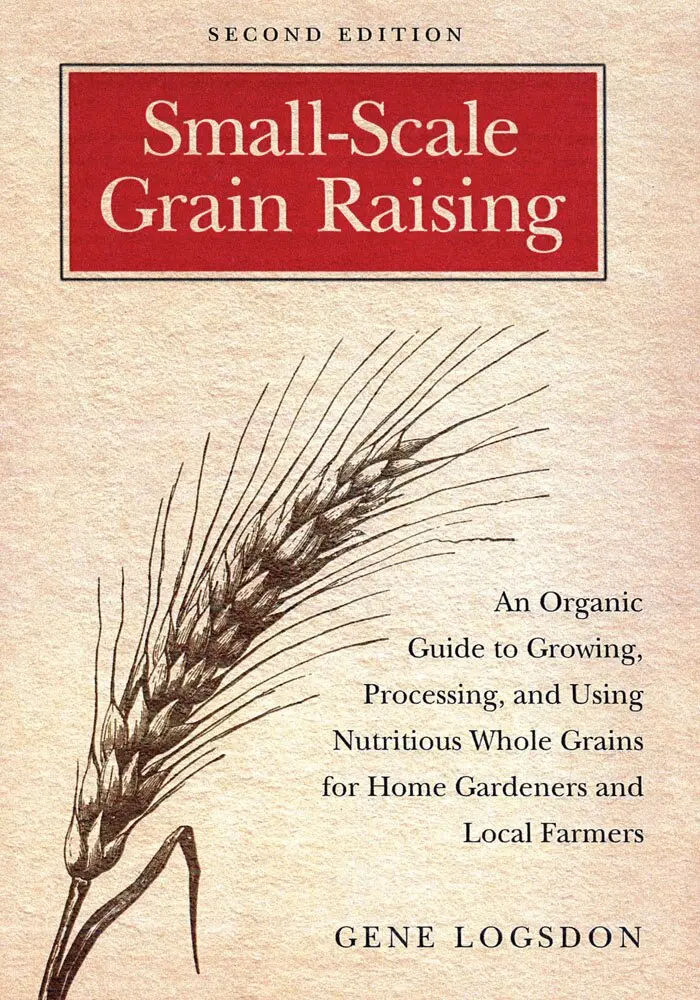
Small-Scale Grain Raising
An Organic Guide to Growing, Processing, and Using Nutritious Whole Grains for Home Gardeners and Local Farmers, 2nd Edition
Av Gene Logsdon
279 kr
Tillfälligt slut
Fler format och utgåvor
Beskrivning
Produktinformation
- Utgivningsdatum: 2009-04-14
- Mått: 178 x 254 x 20 mm
- Vikt: 680 g
- Format: Häftad
- Språk: Engelska
- Serie: Chelsea Green Publishing Co
- Antal sidor: 320
- Upplaga: 2
- Förlag: Chelsea Green Publishing Co
- Illustratör: Jerry O'Brien
- ISBN: 9781603580779
Utforska kategorier
Mer om författaren
Over the course of his long life and career as a writer, farmer, and journalist, Gene Logsdon published more than two dozen books, both practical and philosophical, on all aspects of rural life and affairs. His nonfiction works include Gene Everlasting, A Sanctuary of Trees, and Living at Nature’s Pace. He wrote a popular blog, The Contrary Farmer, as well as an award-winning column for the Carey, Ohio, Progressor Times. Gene was also a contributor to Farming Magazine and The Draft Horse Journal. He lived and farmed in Upper Sandusky, Ohio, where he died in 2016, a few weeks after finishing his final book, Letter to a Young Farmer.
Recensioner i media
The Ethicurean-In Small-Scale Grain Raising, Logsdon lays out clearly just how easy it can be to grow grains for your family and your livestock, from his beloved "pancake patch" up to acre-sized plots. Interspersed with good-humored vintage anecdotes and his usual Contrary Farmer commentary, this primer elevates the status of grain-growing on farms of all sizes (from the backyard on up) to a happy essential. As he states repeatedly, there's nothing so delicious -- or so economical -- as home-baked goods made with fresh grains you grew and milled yourself. And when those same home-grown grains can also feed your animals and build soil fertility… well, what's stopping you?Logsdon's book covers all of the well-known grains and several of the lesser ones: barley, buckwheat, corn, millet, oats, rice, spelt, sorghum, triticale, wheat, and others. He also devotes a chapter to soybeans and dried beans, despite their classification as legumes, because they partner so well with grains both in growing and in eating. For at least the major grains he discusses varieties, yields, nutritional value, and uses (both for human and animal consumption as well as other farm uses). He describes how to prepare the soil, how to plant the grain seeds (including optimal space requirements), what diseases and pests to watch for and how to deal with them, how to harvest and dry the grains, how to store them, and, finally, how to turn those seeds into food for your family.Drawing on his personal experience growing almost all of the major grains, Logsdon describes "how we do it" even when it contrasts with conventional wisdom. He touts the value of open-pollinated seed, despite advances in hybrids, because of their superior taste and the satisfaction of not being beholden to agribusiness. He also demonstrates that old hand tools and techniques can sometimes be the most efficient when growing on a small scale. For example, though corn may be harvested by machine, he outlines how to bundle corn stalks into shocks for easy, inexpensive drying and storage (and aesthetic value). He claims to keep a basket full of old socks to slip over ripening ears of corn to prevent wild animals from dining on his crops. (I'd like to see that!) And for his money, the best weed control -- the one to which pests never develop resistance -- is the hoe.
Betyg & recensioner
0 recensioner
Inga recensioner tillgängliga.