• Fri frakt över 249 kr
  • •
  • Snabba leveranser
  • •
  • Billiga böcker
Kundservice

Du är på sajten för privatpersoner.

Företag, bibliotek eller offentlig verksamhet?

Du handlar på classic.bokus.com, där alla dina funktioner finns intakta.
Till classic.bokus.com
Bokus logotyp. Gå till startsidan.
  • Erbjudanden
  • Student
  • Topplistor
  • Barn & ungdom
  • Bokus Play
  • E-böcker
  • Ljudböcker
  • Pocketböcker
  • Spel och pussel

Pocketfynda! Hundratals böcker för 49 kr/st →

Sidfot

Mina sidor

    Hjälp

    • Kundservice
    • Vanliga frågor och svar
    • Frakt och leverans
    • Retur vid ångerrätt
    • Reklamera vara
    • Betalning
    • Köpvillkor
    • Allmänna villkor
    • Information om webbplatsens tillgänglighet

    Om Bokus

    • Om oss
    • Pressrum
    • För studenter
    • För företag
    • För bibliotek och offentlig verksamhet
    • För leverantörer
    • Hållbarhet

    Populärt

    • Aktuella erbjudanden
    • Presentkort
    • Studentlitteratur
    • Nya böcker
    • Topplistor
    • Signerade böcker
    • Engelska böcker

    Inspiration

    • Boktips
    • BookTok
    • Barnbokskaraktärer
    • Populära författare
    Logotyp för Bokus
    Följ oss på Facebook (extern länk)Följ oss på Instagram (extern länk)Följ oss på YouTube (extern länk)Följ oss på TikTok (extern länk)
    bokus @ CookiesAnpassa cookiesIntegritetspolicyKöpvillkor
    Till Citymail hemsida (extern länk)Till Budbee hemsida (extern länk)Till Postnord hemsida (extern länk)Till Schenker hemsida (extern länk)Till Early Bird hemsida (extern länk)Till Walleys hemsida (extern länk)
    1. Psykologi och pedagogik
    2. Pedagogik
    3. Utbildningsstrategier och utbildningspolitik

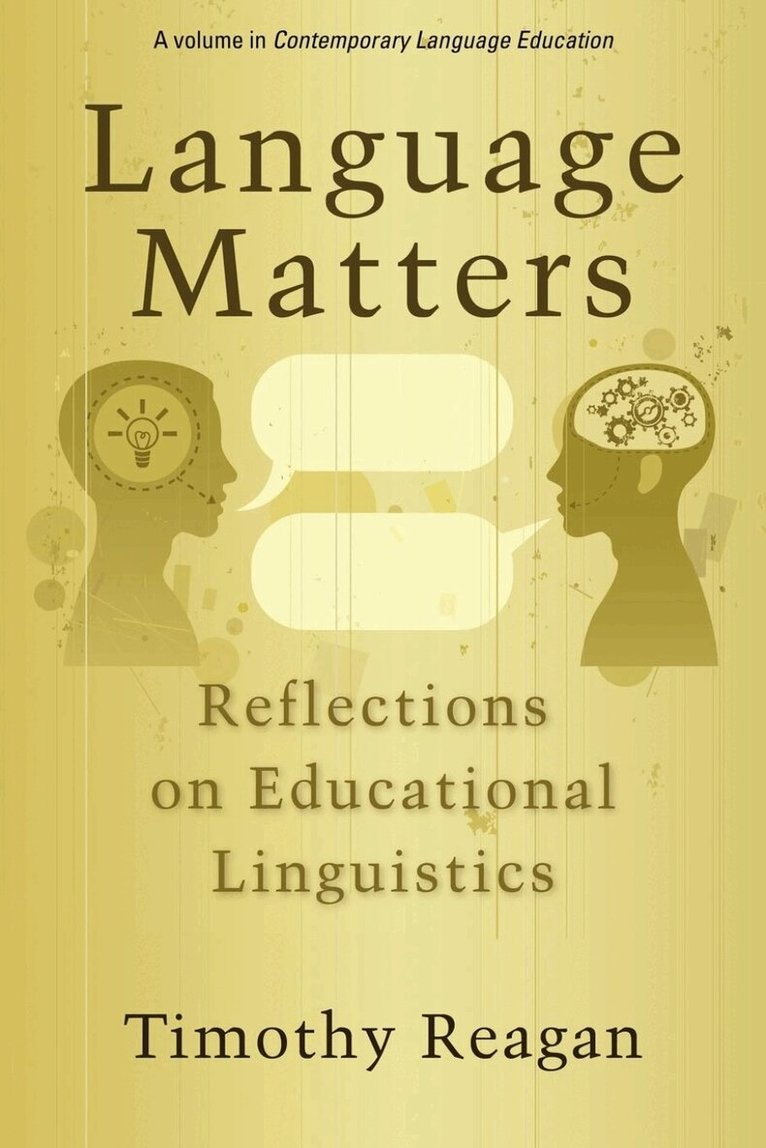
    Language Matters

    Reflections on Educational Linguistics

    AvTimothy Reagan,Terry a. Osborn

    Häftad, Engelska, 2009

    Del i serien Contemporary Language Education

    603 kr

    Beställningsvara. Skickas inom 5-8 vardagar. Fri frakt över 249 kr.

    Fler format och utgåvor

    Inbunden

    1 066 kr

    E-bok

    432 kr

    E-bok

    647 kr

    Beskrivning

    This book addresses a timely and very important topic: language in education. Language, apparently, is a very tricky business. On the one hand, everyone uses language, and virtually everyone has strong views about language. In the educational domain this seems to be especially true. Language is not merely an intrinsic component of the educational process as the medium of instruction in the classroom, but also serves as the mediator of social reality for students and teachers alike. It plays a central role in articulating and conveying not only social, cultural and empirical ideas, but ideological concepts as well. It is also used to make judgments about the speaker, not to mention its role in maintaining differential power relations. And yet, in spite of this, the role of language is not sufficiently recognized in classroom practice much of the time. Nor is language, except in fairly narrow ways, really an especially central part of the curriculum, in spite of its incredible importance. To be sure, we do spend a great deal of time and money attempting to teach students to read and write (that is, to provide them with basic literacy skills), and we provide nominal support for foreign language education programs. We also provide limited support for children coming to school who do not speak English. What we do not do, though, is to recognize the absolute centrality of language knowledge and language use for the educated person. This book seeks to address these issues from the broad perspective of critical pedagogy.

    Produktinformation

    • Utgivningsdatum:2009-03-11
    • Mått:156 x 234 x 14 mm
    • Vikt:381 g
    • Format:Häftad
    • Språk:Engelska
    • Serie:Contemporary Language Education
    • Antal sidor:268
    • Förlag:Emerald Publishing Inc
    • ISBN:9781607520603

    Utforska kategorier

    • Utbildningsstrategier och utbildningspolitik inom Psykologi och pedagogik

    Innehållsförteckning

    • Preface.Chapter 1. The Reality of Language: Positivism and the Objectification of Language.Chapter 2. The Legitimacy of Language: A Critique of Linguistic Legitimacy.Chapter 3. The Learning of Language: Epistemology and Metaphorical Models for Language Learning.Chapter 4. The Teaching of Language: The Case of Foreign Language Education in the United States.Chapter 5. Paideia Redux: The Case for the Classical Languages in U.S. Schools.Chapter 6. The Challenge of Language Minorities: Linguistic Diversity and the School.Chapter 7. The Construction of Language: Interlinguistics and the Case of Esperanto as an International Auxiliary Language.Chapter 8. Language Planning and Language Policy: National and International Perspectives.Chapter 9. Language Matters: Some Concluding Thoughts.Appendix: The Sixteen Rules of Esperanto.Bibliography