Timothy Reagan – författare
Visar alla böcker från författaren Timothy Reagan. Handla med fri frakt och snabb leverans.
17 produkter
17 produkter
1 801 kr
Skickas inom 10-15 vardagar
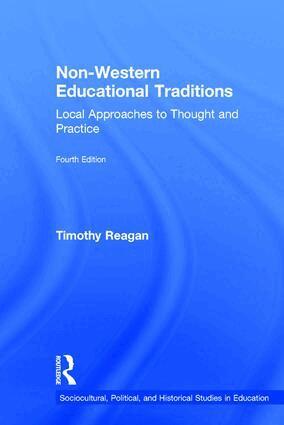
Informative and mind-opening, this text uniquely provides a comprehensive overview of a range of non-western approaches to educational thought and practice. Its premise is that understanding the ways that other people educate their children—as well as what counts for them as "education"—may help readers to think more clearly about some of their own assumptions and values, and to become more open to alternative viewpoints about important educational matters. The approach is deliberately and profoundly pedagogical, based in the author’s own teaching practice. Designed to be used in pre-service and in-service teacher education courses where substantial critical discussion and debate are encouraged, the text is enhanced by Questions for Discussion and Reflection in each chapter. Updates and Features of the Fourth Edition• NEW! Chapter 2 exploring key features of the ‘western educational tradition’, and information about the contemporary educational systems in different countries• NEW! Chapter 10 on traditional educational thought and practice in Oceania, with special focus on the Maori in New Zealand, the Hawai’ians, and the Australian Aboriginal peoples• Updated chapter on Africa includes fuller explanation of the diversity within the indigenous African experience, as well as several contemporary cases of state education in Africa• Updated Chapter 4 is designed to help non-Muslims to understand the Muslim educational heritage and the growing issue of Islamophobia• Exploration of Chinese education now includes a special emphasis on the thought of Confucius, the role of the imperial examination system, and the impact of political and economic changes in the 20th century• Updated analysis of contemporary educational practices in Hindu and Buddhist educational thought and practice and brief discussions of Jainism and Sikhism
456 kr
Skickas
Informative and mind-opening, this text uniquely provides a comprehensive overview of a range of non-western approaches to educational thought and practice. Its premise is that understanding the ways that other people educate their children—as well as what counts for them as "education"—may help readers to think more clearly about some of their own assumptions and values, and to become more open to alternative viewpoints about important educational matters. The approach is deliberately and profoundly pedagogical, based in the author’s own teaching practice. Designed to be used in pre-service and in-service teacher education courses where substantial critical discussion and debate are encouraged, the text is enhanced by Questions for Discussion and Reflection in each chapter. Updates and Features of the Fourth Edition• NEW! Chapter 2 exploring key features of the ‘western educational tradition’, and information about the contemporary educational systems in different countries• NEW! Chapter 10 on traditional educational thought and practice in Oceania, with special focus on the Maori in New Zealand, the Hawai’ians, and the Australian Aboriginal peoples• Updated chapter on Africa includes fuller explanation of the diversity within the indigenous African experience, as well as several contemporary cases of state education in Africa• Updated Chapter 4 is designed to help non-Muslims to understand the Muslim educational heritage and the growing issue of Islamophobia• Exploration of Chinese education now includes a special emphasis on the thought of Confucius, the role of the imperial examination system, and the impact of political and economic changes in the 20th century• Updated analysis of contemporary educational practices in Hindu and Buddhist educational thought and practice and brief discussions of Jainism and Sikhism
Critical Questions, Critical Perspectives
Language and the Second Language Educator
Häftad, Engelska, 2005
554 kr
Skickas inom 5-8 vardagar
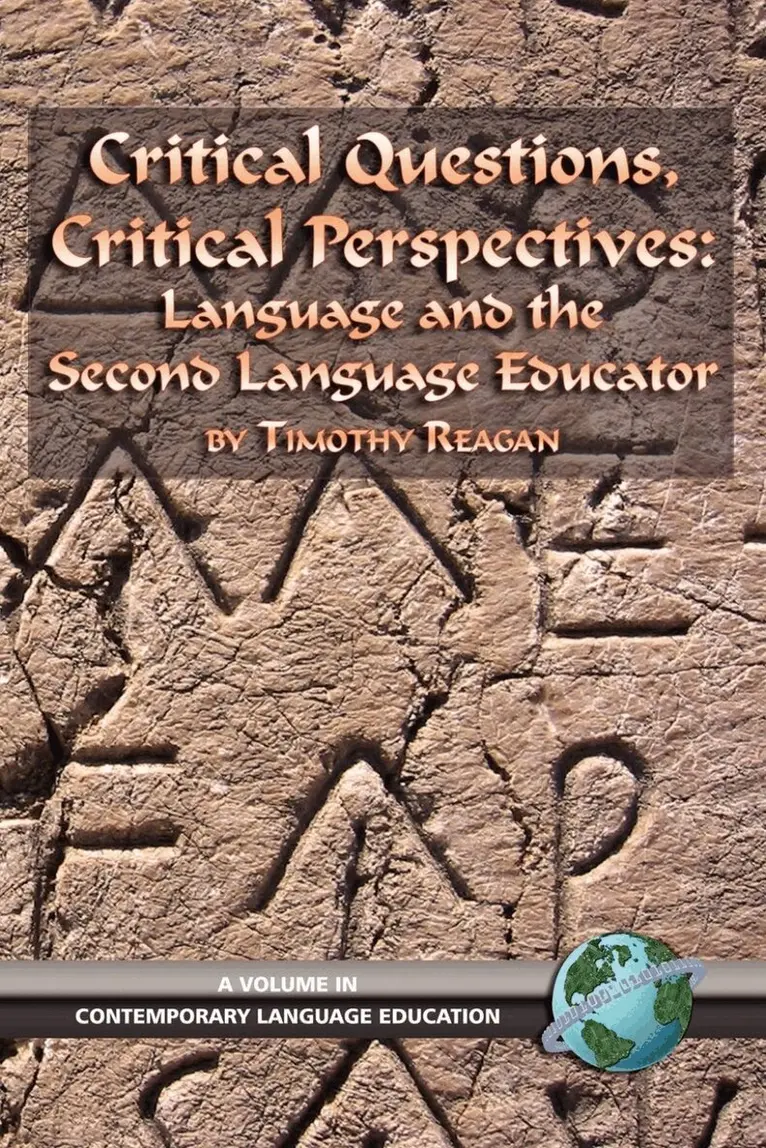
Critical Questions, Critical Perspectives: Language and the Second Language Educator is intended primarily for language educators, broadly conceived, and thus is appropriate for not only foreign language teachers, but also individuals teaching English to speakers of other languages in both Anglophone and non-Anglophone settings, teachers in bilingual education programs, heritage language teachers in both formal and informal settings, and others whose work involves language teaching and learning. It is also intended for teachers of all age groups and levels, since the issues that it raises are neither age nor level specific. This is not a book about teaching methodology, nor is it the sort of work that will provide the teacher with practical activities for use in the classroom.
Critical Questions, Critical Perspectives
Language and the Second Language Educator
Inbunden, Engelska, 2005
1 022 kr
Skickas inom 5-8 vardagar
Critical Questions, Critical Perspectives: Language and the Second Language Educator is intended primarily for language educators, broadly conceived, and thus is appropriate for not only foreign language teachers, but also individuals teaching English to speakers of other languages in both Anglophone and non-Anglophone settings, teachers in bilingual education programs, heritage language teachers in both formal and informal settings, and others whose work involves language teaching and learning. It is also intended for teachers of all age groups and levels, since the issues that it raises are neither age nor level specific. This is not a book about teaching methodology, nor is it the sort of work that will provide the teacher with practical activities for use in the classroom.
587 kr
Skickas inom 5-8 vardagar
This book addresses a timely and very important topic: language in education. Language, apparently, is a very tricky business. On the one hand, everyone uses language, and virtually everyone has strong views about language. In the educational domain this seems to be especially true. Language is not merely an intrinsic component of the educational process as the medium of instruction in the classroom, but also serves as the mediator of social reality for students and teachers alike. It plays a central role in articulating and conveying not only social, cultural and empirical ideas, but ideological concepts as well. It is also used to make judgments about the speaker, not to mention its role in maintaining differential power relations. And yet, in spite of this, the role of language is not sufficiently recognized in classroom practice much of the time. Nor is language, except in fairly narrow ways, really an especially central part of the curriculum, in spite of its incredible importance. To be sure, we do spend a great deal of time and money attempting to teach students to read and write (that is, to provide them with basic literacy skills), and we provide nominal support for foreign language education programs. We also provide limited support for children coming to school who do not speak English. What we do not do, though, is to recognize the absolute centrality of language knowledge and language use for the educated person. This book seeks to address these issues from the broad perspective of critical pedagogy.
1 038 kr
Skickas inom 5-8 vardagar
This book addresses a timely and very important topic: language in education. Language, apparently, is a very tricky business. On the one hand, everyone uses language, and virtually everyone has strong views about language. In the educational domain this seems to be especially true. Language is not merely an intrinsic component of the educational process as the medium of instruction in the classroom, but also serves as the mediator of social reality for students and teachers alike. It plays a central role in articulating and conveying not only social, cultural and empirical ideas, but ideological concepts as well. It is also used to make judgments about the speaker, not to mention its role in maintaining differential power relations. And yet, in spite of this, the role of language is not sufficiently recognized in classroom practice much of the time. Nor is language, except in fairly narrow ways, really an especially central part of the curriculum, in spite of its incredible importance. To be sure, we do spend a great deal of time and money attempting to teach students to read and write (that is, to provide them with basic literacy skills), and we provide nominal support for foreign language education programs. We also provide limited support for children coming to school who do not speak English. What we do not do, though, is to recognize the absolute centrality of language knowledge and language use for the educated person. This book seeks to address these issues from the broad perspective of critical pedagogy.
458 kr
Skickas inom 5-8 vardagar
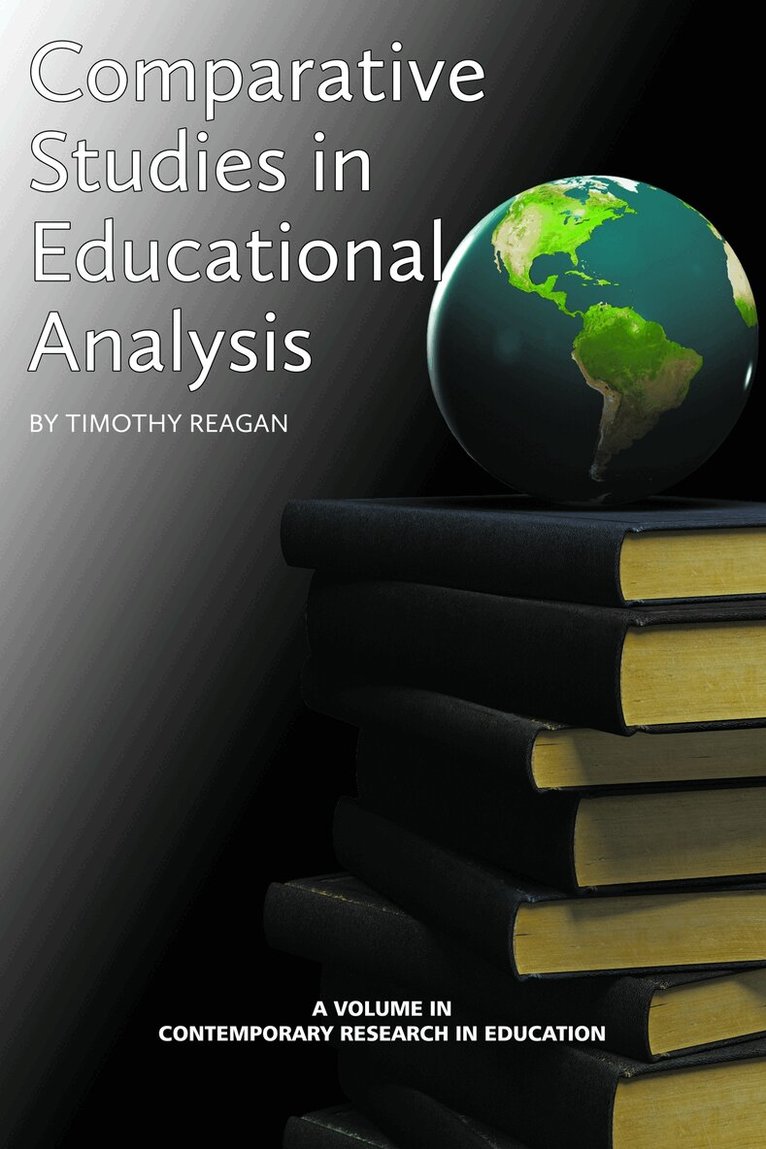
This book has a pedagogical goal in mind; it is not a scholarly work so much as an applied text informed by scholarship and research. The book’s goal is to provide individuals who are teaching courses in comparative and international education, educational administration, educational policy, and politics of education with a supplementary text that can be used to help their students develop skills in policy analysis, evaluation and development. As is explained in the book, the problem that we face with respect to having students engage in “hands-on” study of particular cases is that by focusing on real cases, students are faced with either virtually unlimited data, or insufficient data (or, indeed, paradoxically with both problems). In addition, students come to such cases with all sorts of preconceptions that can cloud judgment in a host of ways. By making use of fictitious case studies, though, we can carefully limit the amount of data with which students need to deal, and we can also minimize the challenges presented by the “baggage” that students might bring with them about particular real nations.
845 kr
Skickas inom 5-8 vardagar
This book has a pedagogical goal in mind; it is not a scholarly work so much as an applied text informed by scholarship and research. The book’s goal is to provide individuals who are teaching courses in comparative and international education, educational administration, educational policy, and politics of education with a supplementary text that can be used to help their students develop skills in policy analysis, evaluation and development. As is explained in the book, the problem that we face with respect to having students engage in “hands-on” study of particular cases is that by focusing on real cases, students are faced with either virtually unlimited data, or insufficient data (or, indeed, paradoxically with both problems). In addition, students come to such cases with all sorts of preconceptions that can cloud judgment in a host of ways. By making use of fictitious case studies, though, we can carefully limit the amount of data with which students need to deal, and we can also minimize the challenges presented by the “baggage” that students might bring with them about particular real nations.
651 kr
Skickas inom 5-8 vardagar
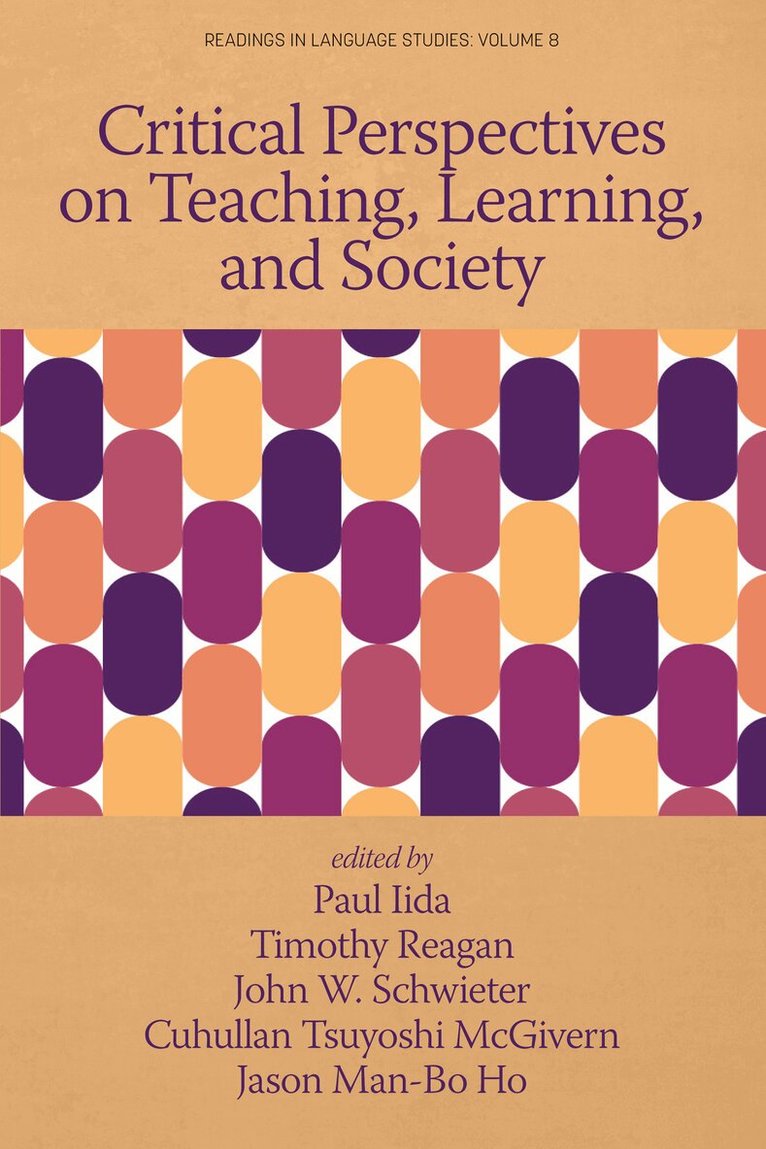
Founded in 2002, the International Society for Language Studies is a worldwide organization of volunteers, scholars, and practitioners committed to critical, interdisciplinary, and emergent approaches to language studies. Its eighth volume of the Readings in Language Studies series, Critical Perspectives on Teaching, Learning, and Society, presents international perspectives on issues of language related to a variety of themes.
1 103 kr
Skickas inom 5-8 vardagar
Founded in 2002, the International Society for Language Studies is a worldwide organization of volunteers, scholars, and practitioners committed to critical, interdisciplinary, and emergent approaches to language studies. Its eighth volume of the Readings in Language Studies series, Critical Perspectives on Teaching, Learning, and Society, presents international perspectives on issues of language related to a variety of themes.
554 kr
Skickas inom 5-8 vardagar
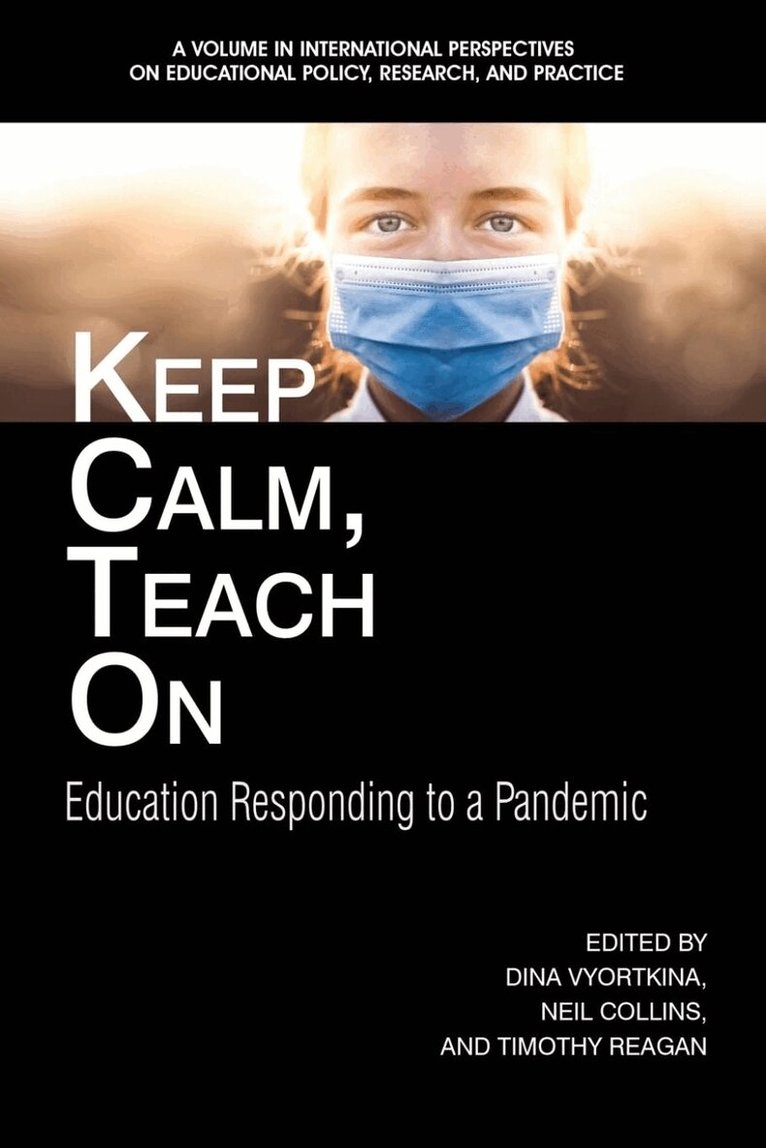
COVID-19 has had massive social, political, and economic consequences, not least in education. Schools and universities globally closed their doors and sought to provide educational services to students in other, alternative ways. This book is a collection of essays about how different institutions and systems of education around the world have attempted to meet the challenges created by COVID-19. It reports the impact of the pandemic in both developed and developing nations and at all levels of education. The collective responses and lessons learned are analyzed to explain the relative success of different coping strategies.
1 022 kr
Skickas inom 5-8 vardagar
COVID-19 has had massive social, political, and economic consequences, not least in education. Schools and universities globally closed their doors and sought to provide educational services to students in other, alternative ways. This book is a collection of essays about how different institutions and systems of education around the world have attempted to meet the challenges created by COVID-19. It reports the impact of the pandemic in both developed and developing nations and at all levels of education. The collective responses and lessons learned are analyzed to explain the relative success of different coping strategies.
523 kr
Skickas inom 5-8 vardagar
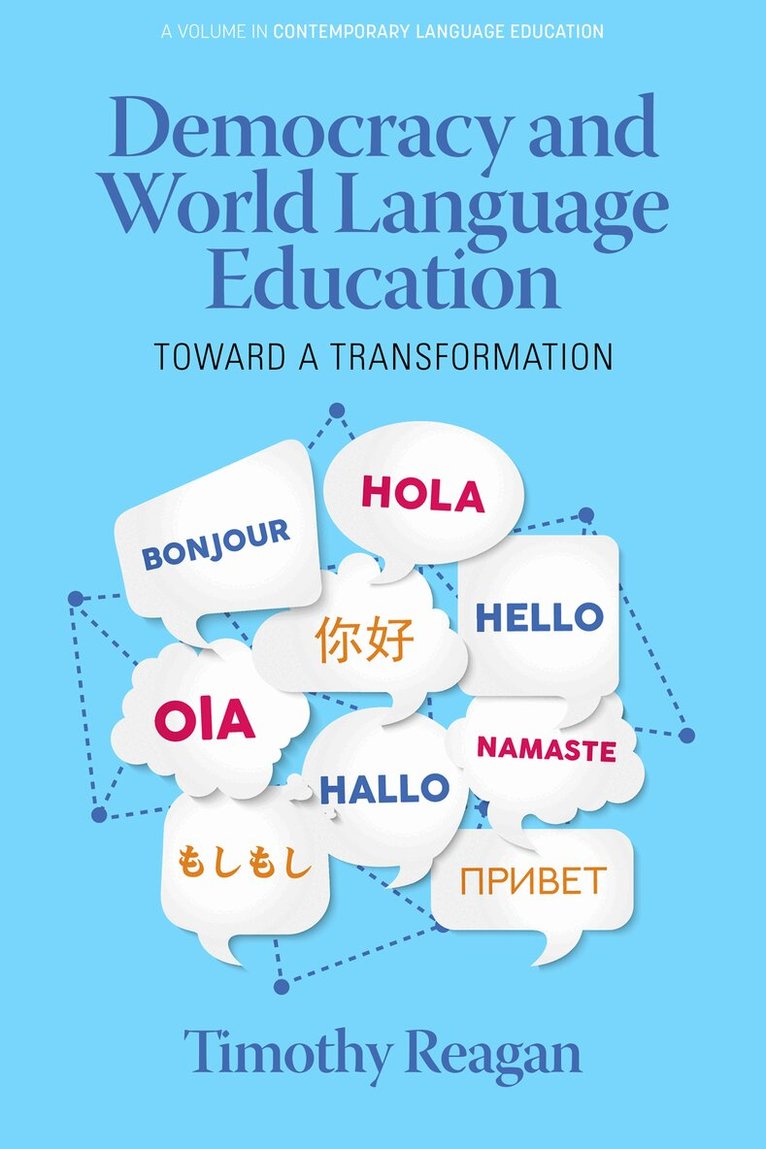
This book challenges the reader to consider issues of language and linguistic discrimination as they impact world language education. Using the nexus of race, language, and education as a lens through which one can better understand the role of the world language education classroom as both a setting of oppression and as a potential setting for transformation, Democracy and World Language Education: Toward a Transformation offers insights into a number of important topics.Among the issues that are addressed in this timely book are linguicism, the ideology of linguistic legitimacy, raciolinguistics, and critical epistemology. Specific cases and case studies that are explored in detail include the contact language Spanglish, African American English, and American Sign Language. The book also includes critical examinations of the less commonly taught languages, the teaching of classical languages (primarily Latin and Greek), and the paradoxical learning and speaking of “critical languages” that are supported primarily for purposes of national security (Arabic, Chinese, Farsi, Russian, etc.).
964 kr
Skickas inom 5-8 vardagar
This book challenges the reader to consider issues of language and linguistic discrimination as they impact world language education. Using the nexus of race, language, and education as a lens through which one can better understand the role of the world language education classroom as both a setting of oppression and as a potential setting for transformation, Democracy and World Language Education: Toward a Transformation offers insights into a number of important topics.Among the issues that are addressed in this timely book are linguicism, the ideology of linguistic legitimacy, raciolinguistics, and critical epistemology. Specific cases and case studies that are explored in detail include the contact language Spanglish, African American English, and American Sign Language. The book also includes critical examinations of the less commonly taught languages, the teaching of classical languages (primarily Latin and Greek), and the paradoxical learning and speaking of “critical languages” that are supported primarily for purposes of national security (Arabic, Chinese, Farsi, Russian, etc.).
Teaching World Languages in Middle and Secondary Schools
A Critical Introduction
Inbunden, Engelska, 2025
1 167 kr
Skickas inom 5-8 vardagar
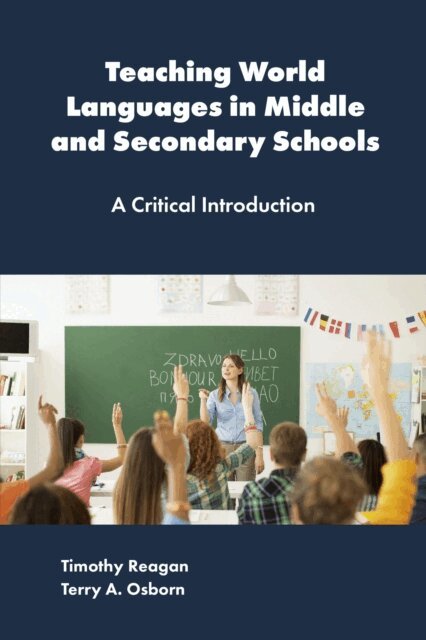
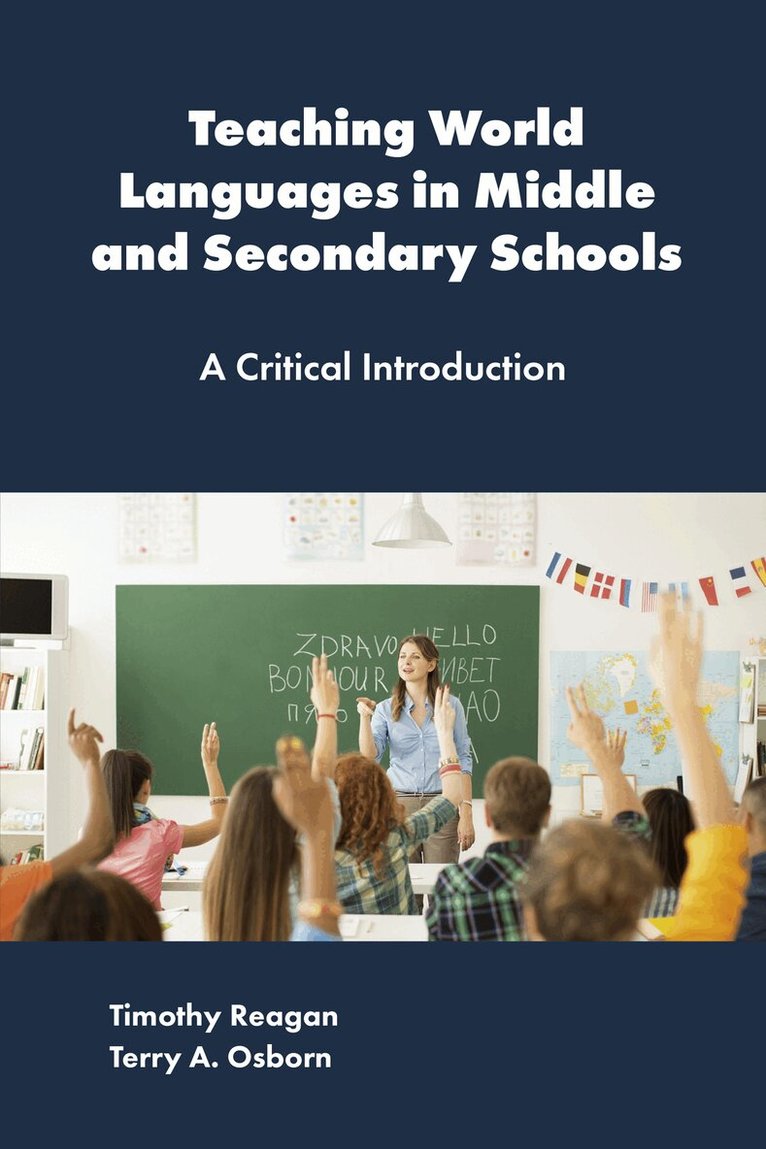
Teaching World Languages in Middle and Secondary Schools: A Critical Introduction is an introductory textbook for teacher education candidates, at either the undergraduate or graduate levels, who are seeking certification to teach a world/foreign language. It might also be used as a methods textbook in programs preparing teachers to work with English Language Learners (ELLs) in public school contexts. There is a growing shortage of world language teachers in the United States, and the market for such educators is likely to increase dramatically in the years ahead. Currently, only about 20% of US students study a language other than English, although this may change if more individuals are prepared to teach world languages. This book stands out from most world language education methodology books by combining ideas, concepts, and practices from two traditions in the world language education literature that rarely overlap: the technical skills and knowledge needed to be an effective and competent classroom teacher, and the growing literature on critical pedagogy in the specific context of world language education.
Teaching World Languages in Middle and Secondary Schools
A Critical Introduction
Häftad, Engelska, 2025
716 kr
Skickas inom 5-8 vardagar
Teaching World Languages in Middle and Secondary Schools: A Critical Introduction is an introductory textbook for teacher education candidates, at either the undergraduate or graduate levels, who are seeking certification to teach a world/foreign language. It might also be used as a methods textbook in programs preparing teachers to work with English Language Learners (ELLs) in public school contexts. There is a growing shortage of world language teachers in the United States, and the market for such educators is likely to increase dramatically in the years ahead. Currently, only about 20% of US students study a language other than English, although this may change if more individuals are prepared to teach world languages. This book stands out from most world language education methodology books by combining ideas, concepts, and practices from two traditions in the world language education literature that rarely overlap: the technical skills and knowledge needed to be an effective and competent classroom teacher, and the growing literature on critical pedagogy in the specific context of world language education.
992 kr
Skickas inom 10-15 vardagar
This book examines the nature of human language and the ideology of linguistic legitimacy – the common set of beliefs about language differences that leads to the rejection of some language varieties and the valorization of others.