• Fri frakt över 249 kr
  • •
  • Snabba leveranser
  • •
  • Billiga böcker
Kundservice

Du är på sajten för privatpersoner.

Företag, bibliotek eller offentlig verksamhet?

Du handlar på classic.bokus.com, där alla dina funktioner finns intakta.
Till classic.bokus.com
Bokus logotyp. Gå till startsidan.
  • Erbjudanden
  • Nyheter
  • Student
  • Topplistor
  • Barn & ungdom
  • Bokus Play
  • E-böcker
  • Pocketböcker
  • Spel & pussel

10% rabatt på allt med kod: NYSTART10 →

Sidfot

Mina sidor

    Hjälp

    • Kundservice
    • Vanliga frågor och svar
    • Frakt och leverans
    • Retur vid ångerrätt
    • Reklamera vara
    • Betalning
    • Köpvillkor
    • Allmänna villkor
    • Information om webbplatsens tillgänglighet

    Om Bokus

    • Om oss
    • Pressrum
    • För studenter
    • För företag
    • För bibliotek och offentlig verksamhet
    • För leverantörer
    • Hållbarhet

    Populärt

    • Aktuella erbjudanden
    • Presentkort
    • Studentlitteratur
    • Nya böcker
    • Topplistor
    • Signerade böcker
    • Engelska böcker

    Inspiration

    • Boktips
    • BookTok
    • Populära bokserier
    • Barnbokskaraktärer
    • Populära författare
    Logotyp för Bokus
    Följ oss på Facebook (extern länk)Följ oss på Instagram (extern länk)Följ oss på YouTube (extern länk)Följ oss på TikTok (extern länk)
    bokus @ CookiesAnpassa cookiesIntegritetspolicyKöpvillkor
    Till Citymail hemsida (extern länk)Till Budbee hemsida (extern länk)Till Postnord hemsida (extern länk)Till Schenker hemsida (extern länk)Till Early Bird hemsida (extern länk)Till Walleys hemsida (extern länk)
    1. Skönlitteratur
    2. Litteraturvetenskap
    3. Litteraturvetenskap

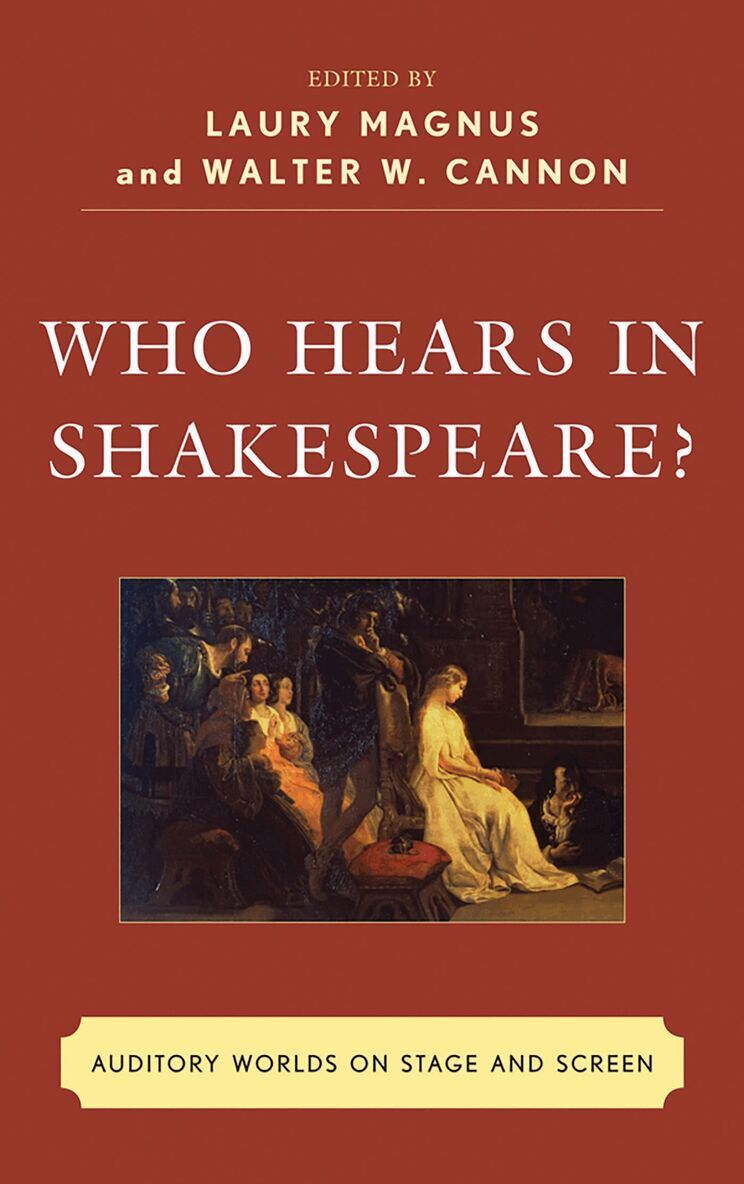
    Who Hears in Shakespeare?

    Shakespeare’s Auditory World, Stage and Screen

    AvLaury Magnus,Walter W. Cannon

    Inbunden, Engelska, 2011

    1 604 kr

    Beställningsvara. Skickas inom 10-15 vardagar. Fri frakt över 249 kr.

    Beskrivning

    This volume, examining the ways in which Shakespeare’s plays are designed for hearers as well as spectators, has been prompted by recent explorations of the auditory dimension of early modern drama by such scholars as Andrew Gurr, Bruce Smith, and James Hirsh. To look at the dynamics of hearing in Shakespeare’s plays involves a paradigm shift that changes how we understand virtually everything about them, from the architecture of the buildings, to playing spaces, to blocking, and to larger interpretative issues, including our understanding of character based on players’ responses to what they hear, mishear, or refuse to hear. Who Hears in Shakespeare? Auditory Worlds on Stageand Screen is comprised of three sections on Shakespeare’s texts and performance history: “The Poetics of Hearing and the Early Modern Stage”; “Metahearing: Hearing, Knowing, and Audiences, Onstage and Off”; and “Transhearing: Hearing, Whispering, Overhearing, and Eavesdropping in Film and Other Media.”Chapters by noted scholars explore the complex reactions and interactions of onstage and offstage audiences and show how Shakespearean stagecraft, actualized on stage and adapted on screen, revolves around various situations and conventions of hearing—soliloquies,, asides, avesdropping, overhearing, and stage whispers. In short, Who Hears in Shakespeare? enunciates Shakespeare’s nuanced, powerful stagecraft of hearing. The volume ends with Stephen Booth’s afterword, his inspiring meditation on hearing that considers Shakespearean “audiences” and their responses to what they hear—or don’t hear—in Shakespeare’s plays.

    Produktinformation

    • Utgivningsdatum:2011-12-30
    • Mått:163 x 241 x 25 mm
    • Vikt:585 g
    • Format:Inbunden
    • Språk:Engelska
    • Antal sidor:313
    • Förlag:Associated University Presses
    • ISBN:9781611474749

    Utforska kategorier

    • Litteraturvetenskap inom Skönlitteratur
    • Teater inom Kultur

    Mer om författaren

    Laury Magnus is professor of humanities at the US Merchant Marine Academy, Kings Point, New York. Her books include Lexical and Syntactic Repetition in Modern Poetry and her New Kittredge Editions of Romeo and Juliet, The Taming of the Shrew, The Comedy of Errors, and Measure forMeasure. Her essays and reviews appear in The Shakespeare Newsletter, Literature and Film Quarterly, Connotations, Assays, and College Literature. Her chapter on “Shakespeare on Film and Television” appears in The Oxford Handbook to Shakespeare.Walter W. Cannon is professor of English at Central College in Pella, Iowa, where he teaches early modern literature, including Shakespeare and his contemporaries. His essays and reviews have appeared in The Upstart Crow, Theatre History Studies, and Cahiers Élisabéthains. His chapter “The Poetics of Indoor Spaces” appears in Inside Shakespeare: Essays on the Blackfriars Stage.

    Recensioner i media

    Who Hears in Shakespeare presents a varied and engaging collection on the generalized area of hearing, mishearing, and overhearing in Shakespeare as performed by both the on-stage and the theatrical audiences. The capaciousness of the subject allows for a great variety of approaches, as the contributions of the two editors demonstrate. . . .The late and very much lamented Bernice Kliman explores the multiplicity of choices presented by Measure for Measure, both in terms of the text and the staging. The intelligence, learning, and wise evaluation of this article are what we had learned to expect from Bernice.

    Innehållsförteckning

    • Introduction by Laury Magnus and Walter W. CannonPart I. The Poetics of Hearing and the Early Modern Stage Chapter 1: Why Was the Globe Round? by Andrew Gurr Chapter 2: Guarded, Unguarded, and Unguardable Speech in late Renaissance Drama by James Chapter 3: Hearing Complexity: Speech, Reticence, and the Construction of Character by Walter . CannonChapter 4: “if this be worth your hearing”: Theorizing Gossip on Shakespeare’s Stage by Jennifer HollPart II. Metahearing: Hearing, Knowing, and Audiences, Onstage and OffChapter 5: Mimetic Hearing and Meta-hearing in Hamlet by Laury Magnus Chapter 6: Hearing and Overhearing in The Tempest by David Bevington Chapter 7: Asides and Multiple Audiences in The Merchant of Venice by Anthony BurtonChapter 8: “And Now Behold the Meaning”: Audience, Interpretation, and Translation in All’s Well That Ends Well and Henry V by Kathleen Kalpin SmithChapter 9: Hearing Power in Measure for Measure by Bernice W. Kliman, Chapter 10: “Hark, a word in your ear”: Whispers, Asides, and Interpretation in Troilus and Cressida by Nova MyhillPart III. Transhearing: Hearing, Overhearing, Whispering, and Eavesdropping in Film and Other MediaChapter 11: “Mutes or Audience to this Act”: Eavesdroppers in Branagh’s Shakespeare Films by Philippa SheppardChapter 12: Overhearing Malvolio for Pleasure or Pity: The Letter Scene and the Dark House Scene in Twelfth Night on Stage and Screen by Gayle GaskiChapter 13: “But Mark His Gesture”: Hearing and Seeing in Othello’s Eavesdropping Scene by Erin Minear Afterword: Who Doesn’t Listen in Shakespeare? by Stephen Booth