• Fri frakt över 249 kr
  • •
  • Snabba leveranser
  • •
  • Billiga böcker
Kundservice

Du är på sajten för privatpersoner.

Företag, bibliotek eller offentlig verksamhet?

Du handlar på classic.bokus.com, där alla dina funktioner finns intakta.
Till classic.bokus.com
Bokus logotyp. Gå till startsidan.
  • Erbjudanden
  • Nyheter
  • Student
  • Topplistor
  • Barn & ungdom
  • Bokus Play
  • E-böcker
  • Pocketböcker
  • Spel & pussel

Må bättre, för mindre! Upp till 50% rabatt på hälsoböcker

Sidfot

Mina sidor

    Hjälp

    • Kundservice
    • Vanliga frågor och svar
    • Frakt och leverans
    • Retur vid ångerrätt
    • Reklamera vara
    • Betalning
    • Köpvillkor
    • Allmänna villkor
    • Information om webbplatsens tillgänglighet

    Om Bokus

    • Om oss
    • Pressrum
    • För studenter
    • För företag
    • För bibliotek och offentlig verksamhet
    • För leverantörer
    • Hållbarhet

    Populärt

    • Aktuella erbjudanden
    • Presentkort
    • Studentlitteratur
    • Nya böcker
    • Topplistor
    • Signerade böcker
    • Engelska böcker

    Inspiration

    • Boktips
    • BookTok
    • Populära bokserier
    • Barnbokskaraktärer
    • Populära författare
    Logotyp för Bokus
    Följ oss på Facebook (extern länk)Följ oss på Instagram (extern länk)Följ oss på YouTube (extern länk)Följ oss på TikTok (extern länk)
    bokus @ CookiesAnpassa cookiesIntegritetspolicyKöpvillkor
    Till Citymail hemsida (extern länk)Till Budbee hemsida (extern länk)Till Postnord hemsida (extern länk)Till Schenker hemsida (extern länk)Till Early Bird hemsida (extern länk)Till Walleys hemsida (extern länk)
    1. Samhälle och politik
    2. Politik och statsskick
    3. Politiska ideologier och rörelser

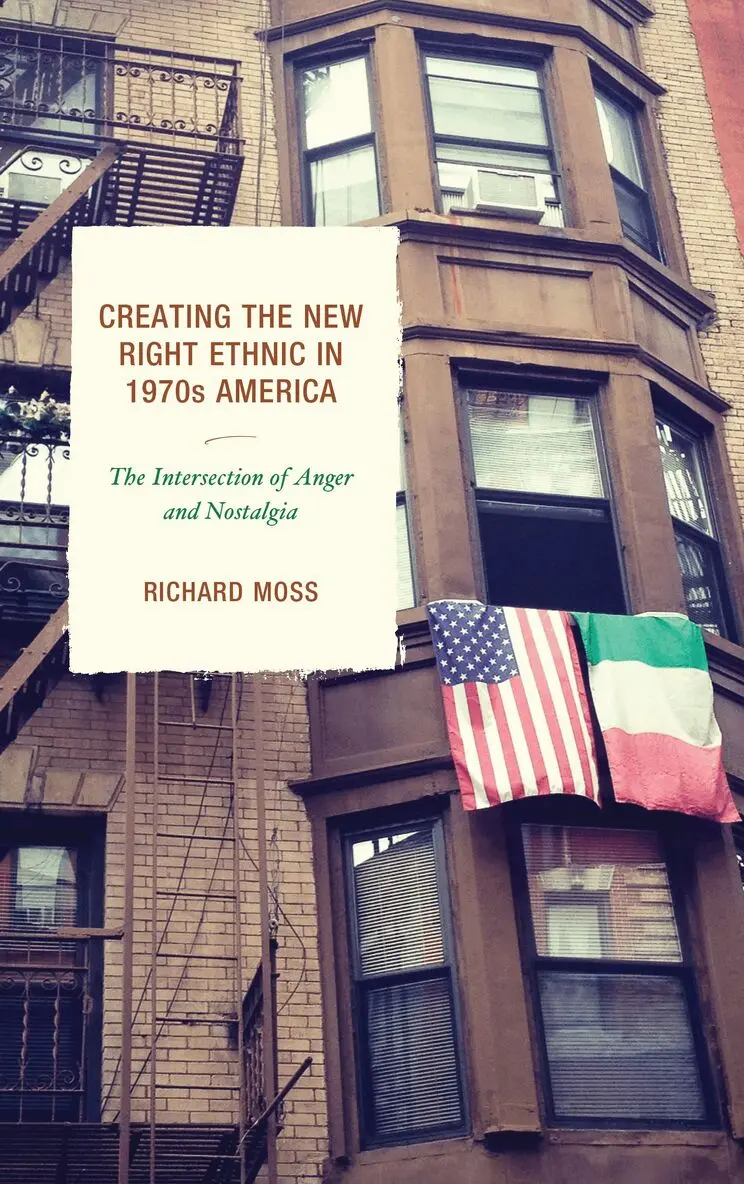
    Creating the New Right Ethnic in 1970s America

    The Intersection of Anger and Nostalgia

    AvRichard Moss

    Inbunden, Engelska, 2017

    1 365 kr

    Beställningsvara. Skickas inom 10-15 vardagar. Fri frakt över 249 kr.

    Fler format och utgåvor

    E-bok

    602 kr

    Häftad

    579 kr

    Beskrivning

    This work analyzes the "New Ethnicity" of the 1970s as a way of understanding America's political turn to the right in that decade. An upsurge of vocal ethnic consciousness among second-, third-, and fourth-generation Southern and Eastern Europeans, the New Ethnicity simultaneously challenged and emulated earlier identity movements such as Black Power.The movement was more complex than the historical memory of racist, reactionary white ethnic leaders suggests. The movement began with a significant grassroots effort to gain more social welfare assistance for "near poor" white ethnic neighborhoods and ease tensions between the working-class African Americans and whites who lived in close proximity to one another in urban neighborhoods. At the same time, a more militant strain of white ethnicity was created by urban leaders who sought conflict with minorities and liberals.The reassertion of ethnicity necessarily involved the invention of myths, symbols, and traditions, and this process actually served to retard the progressive strain of New Ethnicity and strengthen the position of reactionary leaders and New Right politicians who hoped to encourage racial discord and dismantle social welfare programs. Public intellectuals created a mythical white ethnic who shunned welfare, valued the family, and provided an antidote to liberal elitism and neighborhood breakdown. Corporations and publishers embraced this invented ethnic identity and codified it through consumption. Finally, politicians appropriated the rhetoric of the New Ethnicity while ignoring its demands. The image of hard-working, self-sufficient ethnics who took care of their own neighborhood problems became powerful currency in their effort to create racial division and dismantle New Deal and Great Society protections.

    Produktinformation

    • Utgivningsdatum:2017-03-15
    • Mått:159 x 237 x 24 mm
    • Vikt:553 g
    • Format:Inbunden
    • Språk:Engelska
    • Antal sidor:246
    • Förlag:Associated University Presses
    • ISBN:9781611479355

    Utforska kategorier

    • Politiska ideologier och rörelser inom Samhälle och politik
    • Diskriminering och rättvisa inom Samhälle och politik
    • Amerikas historia inom Historia och arkeologi

    Mer om författaren

    Richard Moss is assistant professor of history at Harrisburg Area Community College, Harrisburg, PA.

    Recensioner i media

    The undoing of Lyndon Johnson’s Great Society initiatives was fulfilled by its success. In his examination of the “New Ethnic” identity in urban New Jersey of the 1970s, historian Moss (Harrisburg Area Community College) explains how activists among the old core of the Democratic northeast, particularly the Irish and Italian working class, exploited community anger and fear over two factors. First, there was resentment in urban neighborhoods over federal aid to black and Latino families integrating into the local mainstream. Second, community activists asserted that previous ethnic communities had not needed social services, and invoked a mythic past of bootstrap self-reliance rather than recognizing the privilege of being included as white in the postwar US. The author describes the social and intellectual creation of the northeastern “Reagan Democrats,” laying out the recent political implications in the thread of social history pioneered by David Roediger in Working toward Whiteness (CH, Apr'06, 43-4875) and extended by Matthew Jacobsen’s Special Sorrows (CH, Sep'95, 33-0614) and Roots Too (CH, Jan'07, 44-2879). The eventual acceptance of Reagan political conservatism and deregulation came at a price paid in working-class economic stability, but one willingly paid. “Racial and cultural antipathy was powerful enough to turn white ethnics and workers from their [own] self-interest.” A sophisticated but accessible work. Summing Up: Highly recommended. All academic levels/libraries

    Innehållsförteckning

    • AcknowledgmentsIntroductionChapter 1—The Path to the New EthnicityChapter 2—“Is This Any Way For Nice Ethnic Boys to Behave?” The Blue-Collar Origins of the New EthnicityChapter 3—Instincts, Feelings, and Intimacies: The Intellectual Consolidation of the New EthnicityChapter 4—“I’m a Practical Guy Who Wants to Live in a City That Gives People of All Kinds a Chance to Share”: The Struggle for the Progressive New EthnicityChapter 5—Consuming Roots: Popular Culture Representations of the New EthnicityChapter 6—“Let Them Do For Themselves Like We Do!”: The Right’s Appropriation of the New EthnicityConclusion—“Loose Cannons,” Reagan Democrats, and LegaciesBibliography