• Fri frakt över 249 kr
  • •
  • Snabba leveranser
  • •
  • Billiga böcker
Kundservice

Du är på sajten för privatpersoner.

Företag, bibliotek eller offentlig verksamhet?

Du handlar på classic.bokus.com, där alla dina funktioner finns intakta.
Till classic.bokus.com
Bokus logotyp. Gå till startsidan.
  • Erbjudanden
  • Nyheter
  • Student
  • Topplistor
  • Barn & ungdom
  • Bokus Play
  • E-böcker
  • Pocketböcker
  • Spel & pussel

10% rabatt på allt med kod: NYSTART10 →

Sidfot

Mina sidor

    Hjälp

    • Kundservice
    • Vanliga frågor och svar
    • Frakt och leverans
    • Retur vid ångerrätt
    • Reklamera vara
    • Betalning
    • Köpvillkor
    • Allmänna villkor
    • Information om webbplatsens tillgänglighet

    Om Bokus

    • Om oss
    • Pressrum
    • För studenter
    • För företag
    • För bibliotek och offentlig verksamhet
    • För leverantörer
    • Hållbarhet

    Populärt

    • Aktuella erbjudanden
    • Presentkort
    • Studentlitteratur
    • Nya böcker
    • Topplistor
    • Signerade böcker
    • Engelska böcker

    Inspiration

    • Boktips
    • BookTok
    • Populära bokserier
    • Barnbokskaraktärer
    • Populära författare
    Logotyp för Bokus
    Följ oss på Facebook (extern länk)Följ oss på Instagram (extern länk)Följ oss på YouTube (extern länk)Följ oss på TikTok (extern länk)
    bokus @ CookiesAnpassa cookiesIntegritetspolicyKöpvillkor
    Till Citymail hemsida (extern länk)Till Budbee hemsida (extern länk)Till Postnord hemsida (extern länk)Till Schenker hemsida (extern länk)Till Early Bird hemsida (extern länk)Till Walleys hemsida (extern länk)
    1. Filosofi och religion
    2. Religion och tro
    3. Religion: allmänt

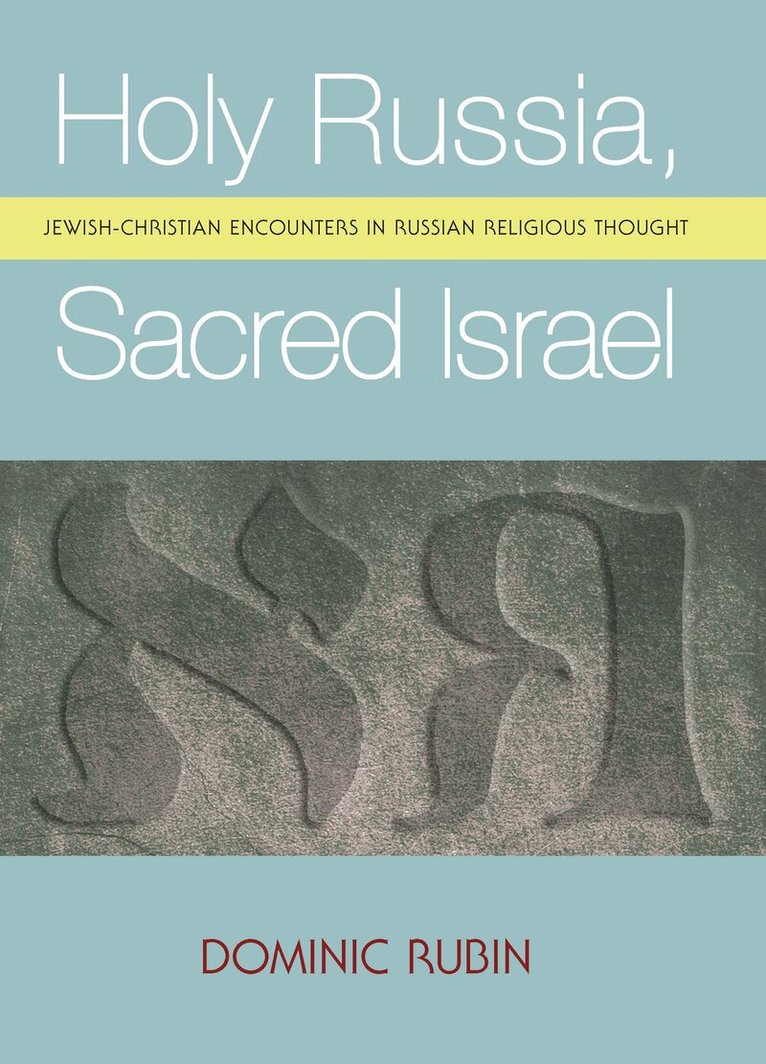
    Holy Russia, Sacred Israel

    Jewish-Christian Encounters in Russian Religious Thought

    AvDominic Rubin

    Häftad, Engelska, 2018

    520 kr

    Beställningsvara. Skickas inom 5-8 vardagar. Fri frakt över 249 kr.

    Fler format och utgåvor

    Inbunden

    1 466 kr

    Beskrivning

    Holy Russia, Sacred Israel examines how Russian religious thinkers, both Jewish and Christian, conceived of Judaism, Jewry and the ‘Old Testament’ philosophically, theologically and personally at a time when the Messianic element in Russian consciousness was being stimulated by events ranging from the pogroms of the 1880s, through two Revolutions and World Wars, to exile in Western Europe. An attempt is made to locate the boundaries between the Jewish and Christian, Russian and Western, Gnostic-pagan and Orthodox elements in Russian thought in this period. The author reflects personally on how the heritage of these thinkers – little analyzed or translated in the West – can help Orthodox (and other) Christians respond to Judaism (including ‘Messianic Judaism’), Zionism, and Christian anti-Semitism today.

    Produktinformation

    • Utgivningsdatum:2018-06-14
    • Mått:155 x 234 x 30 mm
    • Vikt:840 g
    • Format:Häftad
    • Språk:Engelska
    • Antal sidor:570
    • Förlag:Academic Studies Press
    • ISBN:9781618118202

    Utforska kategorier

    • Religion: allmänt inom Filosofi och religion
    • Kristendom inom Filosofi och religion
    • Judendom inom Filosofi och religion

    Mer om författaren

    Dominic Rubin (Ph.D. in Linguistics, London University) is a lecturer in Philosophy, Biblical Hebrew, Old Testament at St.Philaret’s Orthodox Christian Institute and the Moscow Higher School of Economics.

    Recensioner i media

    “Holy Russia, Sacred Israel is without a doubt a very important book and contribution to the field. With a deep and sympathetic understanding for both Judaism and Russian Orthodoxy, Dominic Rubin gives us new readings of some of the canonical figures of Russian thought: Soloviev, Florensky, Rozanov, Gershenzon, Karsavin, and Fedotov, among others. This is an important book for Russian culture because the author has no axe to grind and is unafraid of telling truth to power, facing both past anti-Jewish agitation and propaganda, while at the same time never surrendering hope for a future Russian-Jewish philosophical dialogue. Each figure is judged primarily on the merits of their thinking as theology and as humane expression, in a way which displays erudition, tolerance and a love for both Russian and Jewish culture.”

    Innehållsförteckning

    • PrefaceChapter One: Soloviev’s Judeo-Russian WisdomIntroduction: Russian Jewry in the time of SolovievSoloviev’s general developmentSoloviev, the Jews and JudaismThe flawed wholeness of the Jewish nationThe encounter with J.RabinowitzJudaism, Judeo-Christianity and the LawTalmudic Judaism and integral ChristianitySophia (Soph-Jah) and Judaic/Christian pan(en)theismJewish responses to SolovievChapter Two: Bulgakov and the sacred blood of JewryBulgakov: wrestling with Soloviev’s heritageThe Jews in Bulgakov’s thought: a preview of the main problemJudaism and the Old Testament in Bulgakov’s early philosophyTwo Cities (1906-1910)The Unfading Light (1917)Bulgakov and KabbalahBulgakov and Jewry (1): in Russia – the shadow of the RevolutionAn early essay in Christian Zionism (1915)The paradox of Bulgakov’s anti-SemitismBulgakov’s recollections of the 1905 and 1917 RevolutionsBulgakov and Jewry (2): in exile – the shadow of the HolocaustThe Biblical conception of blood and nationSophiology and sacred bloodThe blood-chosenness of the Jews after ChristThe collective fate of Israel and the remnantA critical development of Bulgakov’s ideasA Messianic Jewish reading of Bulgakov? A (covert) two-covenant reading of Bulgakov? Judas, Saul, and PaulConclusionBulgakov in two contemporary Russian-Jewish interpretationsChapter Three: NBerdyaev, MGershenzon and LShestov: Jewish and Russian Nihilists of the SpiritThe three pessimistsBerdyaev and GershenzonNicolai BerdyaevMikhail GershenzonBetween Slavophilism and BolshevismBerdyaev and Gershenzon on SlavophilismGershenzon, Berdyaev and the Bolshevik RevolutionGershenzon and Vyacheslav Ivanov aft er the Revolution1922: Berdyaev and Gershenzon on historyBerdyaev on history and JewryGershenzon and Jewish destinyPushkin-AhasuerusApotheosis of Jewishness: Gershenzon against Land, Torah and PeopleThe ‘Judaization’ of BerdyaevLev ShestovShestov on GershenzonShestov on Buber and JudaismShestov on BerdyaevShestov, Bulgakov and SteinbergBulgakov on Shestov: ‘fi deist without faith’Steinberg on Shestov: reveal the ‘black man’Judaism beyond the Pale: superseding both TestamentsGershenzon and Shestov – differences and similaritiesV.V.Zenkovsky: the dialectic of Jewry and ChristianityChapter Four: Vasily Rozanov (and Pavel Florensky)‘Sinful slave Vasily….’ Rozanov’s intellectual developmentEarly Rozanov: Judaism over Christianity“Judaism” (1903)The immanent church of conciliar Jewry1.Circumcision2.Sabbath3.MikvehAstarte, Egypt and JudaismThe agonies of MarcionismMiddle Rozanov: Russia expels the Jew withinTwo Jewish encounters in the Beilis yearsMikhail GershenzonAaron SteinbergRozanov’s Judeophobic outpourings (1911-1914)Florensky: Rozanov’s secret helperFlorensky’s Jewish writingsRitual murder and the eucharist.The fl aw in Florensky’s two-tiered logicFlorensky, Romans 11 and Jewish bloodFlorensky’s ‘Kabbalistic scholarship’ Florensky: the broader contextOccultism and magicPolitical totalitarianismKatsis and Florensky’s ‘Christian exegesis’PrefaceFlorensky’s position in Russian religious thoughtName-worship and symbolismIosef Davydovich Levin: “I met Florensky once….” Christianity and anti-Semitism: final wordsChapter Five: LKarsavin and ASteinberg: Russia and Israel SymphonicallyInterwinedTwo friends, two worldsEurasianism,Volphila, AutonomismThe Karsavin-Steinberg exchangeKarsavinSteinbergInflected philosophy: Jews and Russians among the GreeksSteinberg, Jewishness and philosophy: How strange that I am a JewJewishness and Russianness in philosophyJewish Platonized KantianismSteinberg and Jewishness in philosophyThe boundaries between the believer and the worldCore and periphery, Orthodoxy and RevolutionThe case of Georgy FedotovThe case of Alexander MeierKarsavin: rootless Christianity“A Study in Apologetics” Karsavin: experiencing the Jewish vision of God (Poem on Death)Th e tortured JewessContrary couplesKarsavin’s and Steinberg’s triadologyIsrael and the living GodThe end of the Poem on DeathThe Inquisitor and the Jewess-‘conversa’The final dramaThe role of the Jewess in the final dramaJews and personalityFinal years: London, Lithuania, SiberiaAbez and a final Jewish encounterDeath and burialChapter Six: Semyon Frank: from russkiy yevrei to russkiy yevropeetzFrank: the Jew as universal manFrank’s philosophyFrank and GershenzonFrank’s universalismFrank and Gershenzon from Landmarks to RevolutionGershenzon and Frank: the wisdom of PushkinPushkin between Frank and GershenzonPushkin’s message for contemporary RussiaRussian-Jewish WisdomFrank and German-Jewish philosophyCohen and FrankFrank and Cohen on sufferingFrank and RosenzweigThe argument of The Star and Frank’s critiqueThe StarThe critiqueEvaluation of Frank’s critiqueFrank and O.GoldbergConclusionConclusion: Soloviev’s heirs: the third generationAlexander Men: Bulgakovian Judeo-Christianity? The polemic against Men’s Jewish ChristianityN.Feingold and S.LyosovMen in the context of post-Auschwitz theologyBenevich: no Jew, no gentile – no Russian? Conclusion: Russian Orthodoxy and Jewish-Christian dialogue – a noteBibliographyIndex